

sMAX Series
Product Introduction
The sMAX series covers cooled GSENSE2020, GSENSE4040 and GSENSE6504BSI scientific cameras from 2K×2K to 4K×4K. The new sMAX6504B models add 1.2-inch, 2048×2048 VIS and UV configurations with 10GigE, USB3.2 Gen 2 and CXP 2.0x4 interfaces, up to 298 fps, 95% quantum efficiency at 450 nm, and exposure from 12 µs to 300 s. Across the series, temperature-controlled TEC cooling, anti-condensation optics, external triggering, binning and Windows/Linux SDK support target fluorescence microscopy, semiconductor inspection, spectroscopy and astronomy.
Product Features
- Dual-stage TEC high-efficiency cooling, with sMAX6504B air cooling up to 40 °C and water cooling up to 55 °C below ambient
- Built-in anti-condensation optical structure, effectively suppressing condensation under low-temperature and long-exposure conditions
- Temperature-controllable design: sensor temperature stabilizes to set value in short time (sMAX04 typical ≈ 5 min)
- Featuring GSENSE2020 BSI / GSENSE4040 / GSENSE4040 BSI / GSENSE6504BSI sensors with high QE (sMAX6504B: 95% @ 450 nm)
- Maximum resolution 4096 × 4096, covering 2K×2K to 4K×4K multiple specifications
- Support for 8/12/16-bit (some models include 11-bit / Global Reset / HDR modes), enhancing weak signal layering and dynamic range
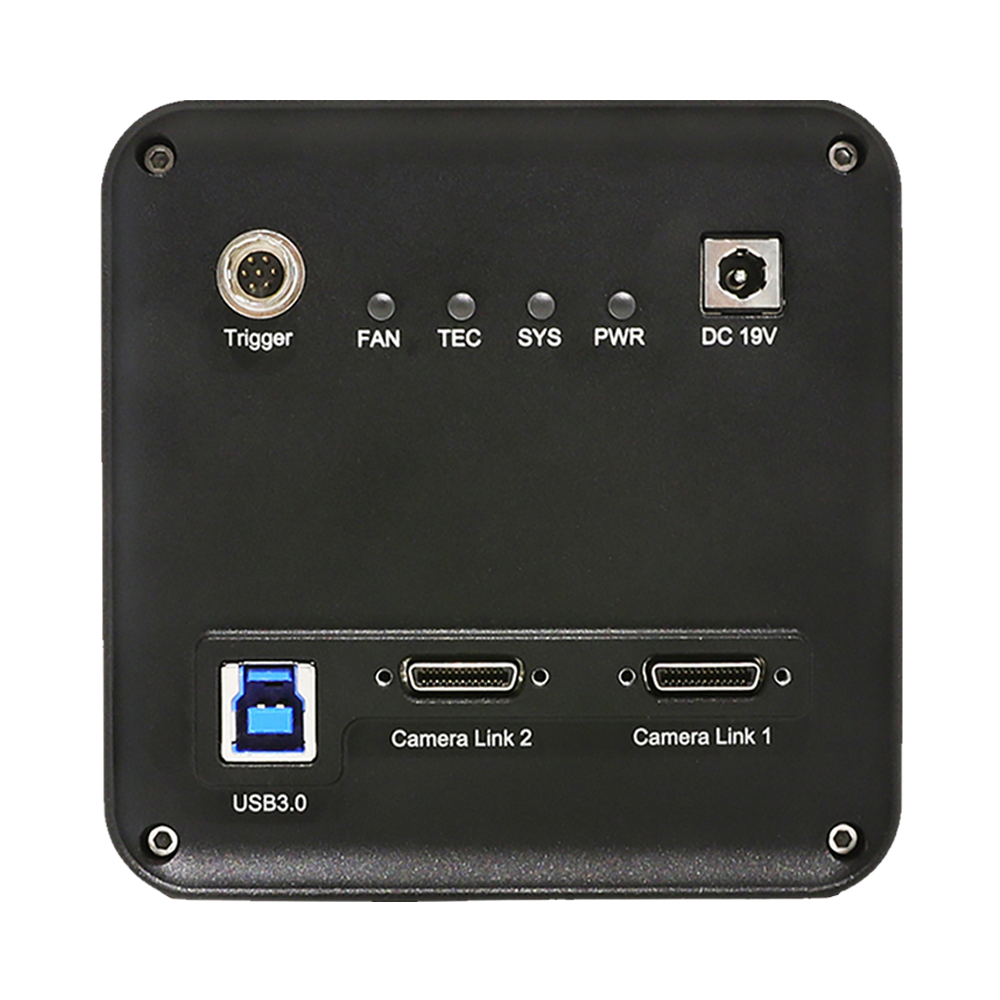
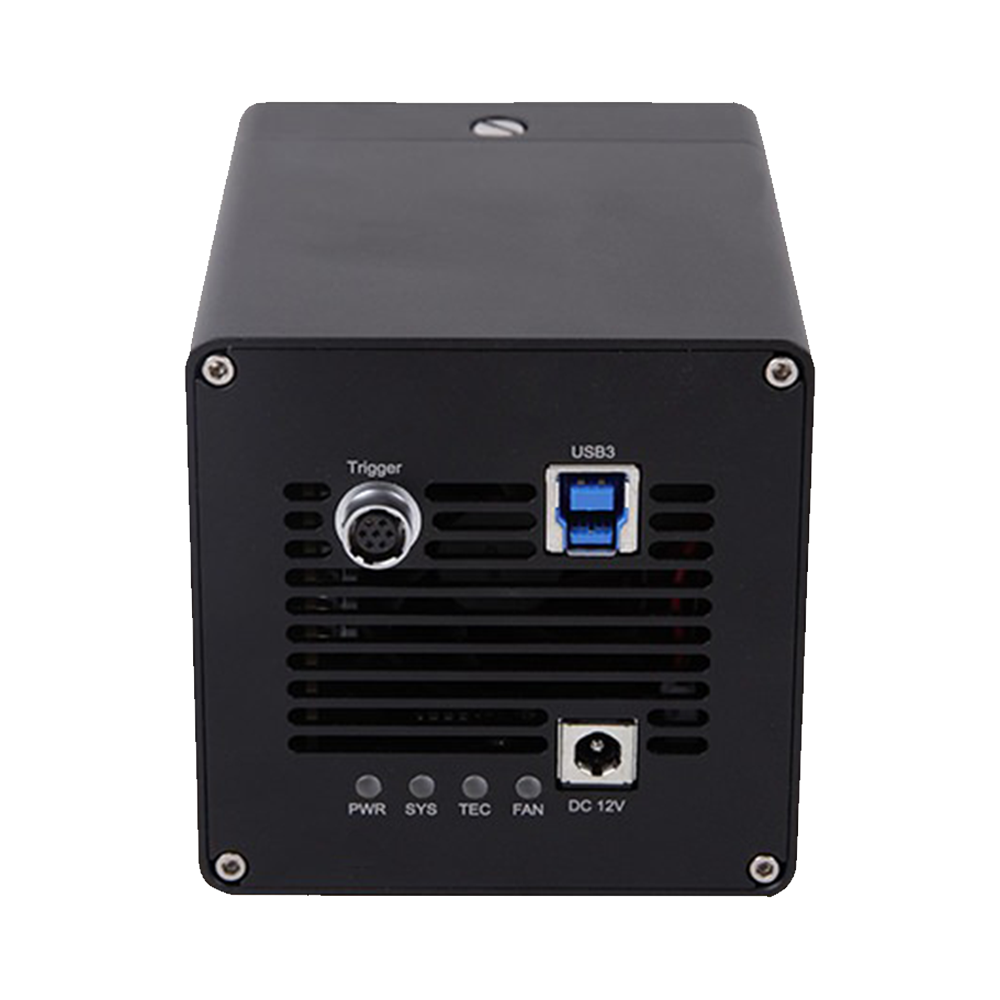
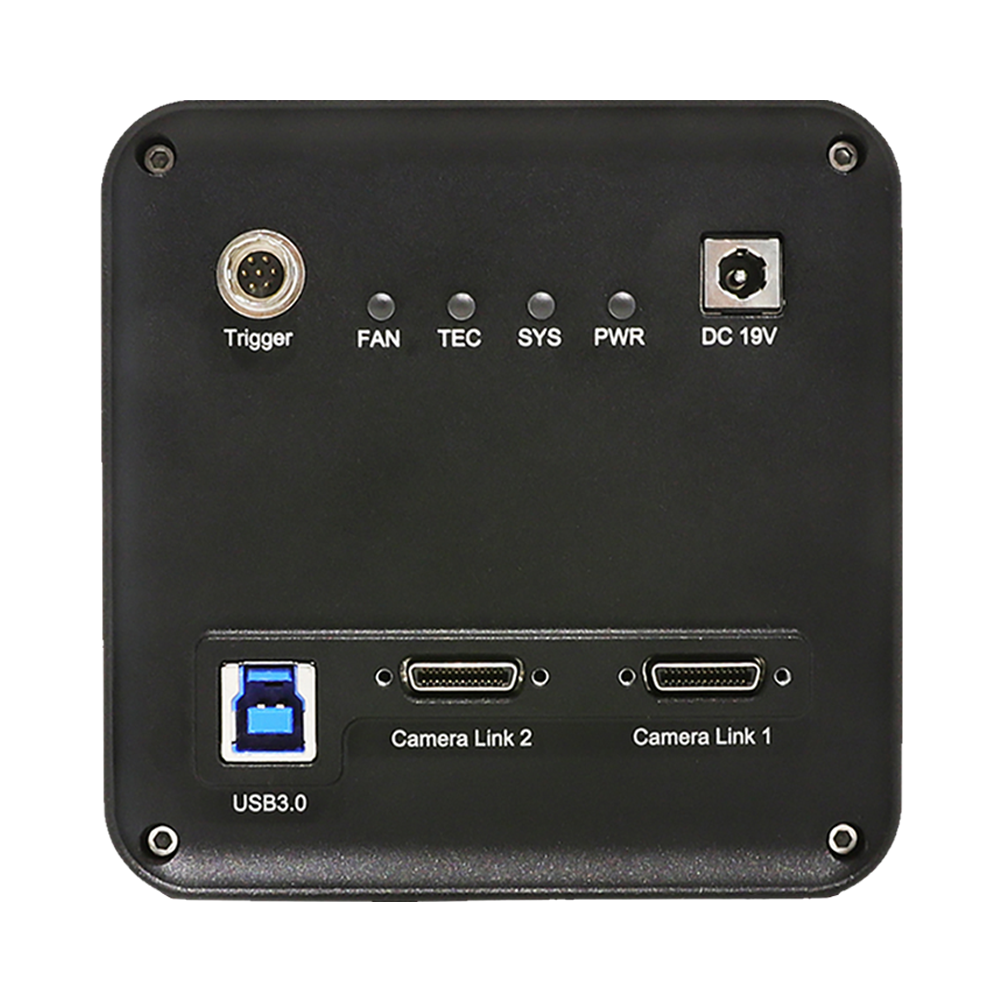
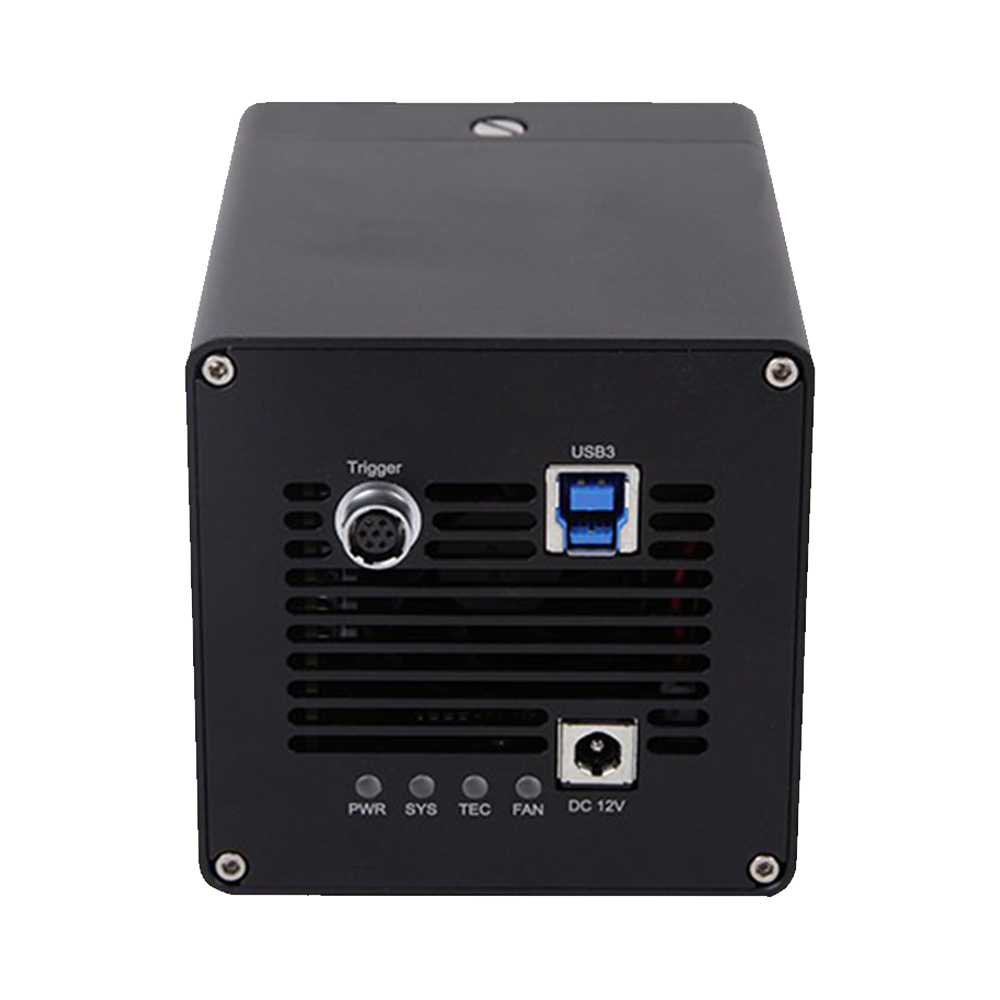
- USB 3.0 / Camera Link / USB3.2 / 10GigE / CXP high-speed interfaces, meeting high-bandwidth transmission requirements
- Free-running and external trigger modes: supporting single-frame/multi-frame triggered acquisition and multi-device synchronization
- Optional -GPS models: built-in GPS timing module supporting UTC absolute time synchronization and multi-camera sync (model dependent)
- Software and hardware combined binning: software 2×2/3×3/4×4, some models support FPGA hardware 2×2
- Rich digital I/O: 1 opto-isolated input, 1 opto-isolated output, 2 configurable GPIOs (model dependent)
- Long exposure capability: up to 3600 s (model dependent; e.g., sMAX16 series), suitable for extremely low-light applications
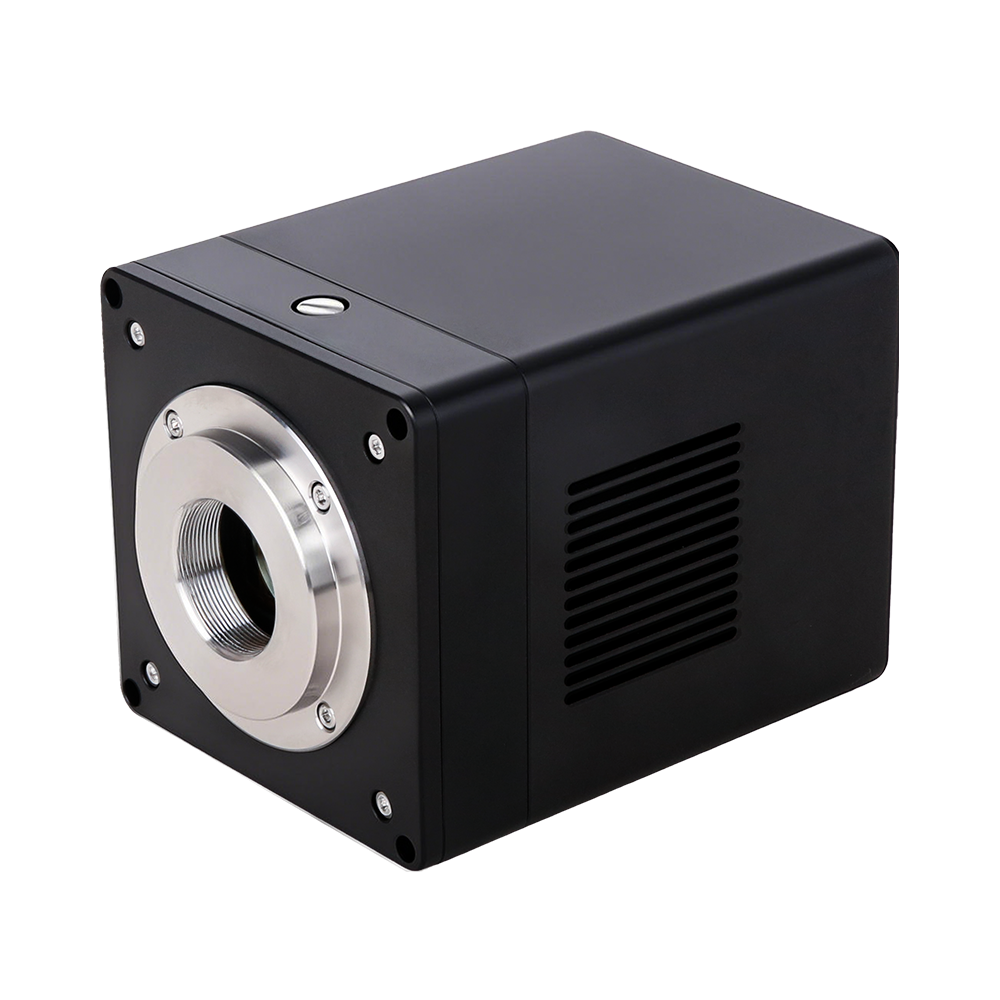
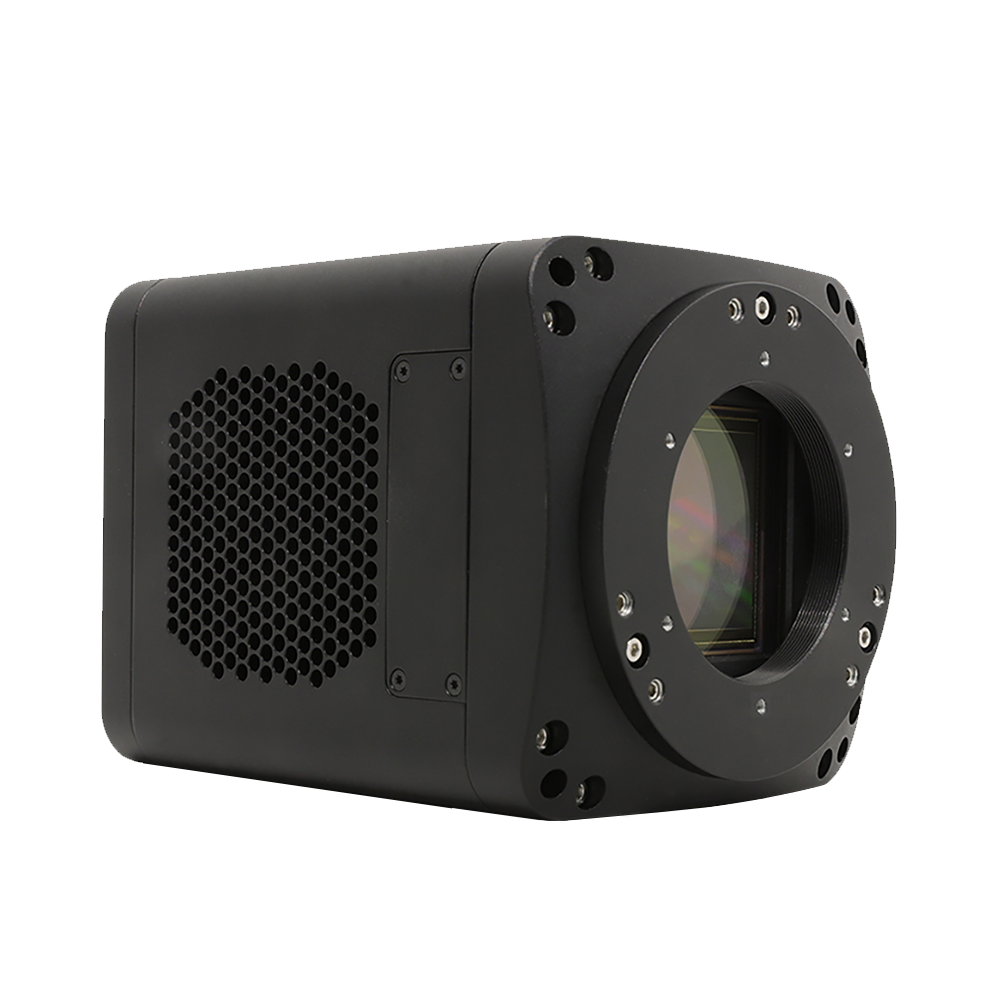
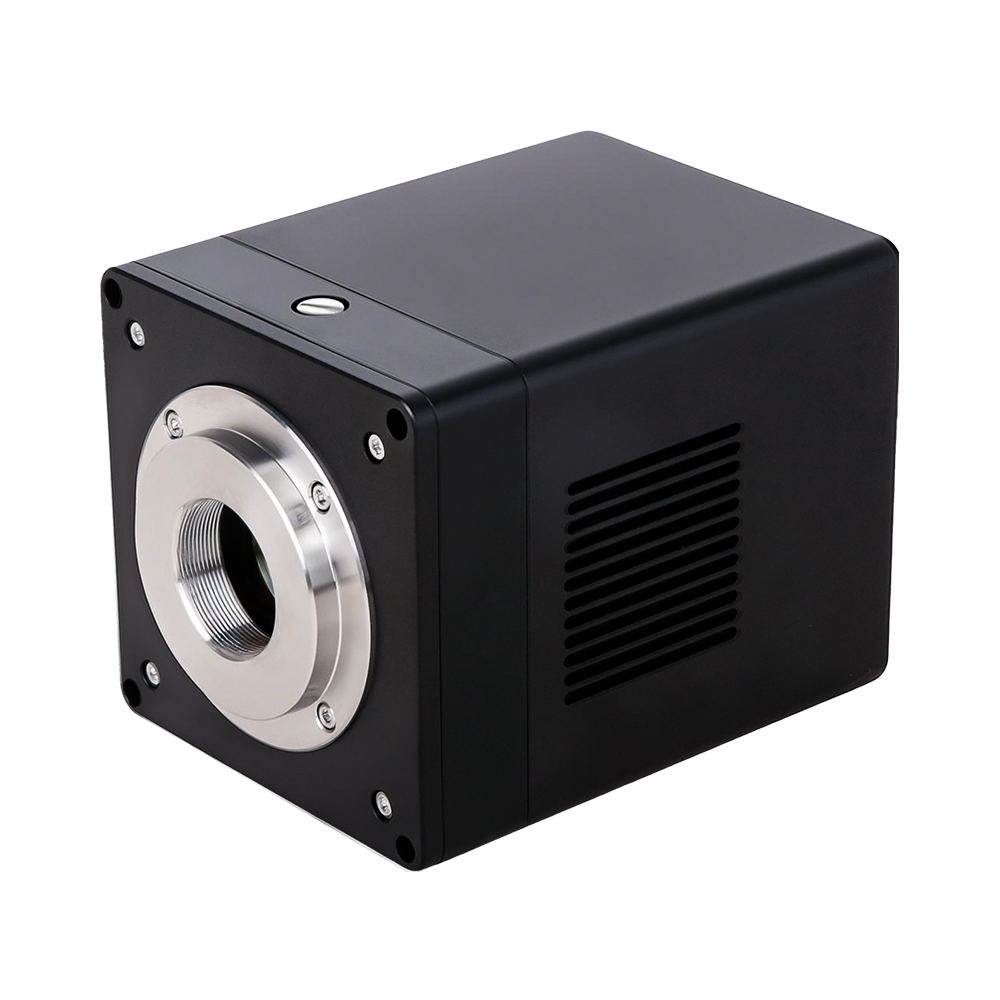
- Flexible lens mount: C-mount / M54 × 0.75 (model dependent), convenient for matching with microscopy/spectroscopy/imaging systems
- Wide spectral response: 200–1100 nm (BSI models) / 300–1000 nm (GSENSE4040), covering visible to near-infrared
- Cross-platform development: Windows / Linux SDK (C/C++/C#/Python) provided, supporting ToupView/CLView; some models compatible with LabVIEW / MATLAB
Product Models
Scientific sCMOS cameras with cooled GSENSE sensors, USB3/Camera Link, 10GigE and CXP interfaces
| Model | Sensor / Size | Resolution | Pixel Size | Shutter | Frame Rate | Interface | Dynamic Range |
Action |
|---|---|---|---|---|---|---|---|---|
| sMAX04BM |
GSENSE2020BSI (sCMOS)
1.2" (18.82 mm) | 13.31 mm × 13.31 mm
|
4.2 MP (2048×2048) | 6.5 µm × 6.5 µm | Rolling shutter / global reset |
72.5 fps @ 2048×2048
72.5 fps @ 1024×1024
|
USB 3.0 |
61.38 dB (11-bit); 59.73 dB (HCG, 12-bit) / 67.17 dB (LCG, 12-bit); HDR 91.83 dB (11HL) / 86.02 dB (12HL)
|
View Details |
| sMAX04BM-U100 |
GSENSE2020BSI (sCMOS)
1.2" (18.82 mm) | 13.31 mm × 13.31 mm
|
4.2 MP (2048×2048) | 6.5 µm × 6.5 µm | Rolling shutter / global reset |
89 fps @ 2048×2048
100 fps @ 1024×1024
|
USB 3.0 |
61.38 dB (11-bit); 59.73 dB (HCG, 12-bit) / 67.17 dB (LCG, 12-bit); HDR 91.83 dB (11HL) / 86.02 dB (12HL)
|
View Details |
| sMAX04BM-CL100 |
GSENSE2020BSI (sCMOS)
1.2" (18.82 mm) | 13.31 mm × 13.31 mm
|
4.2 MP (2048×2048) | 6.5 µm × 6.5 µm | Rolling shutter / global reset |
108 fps @ 2048×2048
108 fps @ 1024×1024
|
Camera Link |
61.38 dB (11-bit); 59.73 dB (HCG, 12-bit) / 67.17 dB (LCG, 12-bit); HDR 91.83 dB (11HL) / 86.02 dB (12HL)
|
View Details |
| sMAX16AM-U3-CL |
GSENSE4040 (sCMOS)
3.3" (52.18 mm) | 36.9 mm × 36.9 mm
|
16.8 MP (4096×4096) | 9 µm × 9 µm | Rolling shutter |
20 fps @ 4096×4096 (USB3)
23 fps @ 4096×4096 (Camera Link)
80 fps @ 2048×2048 (USB3)
90 fps @ 2048×2048 (Camera Link)
|
USB3/Camera Link |
58.5 dB (HCG) / 67.5 dB (LCG) (12-bit); 82.5 dB (HDR16)
|
View Details |
| sMAX16AM-U3-CL-GPS |
GSENSE4040 (sCMOS)
3.3" (52.18 mm) | 36.9 mm × 36.9 mm
|
16.8 MP (4096×4096) | 9 µm × 9 µm | Rolling shutter |
20 fps @ 4096×4096 (USB3)
23 fps @ 4096×4096 (Camera Link)
80 fps @ 2048×2048 (USB3)
90 fps @ 2048×2048 (Camera Link)
|
USB3/Camera Link |
58.5 dB (HCG) / 67.5 dB (LCG) (12-bit); 82.5 dB (HDR16)
|
View Details |
| sMAX16BM-U3-CL |
GSENSE4040BSI (sCMOS)
3.3" (52.18 mm) | 36.9 mm × 36.9 mm
|
16.8 MP (4096×4096) | 9 µm × 9 µm | Rolling shutter |
20 fps @ 4096×4096 (USB3)
23 fps @ 4096×4096 (Camera Link)
|
USB3/Camera Link |
55.0 dB (HCG) / 62.4 dB (LCG) (12-bit)
|
View Details |
| sMAX16BM-U3-CL-GPS |
GSENSE4040BSI (sCMOS)
3.3" (52.18 mm) | 36.9 mm × 36.9 mm
|
16.8 MP (4096×4096) | 9 µm × 9 µm | Rolling shutter |
20 fps @ 4096×4096 (USB3)
23 fps @ 4096×4096 (Camera Link)
|
USB3/Camera Link |
55.0 dB (HCG) / 62.4 dB (LCG) (12-bit)
|
View Details |
| sMAX6504B-VIS-U10-10G |
GSENSE6504BSI (CMOS sensor)
1.2" | 1.2"
|
4.2 MP (2048×2048) | 6.5 µm × 6.5 µm | Rolling shutter / global reset |
10GigE: 248 fps @ 8-bit, 124 fps @ 12-bit, 124 fps @ 16-bit
USB3.2 Gen 2x1: 224 fps @ 8-bit, 112 fps @ 12-bit, 112 fps @ 16-bit
|
USB3.2 Gen 2x1 / 10GigE |
62.1 dB (High Sensitivity Mode); 86 dB (HDR Mode)
|
View Details |
| sMAX6504B-UV-U10-10G |
GSENSE6504BSI (CMOS sensor)
1.2" | 1.2"
|
4.2 MP (2048×2048) | 6.5 µm × 6.5 µm | Rolling shutter / global reset |
10GigE: 248 fps @ 8-bit, 124 fps @ 12-bit, 124 fps @ 16-bit
USB3.2 Gen 2x1: 224 fps @ 8-bit, 112 fps @ 12-bit, 112 fps @ 16-bit
|
USB3.2 Gen 2x1 / 10GigE |
62.1 dB (High Sensitivity Mode); 86 dB (HDR Mode)
|
View Details |
| sMAX6504B-VIS-U20-CXP |
GSENSE6504BSI (CMOS sensor)
1.2" | 1.2"
|
4.2 MP (2048×2048) | 6.5 µm × 6.5 µm | Rolling shutter / global reset |
CXP 2.0x4 / USB3.2 Gen 2x2: 298 fps @ 8-bit, 298 fps @ 12-bit, 170 fps @ 16-bit
|
CXP 2.0x4 / USB3.2 Gen 2x2 |
62.1 dB (High Sensitivity Mode); 86 dB (HDR Mode)
|
View Details |
| sMAX6504B-UV-U20-CXP |
GSENSE6504BSI (CMOS sensor)
1.2" | 1.2"
|
4.2 MP (2048×2048) | 6.5 µm × 6.5 µm | Rolling shutter / global reset |
CXP 2.0x4 / USB3.2 Gen 2x2: 298 fps @ 8-bit, 298 fps @ 12-bit, 170 fps @ 16-bit
|
CXP 2.0x4 / USB3.2 Gen 2x2 |
62.1 dB (High Sensitivity Mode); 86 dB (HDR Mode)
|
View Details |
Package Contents #
sMAX cooled cameras (USB3 / CameraLink / dual interface) standard contents and packing info
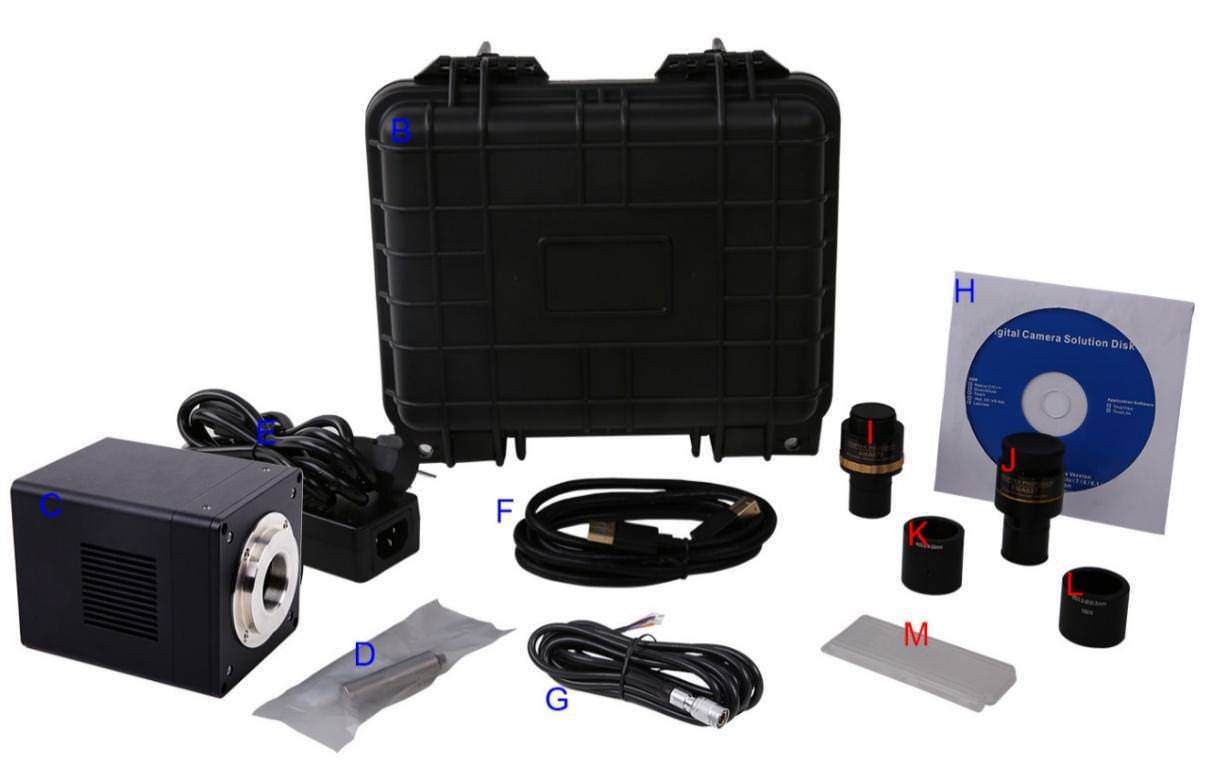
USB3 Cooled
- Camera body (USB3.0)
- Power adapter: AC 100~240 V 50/60 Hz → DC 12 V 3 A
- I/O cable: 7-pin cable or extension cable
- USB3.0 cable
- Lens (optional) C-mount
CameraLink Cooled
- Camera body (CameraLink)
- Power adapter: AC 100~240 V 50/60 Hz → DC 12 V 3 A
- I/O cable: 7-pin cable or extension cable
- CameraLink cable (Optional)
- Lens (optional) C-mount

USB3+CL Dual-interface Cooled
- Camera body (USB3 + CameraLink dual interface)
- Power adapter: AC 100~240 V 50/60 Hz → DC 19 V 4 A
- I/O cable: 7-pin cable or extension cable
- One USB3.0 cable and one CameraLink cable (Optional)
- Lens (optional) C-mount

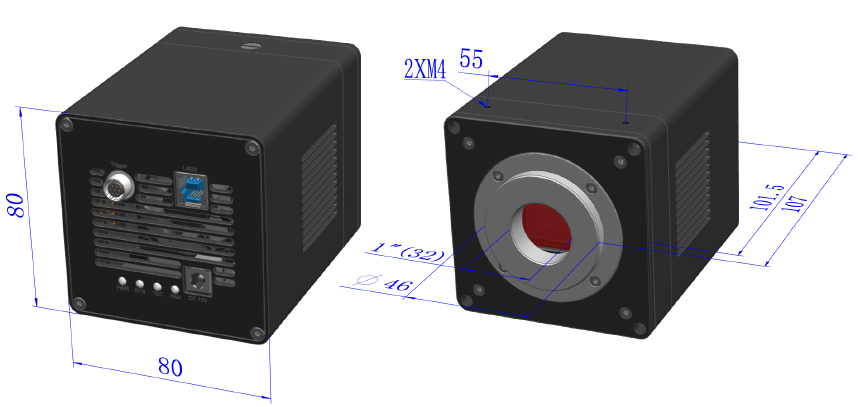
Product Dimensions #
USB3 / CameraLink / dual interface (incl. GPS) outline dimensions


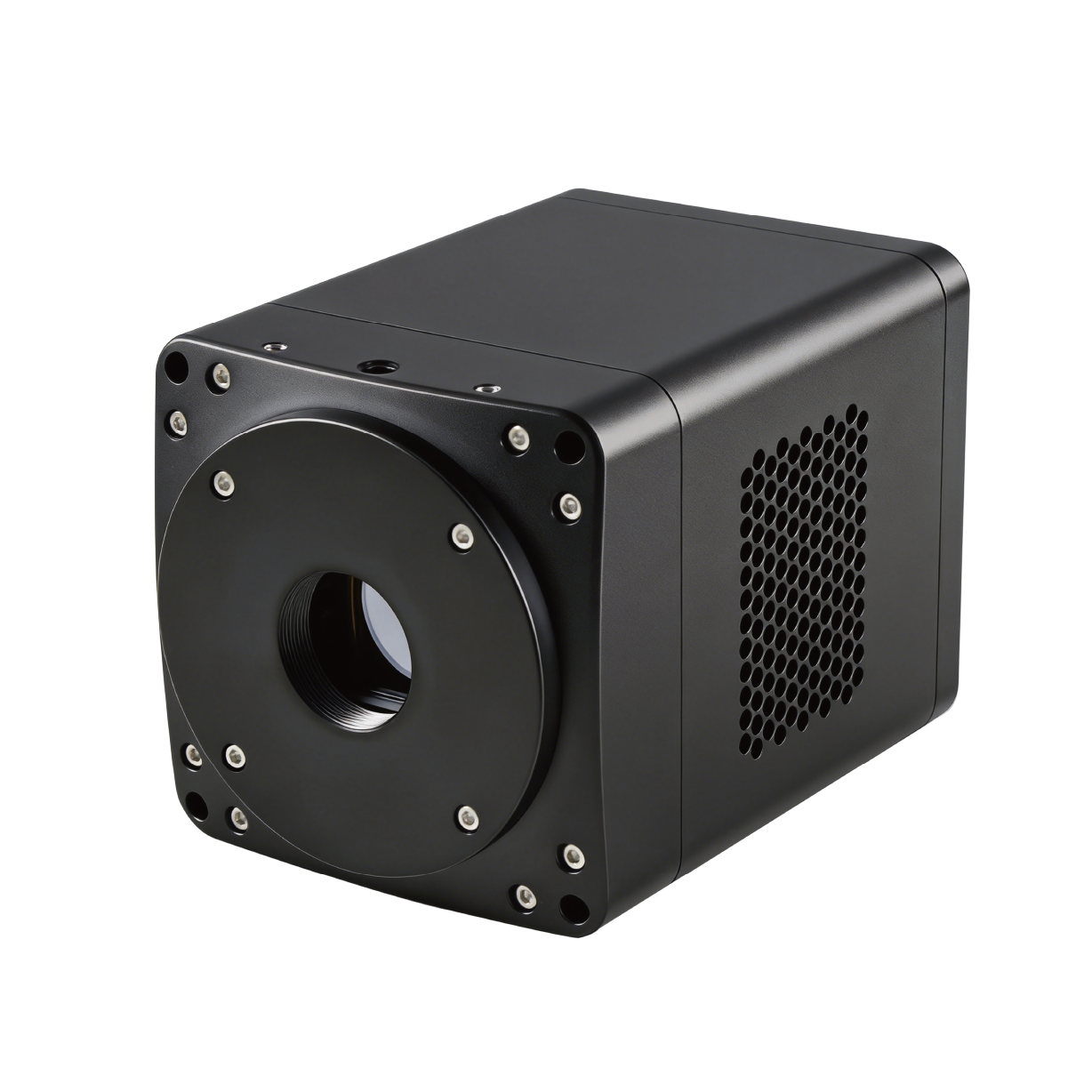
sMAX6504B Series
GSENSE6504BSI 1.2-inch scientific CMOS cameras with VIS/UV filter options and U10-10G or U20-CXP interfaces.
Product features
- GSENSE6504BSI scientific CMOS sensor, 2048×2048 resolution and 6.5 µm pixels
- 200–1100 nm spectral response; VIS models use double-side AR-coated protective glass and UV models use ultraviolet quartz glass
- USB3.2 Gen 2x1 / Gen 2x2, 10GigE or CXP 2.0x4 high-speed interfaces
- Air cooling 40 °C or water cooling 55 °C below ambient
- Mono 8 / Mono 12 / Mono 16 output with external I/O trigger control
Core specifications
- Sensor
- GSENSE6504BSI
- Resolution
- 4.2 MP (2048×2048)
- Pixel size
- 6.5 µm × 6.5 µm
- Frame rate
- Up to 224 fps (USB3.2 Gen 2x1), 248 fps (10GigE) or 298 fps (USB3.2 Gen 2x2 / CXP) at 8-bit
- Dynamic range
- 62.1 dB (High Sensitivity Mode); 86 dB (HDR Mode)
- Readout noise
- 0.74 e⁻ (High Sensitivity Mode); 0.72 e⁻ (HDR Mode)
- Full well capacity
- 1.03 ke⁻ (High Sensitivity Mode); 13.48 ke⁻ (HDR Mode)
- S/N ratio
- 30.1 dB (High Sensitivity Mode); 41.3 dB (HDR Mode)
- Sensitivity
- 9.2×10⁷ e⁻/((W/m²)·s) @ 450 nm
- Dark current
- ≤0.05 e⁻/s/pix @ -10 °C; ≤0.01 e⁻/s/pix @ -20 °C
- Quantum efficiency
- 95% @ 450 nm
- Exposure
- 12 µs – 300 s
- Data interface
- USB3.2 Gen 2x1 / 10GigE or USB3.2 Gen 2x2 / CXP 2.0x4
- GPIO
- 1 opto-isolated input, 1 opto-isolated output, 2 non-isolated I/O ports
- Power / consumption
- 19 V / 4.74 A power adapter; <46 W @ USB3.2 / <55 W @ 10GigE; CXP consumption not specified
- Dimensions / weight
- 85 mm × 85 mm × 118 mm; 976 g
Performance curves
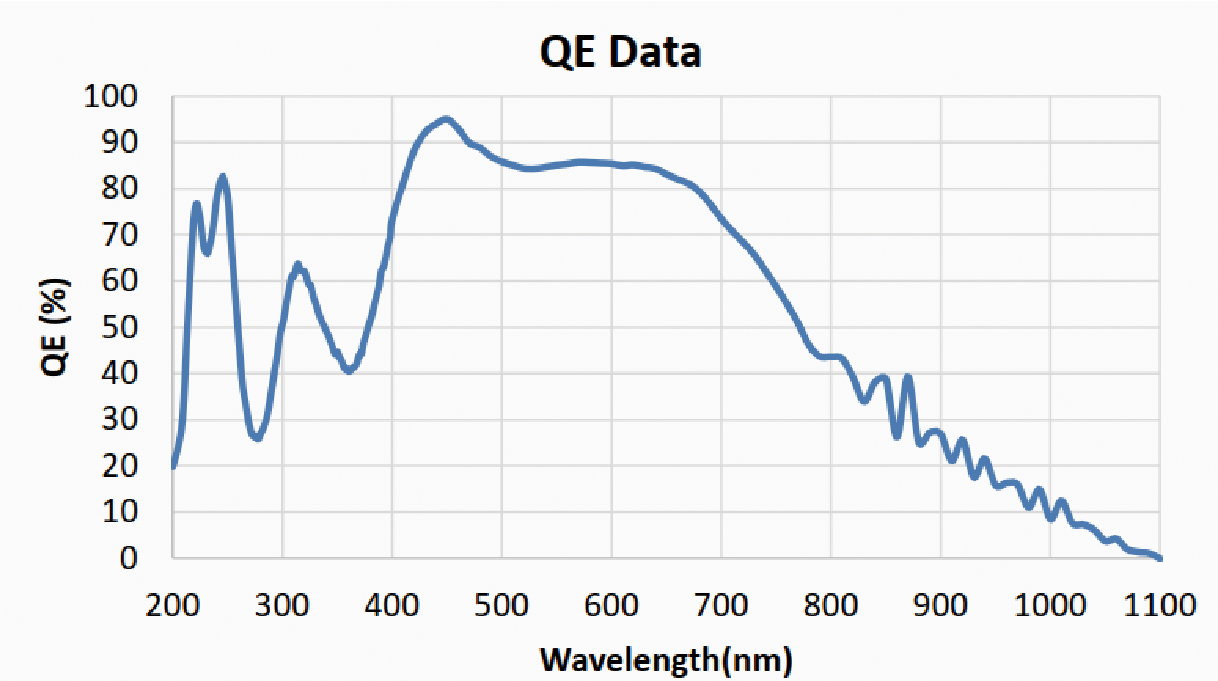
GSENSE6504BSI quantum-efficiency curve
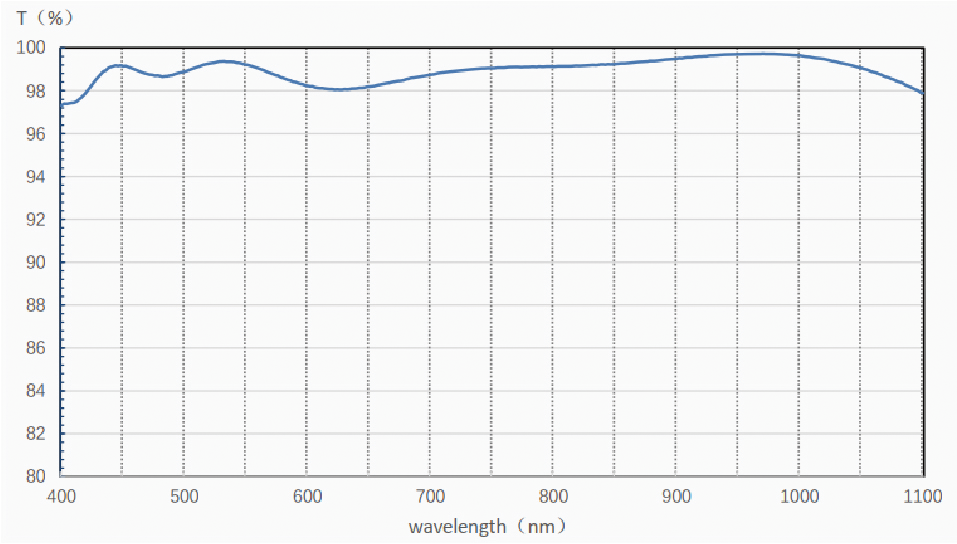
AR-coated protective glass transmission curve
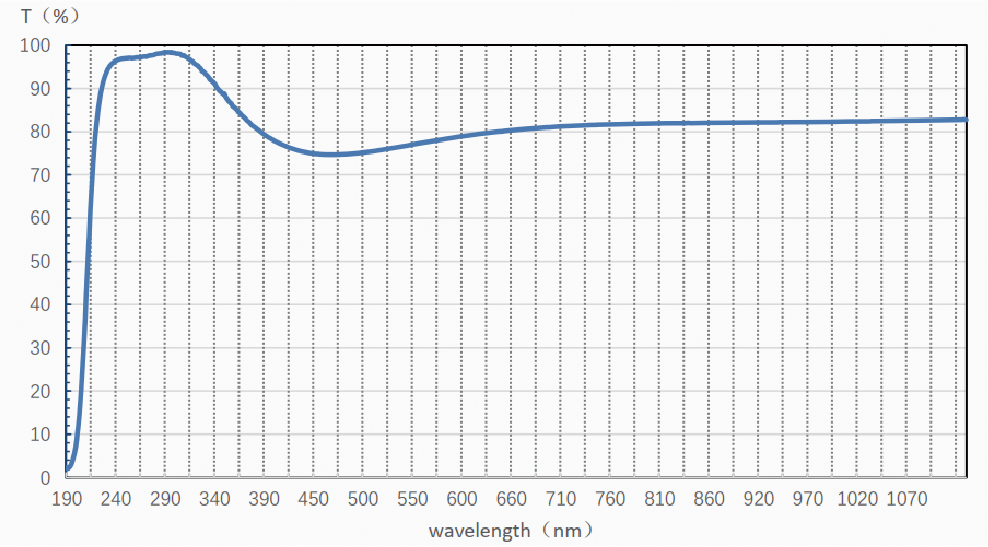
Ultraviolet quartz glass transmission curve
Dimensions and mechanical drawings
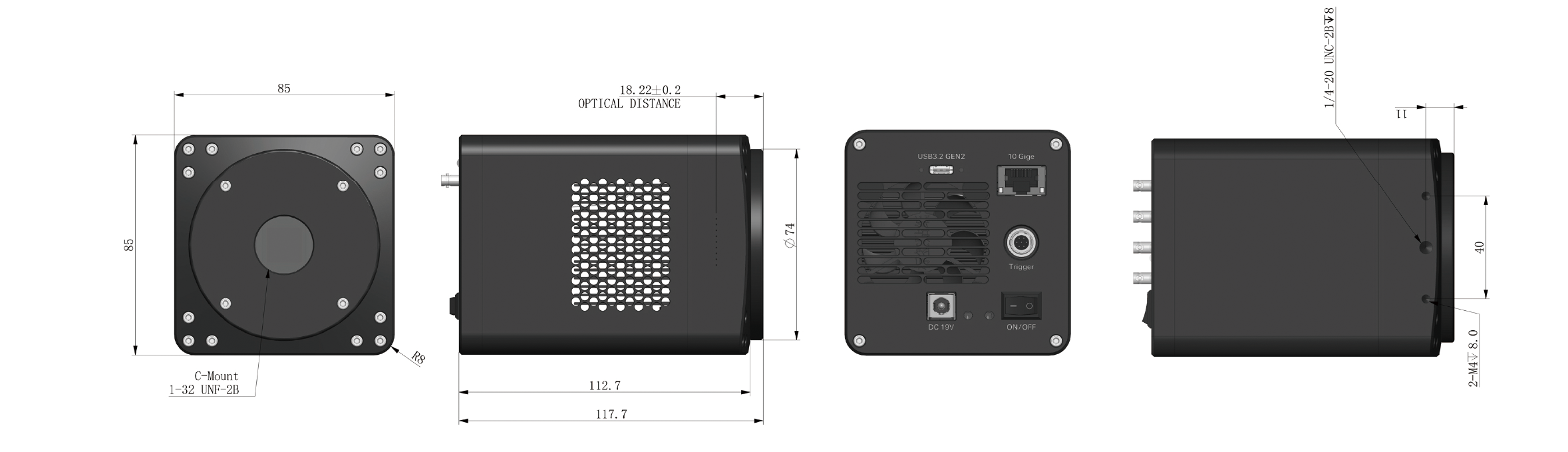
U10-10G air-cooled dimensions
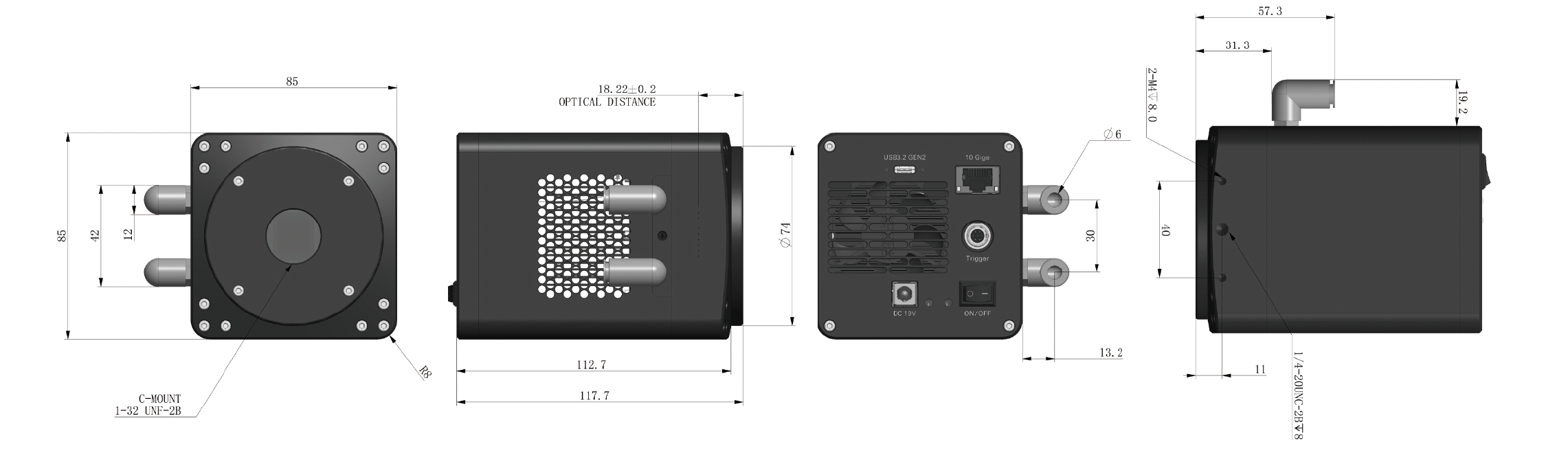
U10-10G water-cooled dimensions
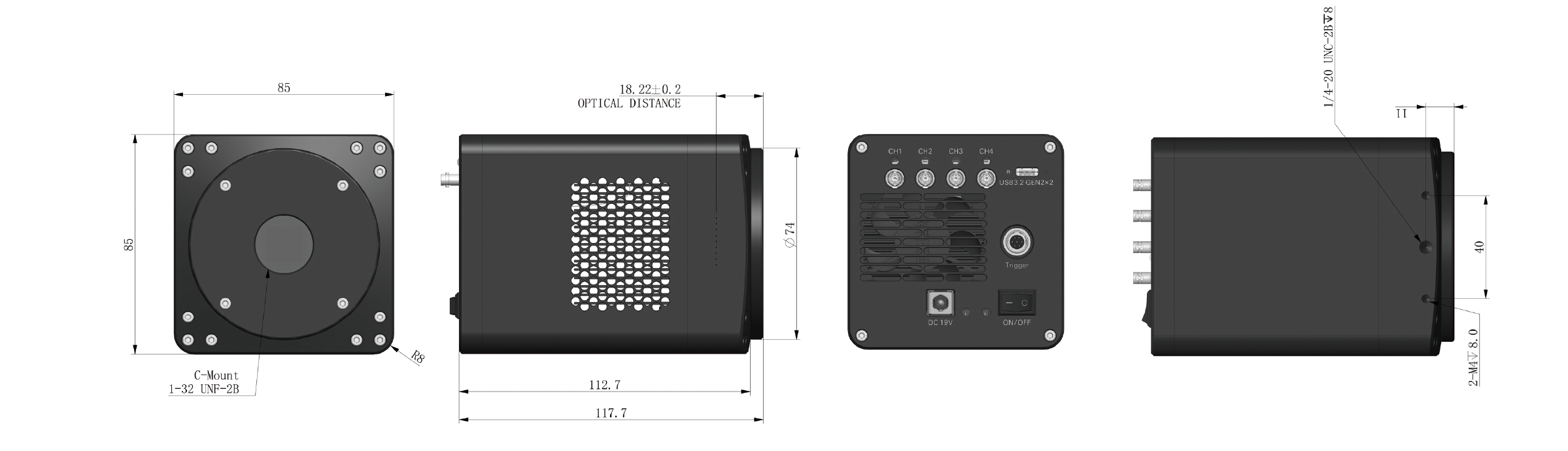
U20-CXP air-cooled dimensions
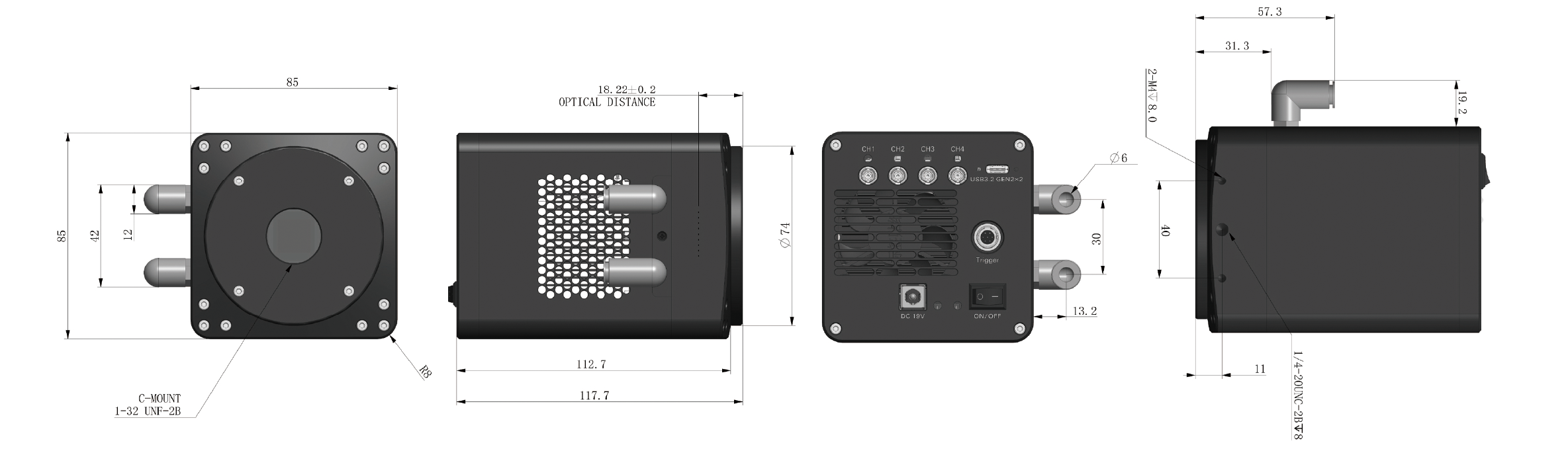
U20-CXP water-cooled dimensions
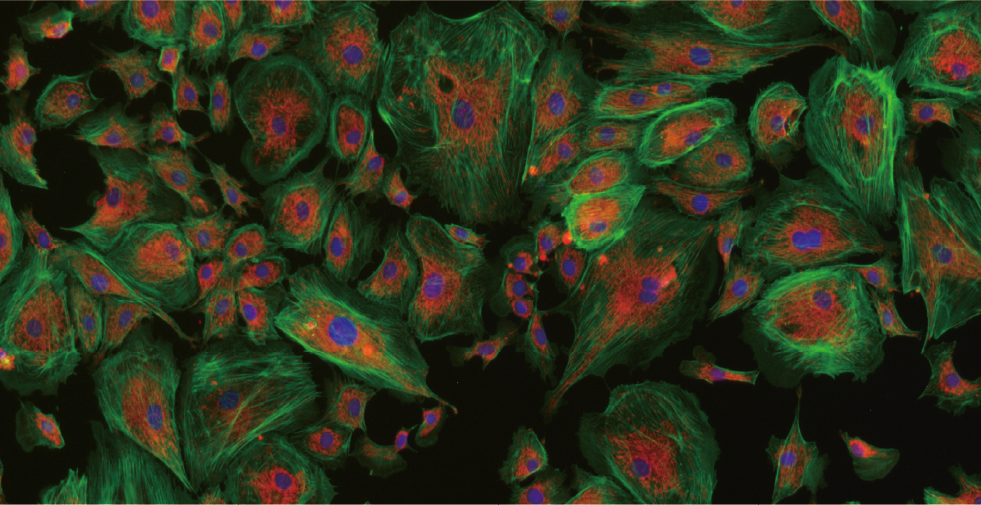
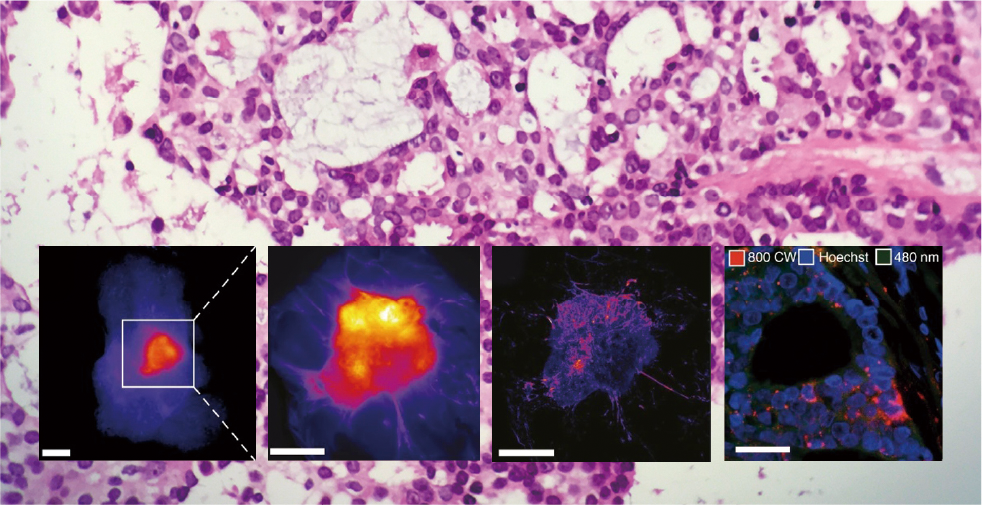
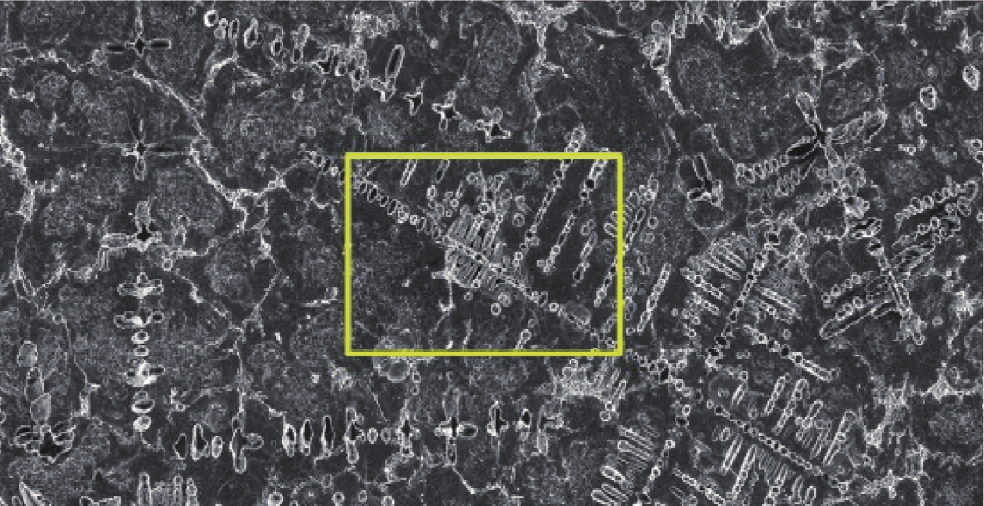
Applications
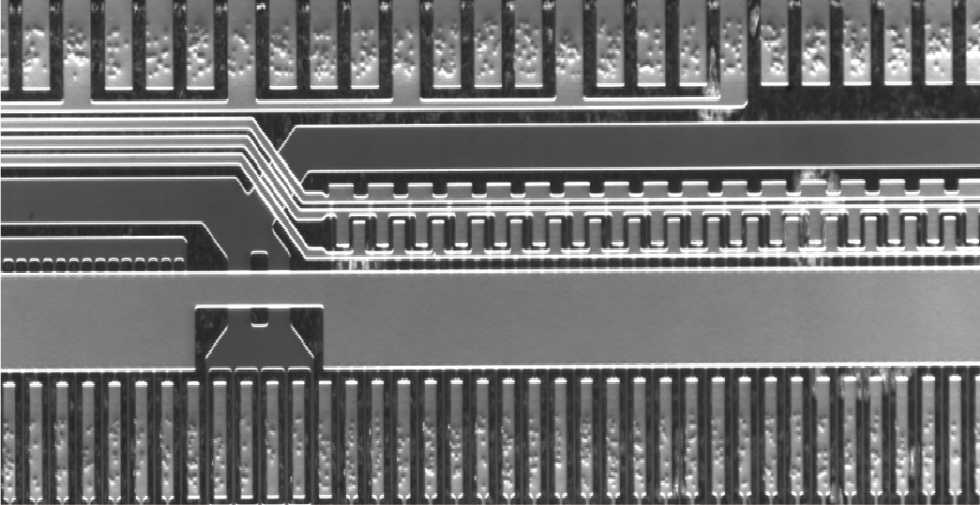
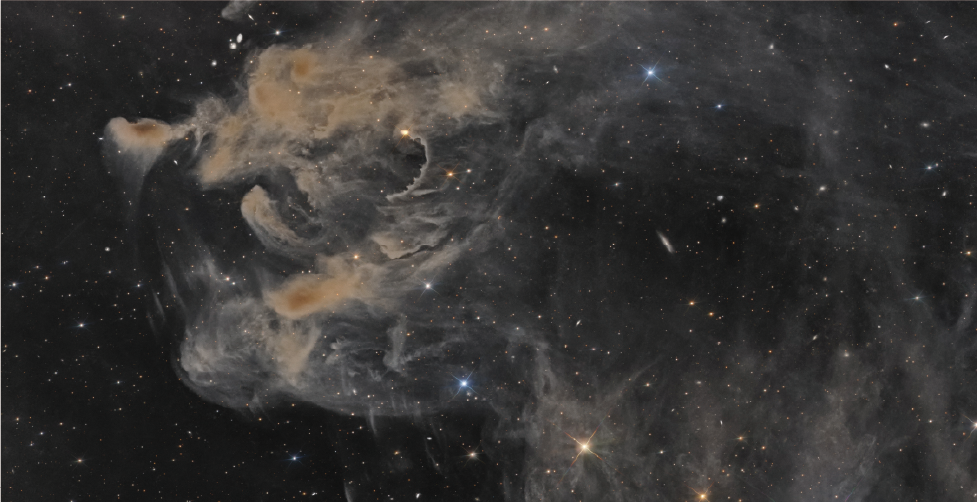
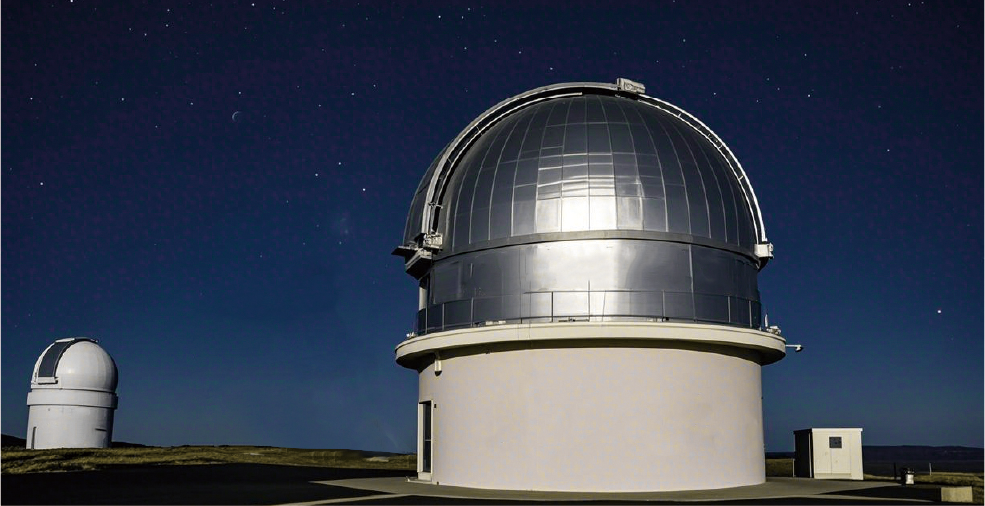
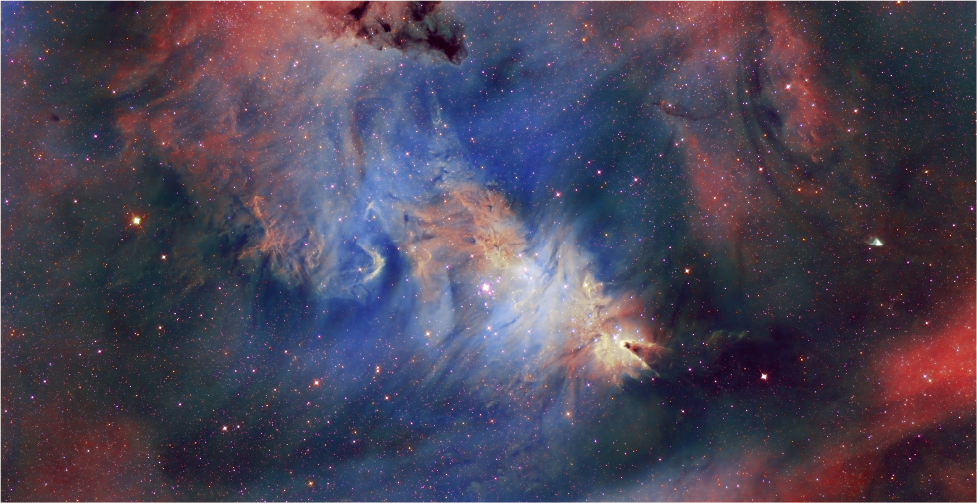
Frequently Asked Questions
Learn more about scientific CMOS cameras
- Ultra-low read noise: sCMOS read noise approaches 1 e⁻, far outperforming traditional CCDs.
- High frame rate: Parallel readout architecture supports 100 fps or higher.
- Wide dynamic range: Captures bright and dark regions simultaneously with ratios up to tens of thousands to one.
- Large field of view and high resolution: Suits high-resolution, wide-field imaging.
EMCCD cameras excel in ultra-low light or long-exposure conditions.
sCMOS delivers greater value for high-resolution, high-speed imaging with low noise.
In-Depth Product Overview
sCMOS Sensor Architecture
Each pixel has its own amplifier and column ADC for parallel readout, enabling high-speed, high-SNR imaging. Dual gain channels and dual ADC designs further expand dynamic range and sensitivity.
Low Noise + Wide Dynamic Range
Typical sCMOS noise is < 2 e⁻ (30 fps) with dynamic range up to 50,000:1—far exceeding traditional CCDs.
Fast Readout & Versatility
Parallel readout supports >100 fps for capturing fast events such as cell motion, fluorescence lifetime studies, and plasma dynamics.
Low-Light Performance
Back-illuminated sCMOS sensors achieve >95% QE from UV to NIR, with low fixed-pattern noise and cooling down to −30 °C for astronomy and other needs.
Application Scenarios & System Value
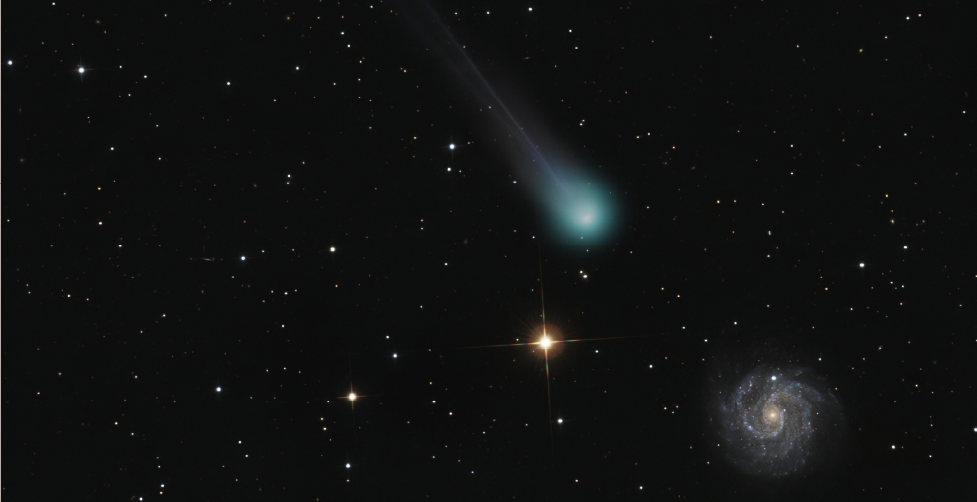
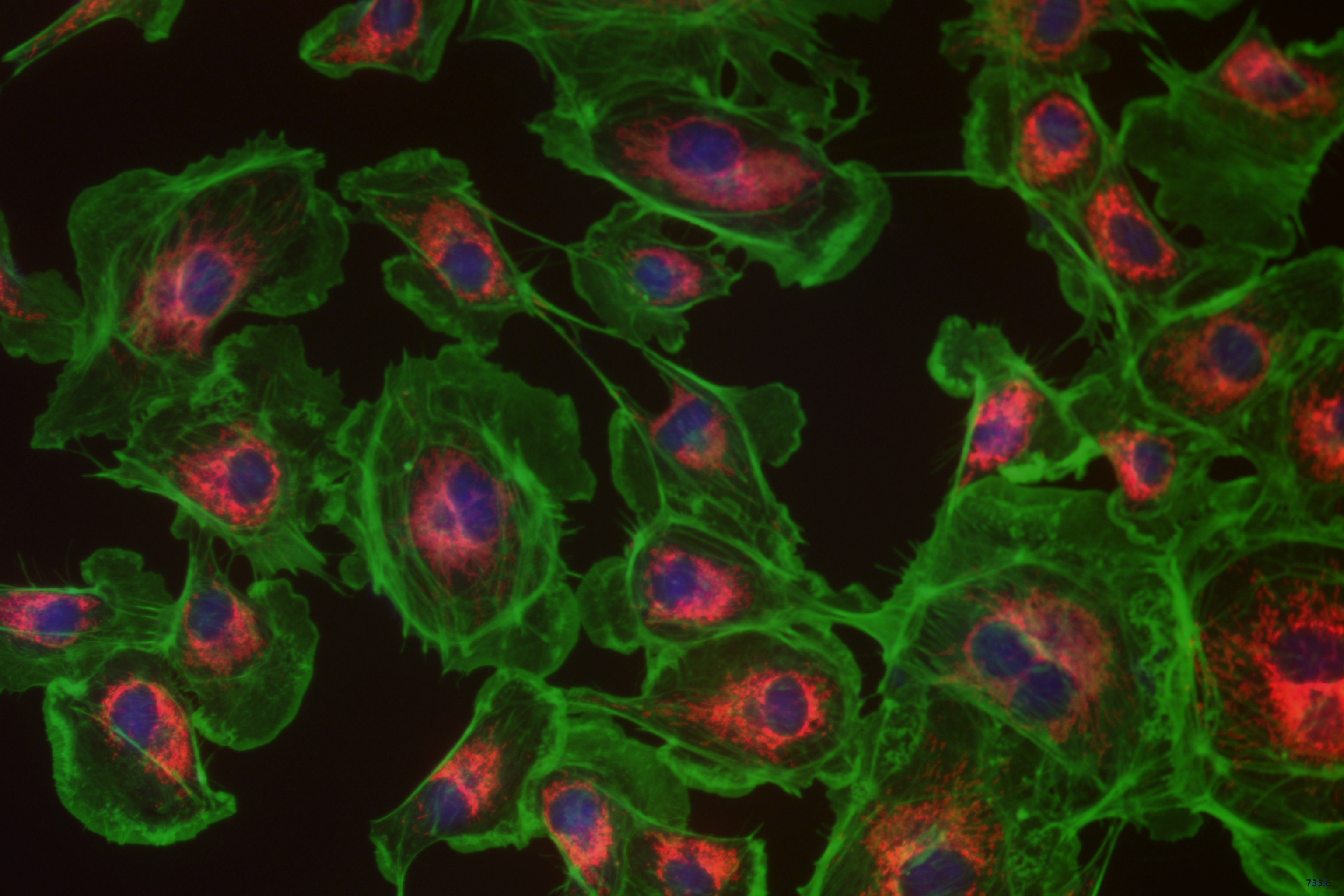
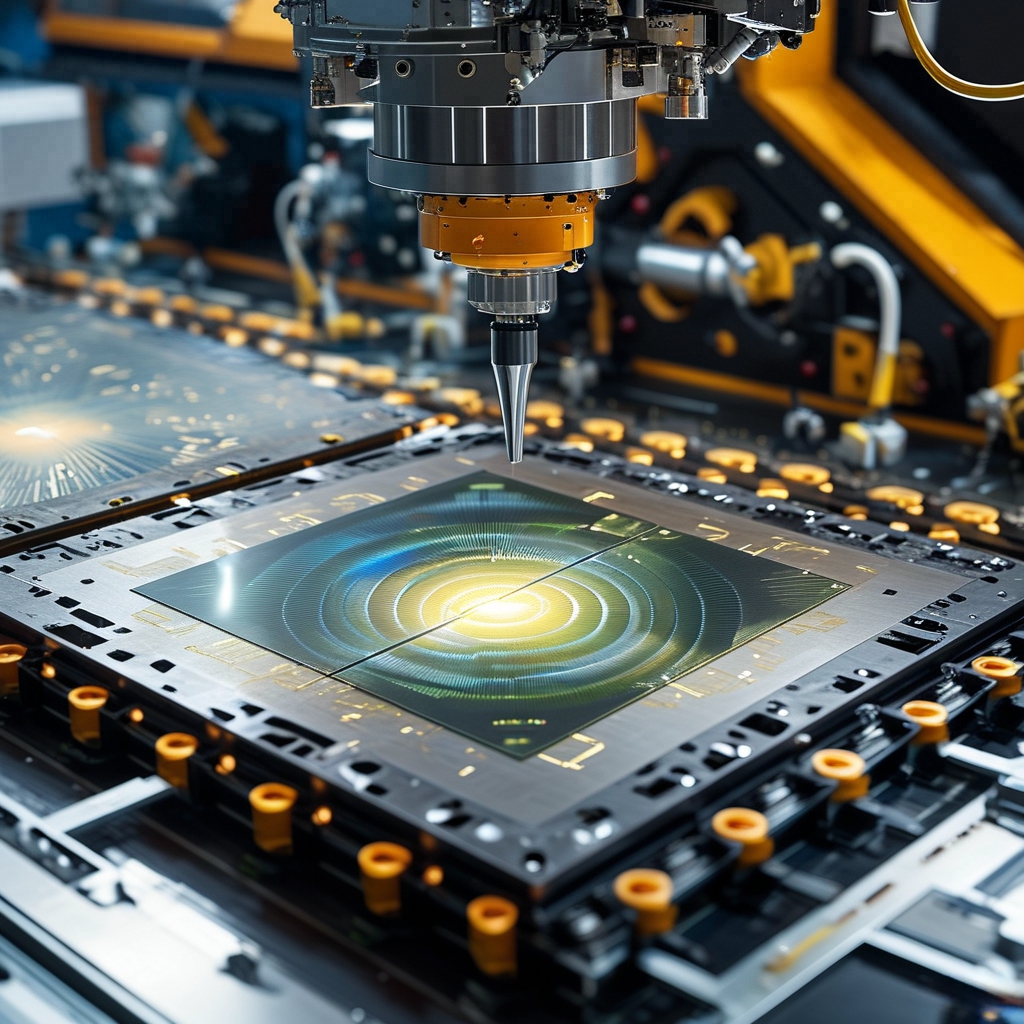
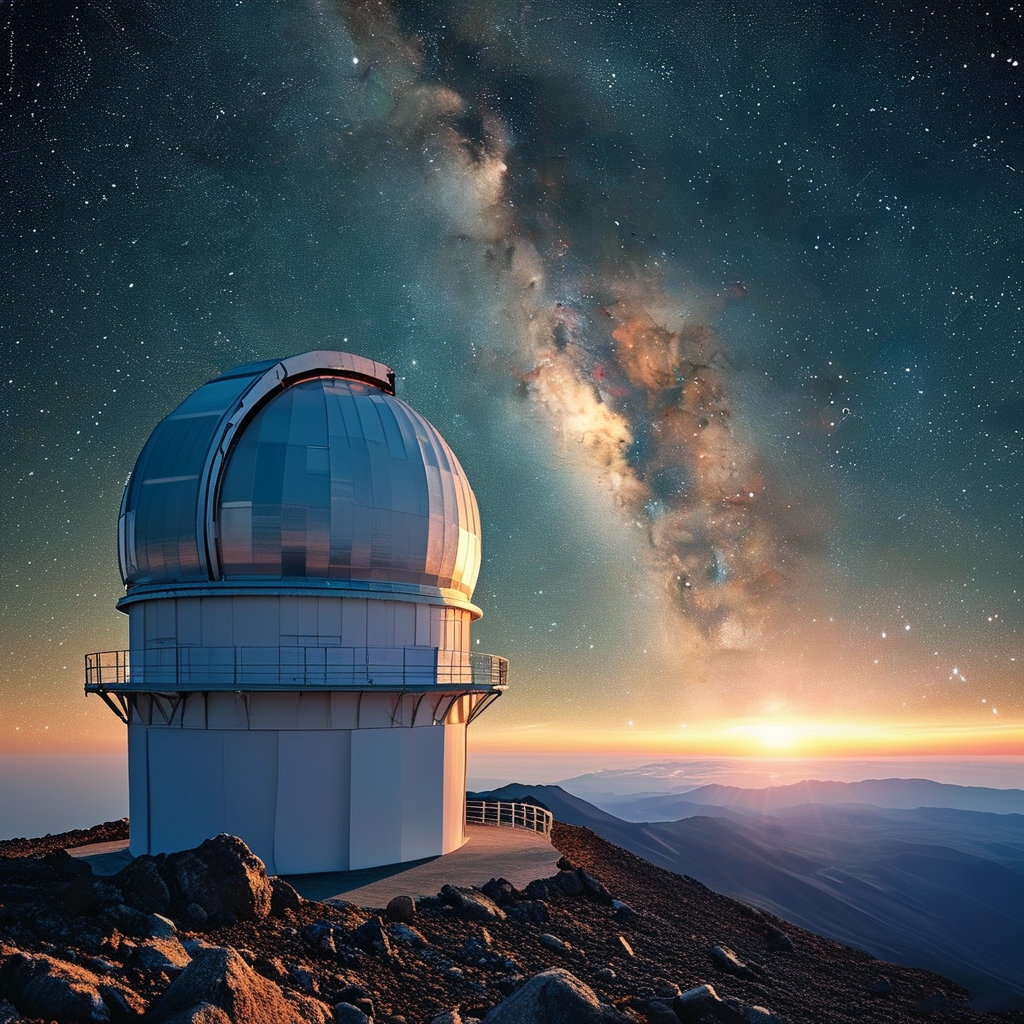
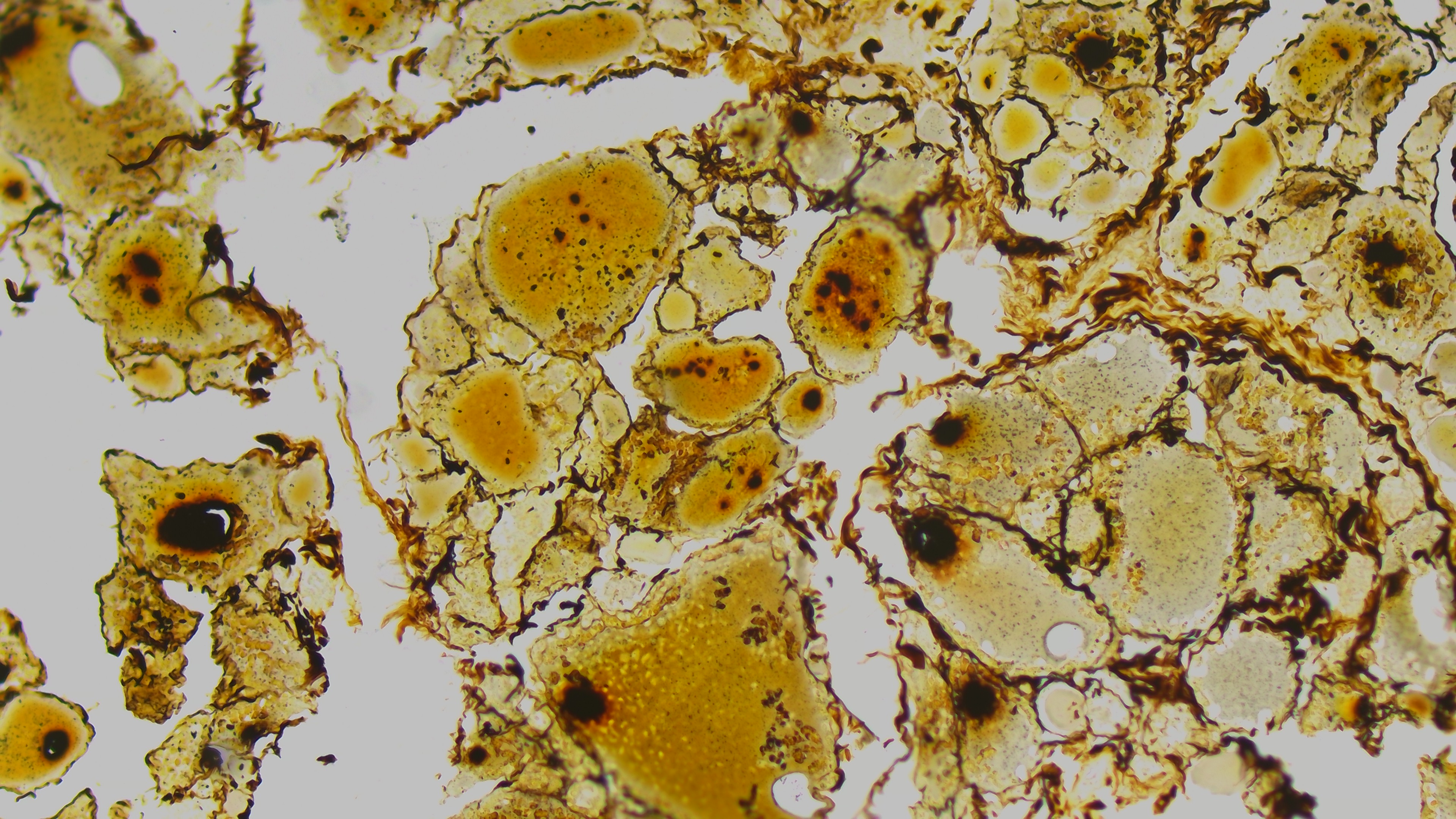
Ideal for fluorescence microscopy, astronomy, cold atom research, X-ray imaging, materials inspection, and industrial microscopy—delivering high sensitivity, precision, and adaptability.
Key Application Areas
Representative sCMOS applications


sCMOS Technology Advantages Summary
- Ultra-low read noise (<2 e⁻)
- High frame rate (>100 fps)
- Wide dynamic range (50,000:1)
- High quantum efficiency (>95%)
- Large FOV, high resolution
- Cooling capability (−30 °C)
- Parallel readout architecture
- Adaptable to diverse research needs