
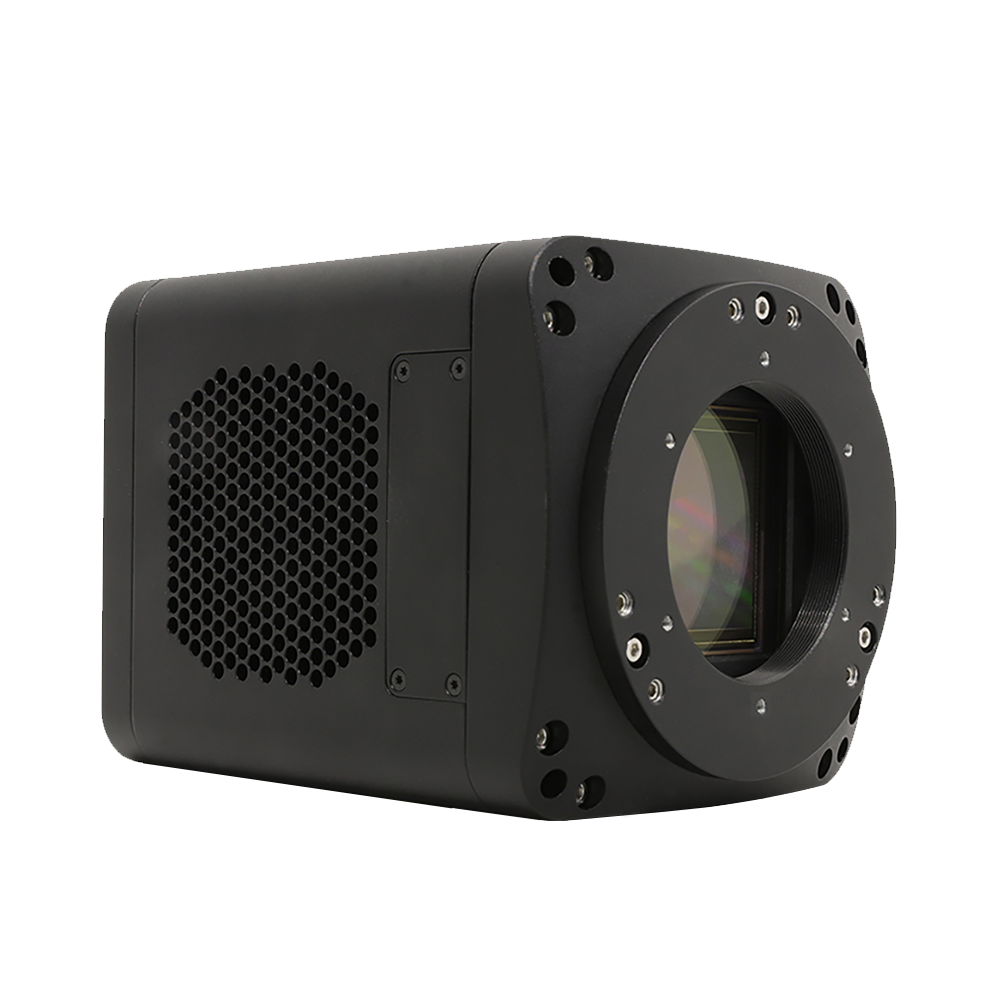
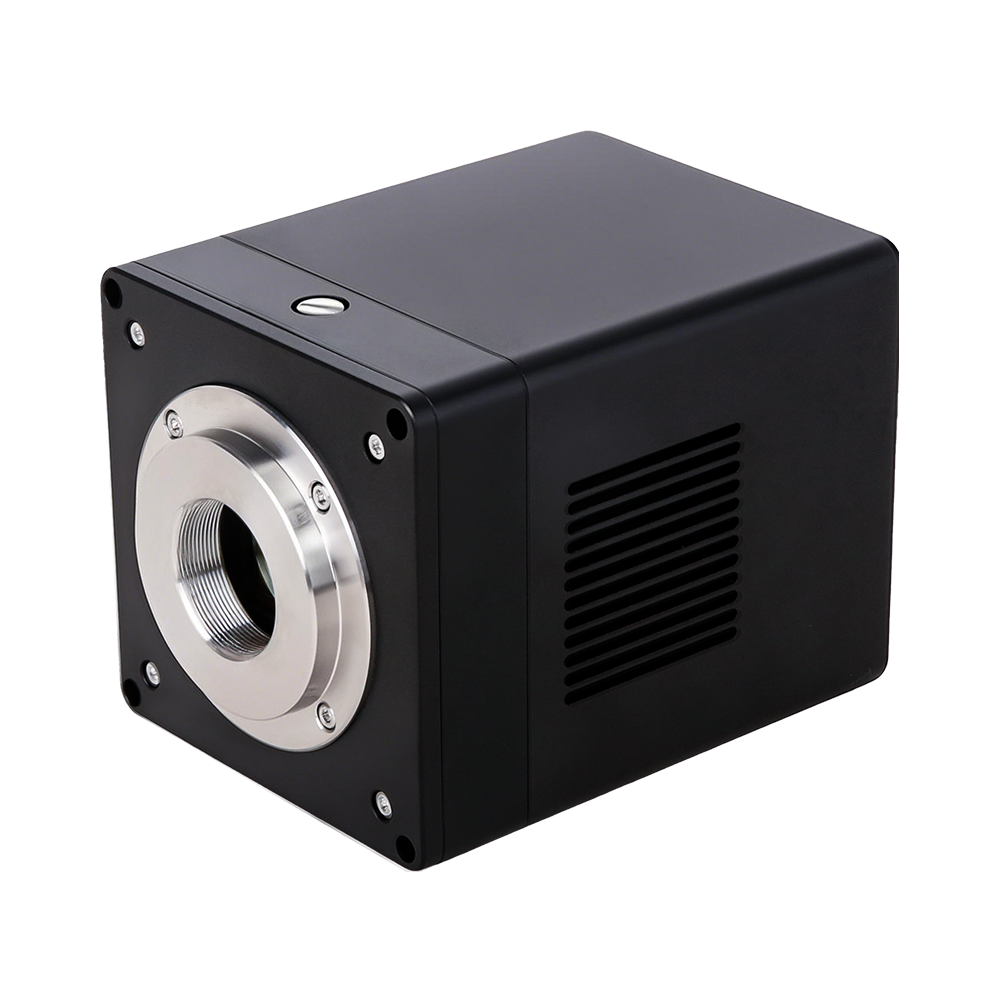
sMAX16BM-U3-CL Scientific Camera
Product Introduction
The sMAX16BM-U3-CL employs a GSENSE4040BSI back-illuminated sensor, providing 90% @ 550 nm ultra-high quantum efficiency and a wider spectral response range (200-1100 nm). Particularly suitable for applications requiring extremely high sensitivity such as fluorescence imaging, astronomical observation, and semiconductor inspection. The 3.2-inch large format combined with back-illuminated technology achieves exceptional low-light imaging performance.
Key Features
- GSENSE4040BSI back-illuminated sCMOS sensor
- Ultra-high quantum efficiency: 90% @ 550 nm
- Ultra-wide spectral response: 200 nm – 1100 nm
- Ultra-high resolution: 4096×4096 (16.8 MP)
- 3.2-inch large format, 36.9 mm × 36.9 mm
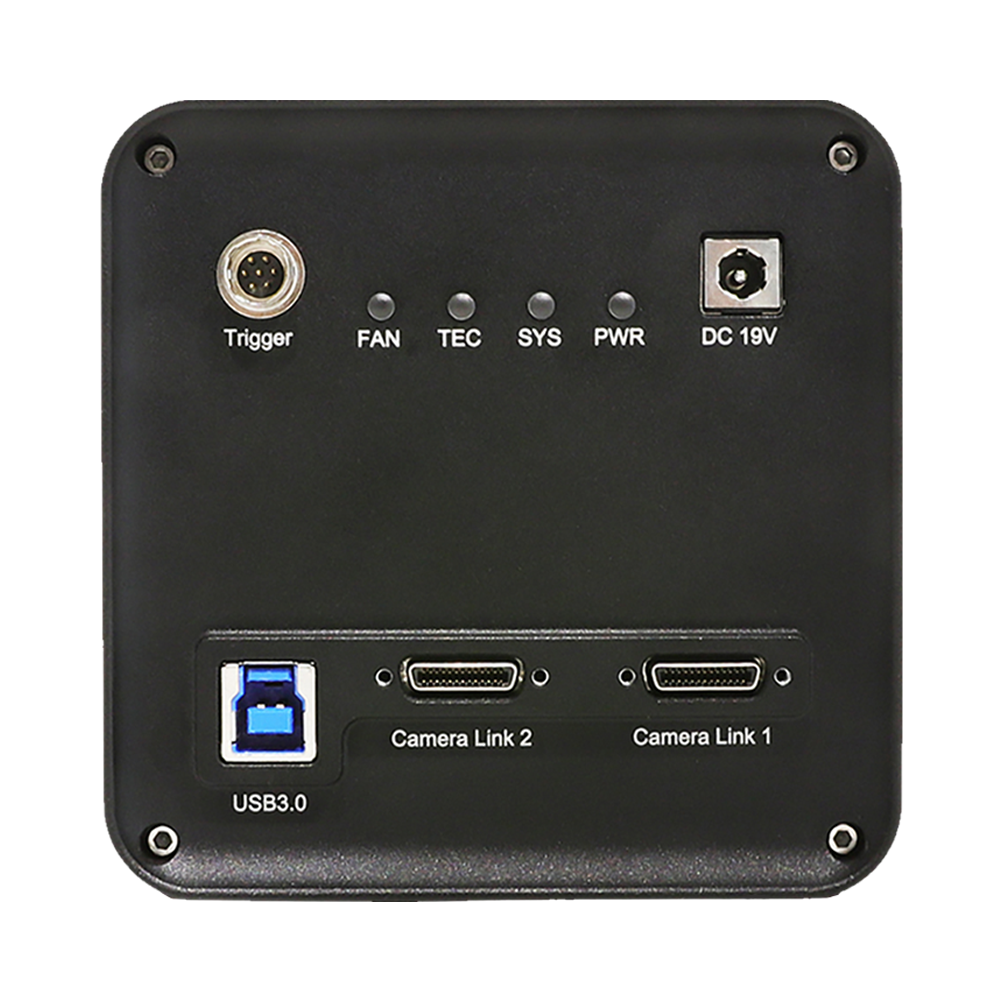
- Dual-interface design: USB 3.0 + Camera Link
- Dual-stage TEC cooling, cooling temperature difference ≥ 40 °C
- Ultra-long exposure capability: 12 µs – 3600 s
- High sensitivity: 26.58 V/(lux·s) @ 550 nm
- 1024 MB (8 Gb) large-capacity cache
- Low dark current: 0.15 e⁻/pixel/s
- M54×0.75 professional lens mount
- High/low gain dual modes: HCG/LCG selectable
- Global reset and rolling shutter modes support
- Suitable for UV to NIR full-spectrum imaging
Product Details
| Specifications | |
| Model | sMAX16BM-U3-CL |
| Sensor | GSENSE4040BSI (sCMOS) |
| Shutter Type | Rolling shutter |
| Color Type | Monochrome |
| Resolution | 16.8 MP (4096×4096) |
| Sensor Size | 36.9 mm × 36.9 mm |
| Sensor Diagonal | 4.1" (52.18 mm) |
| Pixel Size | 9 µm × 9 µm |
| Performance Parameters | |
| Frame Rate | 20 fps @ 4096×4096 (USB3); 23 fps @ 4096×4096 (Camera Link) |
| Exposure Time | 12 µs ~ 1 h |
| Bit Depth | 8/12/16-bit |
| Dynamic Range | 55.0 dB (HCG) / 62.4 dB (LCG) (12-bit) |
| Sensitivity | 26.58 V/(lux·s) @ 550 nm |
| Interface Parameters | |
| GPIO | 1 opto-isolated input, 1 opto-isolated output, 2 non-isolated I/O ports |
| Lens Mount | M54 × 0.75 |
| Data Interface | USB3/Camera Link |
| Power Supply | 19 V 4.74 A DC |
| Physical Parameters | |
| Dimensions | 100 mm × 100 mm × 127.7 mm |
| Weight | 1317 g |
| Environmental Parameters | |
| Operating Temperature | -30 °C to +45 °C |
| Operating Humidity | 0 – 95% |
| Storage Temperature | -40 °C to +60 °C |
| Storage Humidity | Available on request |
| Other Parameters | |
| Operating System | Windows/Linux |
| Certification | Available on request |
Product Overview
sMAX16BM-U3-CL is a scientific-grade cooled camera featuring a GSENSE4040BSI (sCMOS) back-illuminated sCMOS image sensor with the following characteristics:
- High-resolution imaging: 16.8 MP (4096×4096) resolution, 9 µm × 9 µm pixel size, sensor format 36.9 mm × 36.9 mm
- Shutter design: Features Rolling shutter design, supports monochrome imaging, suitable for fluorescence imaging, spectral analysis, gene sequencing and other scientific applications
- High-speed data transmission: Supports USB3/Camera Link high-speed data interface, maximum frame rate up to 20 fps @ 4096×4096 (USB3); 23 fps @ 4096×4096 (Camera Link) , data output formats include 8/12/16-bit
- Excellent dynamic range: Dynamic range up to 55.0 dB (HCG) / 62.4 dB (LCG) (12-bit) , sensitivity of 26.58 V/(lux·s) @ 550 nm
- Cooling system: Built-in cooling stabilizes the sensor and effectively reduces dark current
- Rich interfaces: Supports GPIO interface, lens mount is standard M54 × 0.75 interface
- Compact design: Overall dimensions 100 mm × 100 mm × 127.7 mm , weight approximately 1317 g , power supply 19 V 4.74 A DC
- Full platform support: Supports Windows/Linux systems, includes ToupView software and cross-platform SDK, supports C/C++, C#, Python and other mainstream development languages
Core Performance Metrics
Frame Rate
Up to 20 fps @ 4096×4096 (USB3); 23 fps @ 4096×4096 (Camera Link)
Resolution
16.8 MP (4096×4096)
Dynamic Range
55.0 dB (HCG) / 62.4 dB (LCG) (12-bit)
Scientific Imaging Features
Back-illuminated Sensor
Features back-illuminated sCMOS sensor with higher quantum efficiency, particularly suitable for weak light imaging applications
Cooling Noise Reduction
Built-in cooling system effectively reduces dark current and noise, improving image quality and signal-to-noise ratio
High Sensitivity
Sensitivity reaches 26.58 V/(lux·s) @ 550 nm , meeting high-precision requirements for scientific imaging
Flexible Control
Supports ROI, binning, trigger control and other functions, adapting to different research requirements
The sMAX16BM-U3-CL camera, with its excellent scientific imaging performance, stable cooling system, and rich interface configuration, is an ideal choice for research institutions, medical facilities, and high-end industrial applications, capable of meeting various precision imaging and analysis requirements.
sMAX16BM-U3-CL Product Manual
PDF format, includes detailed technical parameters and dimensional structure
SDK Development Kit
Supports Windows, Linux, macOS and other multi-platforms
3D Model Files
STEP format, for mechanical design integration
Package Contents #
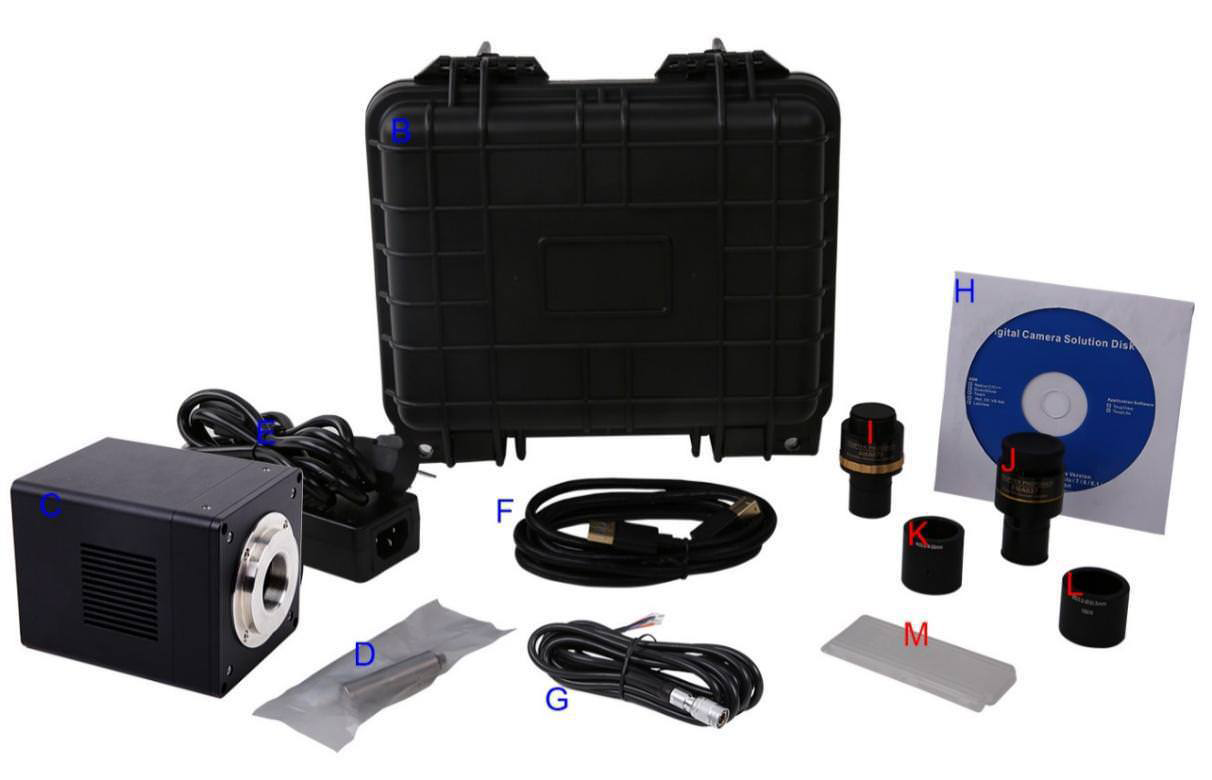
Package list for model sMAX16BM-U3-CL (USB3 Cooled)
USB3 Cooled
- Camera body (USB3.0)
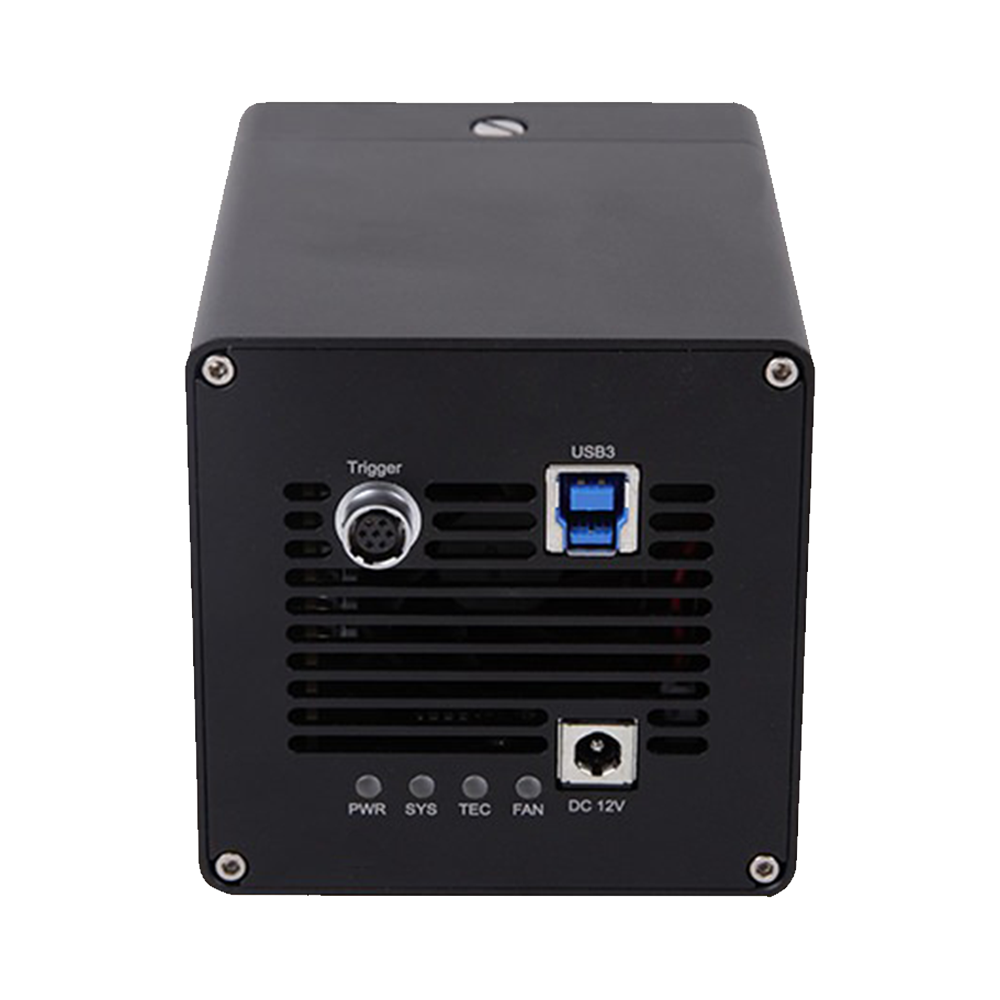
- Power adapter: AC 100~240 V 50/60 Hz → DC 12 V 3 A
- I/O cable: 7-pin cable or extension cable
- USB3.0 cable
- Lens (optional) C-mount
Product Dimensions #
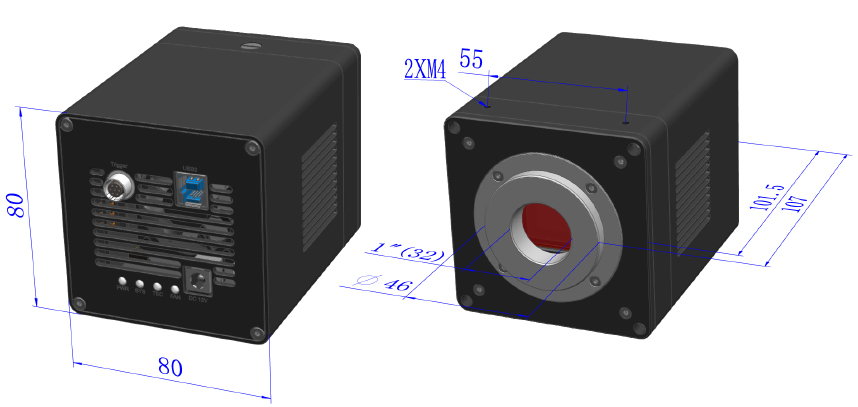
Dimensions for model sMAX16BM-U3-CL (USB3 interface (cooled))
Frequently Asked Questions
Learn more about scientific CMOS cameras
- Ultra-low read noise: sCMOS read noise approaches 1 e⁻, far outperforming traditional CCDs.
- High frame rate: Parallel readout architecture supports 100 fps or higher.
- Wide dynamic range: Captures bright and dark regions simultaneously with ratios up to tens of thousands to one.
- Large field of view and high resolution: Suits high-resolution, wide-field imaging.
EMCCD cameras excel in ultra-low light or long-exposure conditions.
sCMOS delivers greater value for high-resolution, high-speed imaging with low noise.
In-Depth Product Overview
sCMOS Sensor Architecture
Each pixel has its own amplifier and column ADC for parallel readout, enabling high-speed, high-SNR imaging. Dual gain channels and dual ADC designs further expand dynamic range and sensitivity.
Low Noise + Wide Dynamic Range
Typical sCMOS noise is < 2 e⁻ (30 fps) with dynamic range up to 50,000:1—far exceeding traditional CCDs.
Fast Readout & Versatility
Parallel readout supports >100 fps for capturing fast events such as cell motion, fluorescence lifetime studies, and plasma dynamics.
Low-Light Performance
Back-illuminated sCMOS sensors achieve >95% QE from UV to NIR, with low fixed-pattern noise and cooling down to −30 °C for astronomy and other needs.
Application Scenarios & System Value
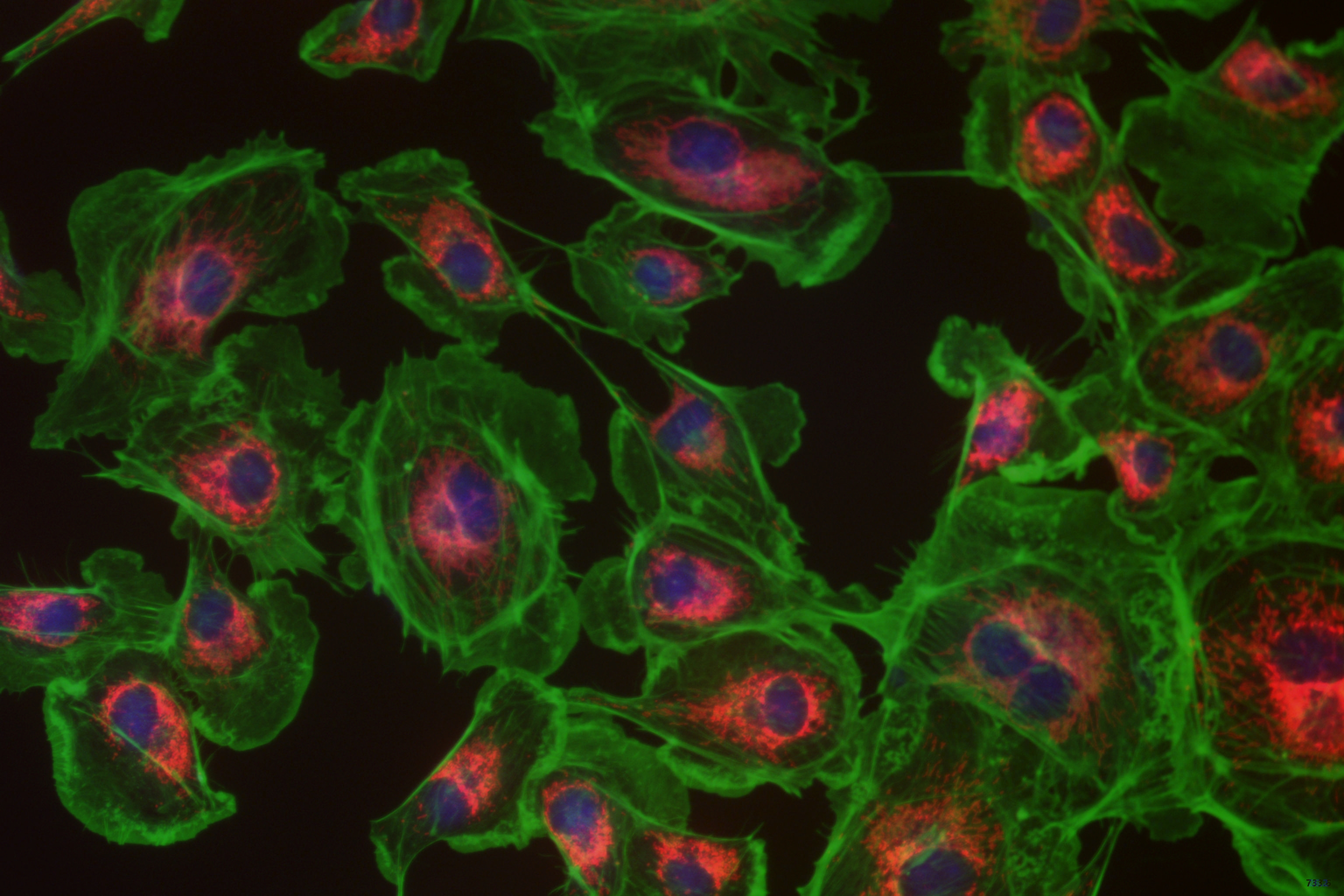
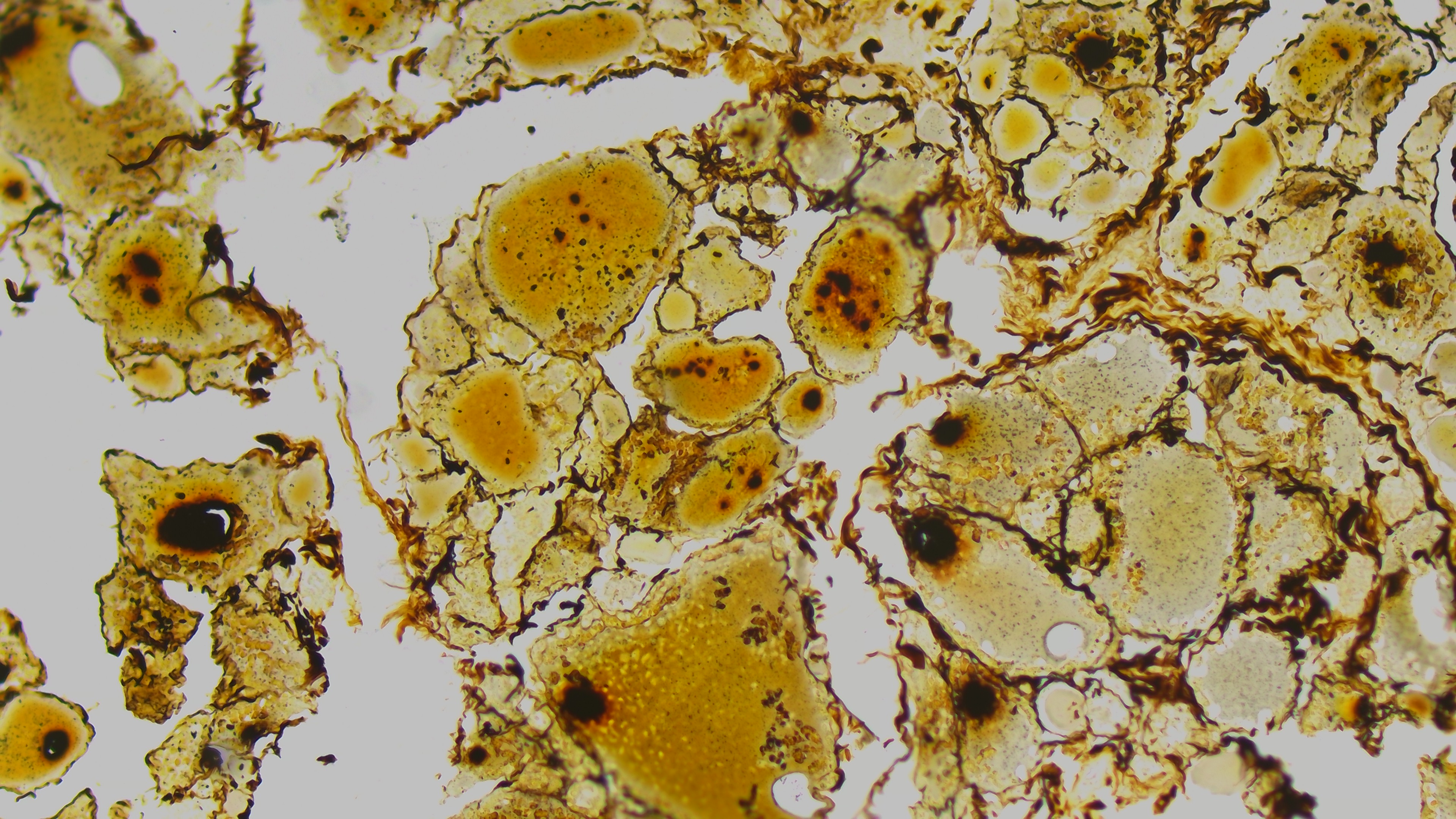
Ideal for fluorescence microscopy, astronomy, cold atom research, X-ray imaging, materials inspection, and industrial microscopy—delivering high sensitivity, precision, and adaptability.
Key Application Areas
Representative sCMOS applications




sCMOS Technology Advantages Summary
- Ultra-low read noise (<2 e⁻)
- High frame rate (>100 fps)
- Wide dynamic range (50,000:1)
- High quantum efficiency (>95%)
- Large FOV, high resolution
- Cooling capability (−30 °C)
- Parallel readout architecture
- Adaptable to diverse research needs