
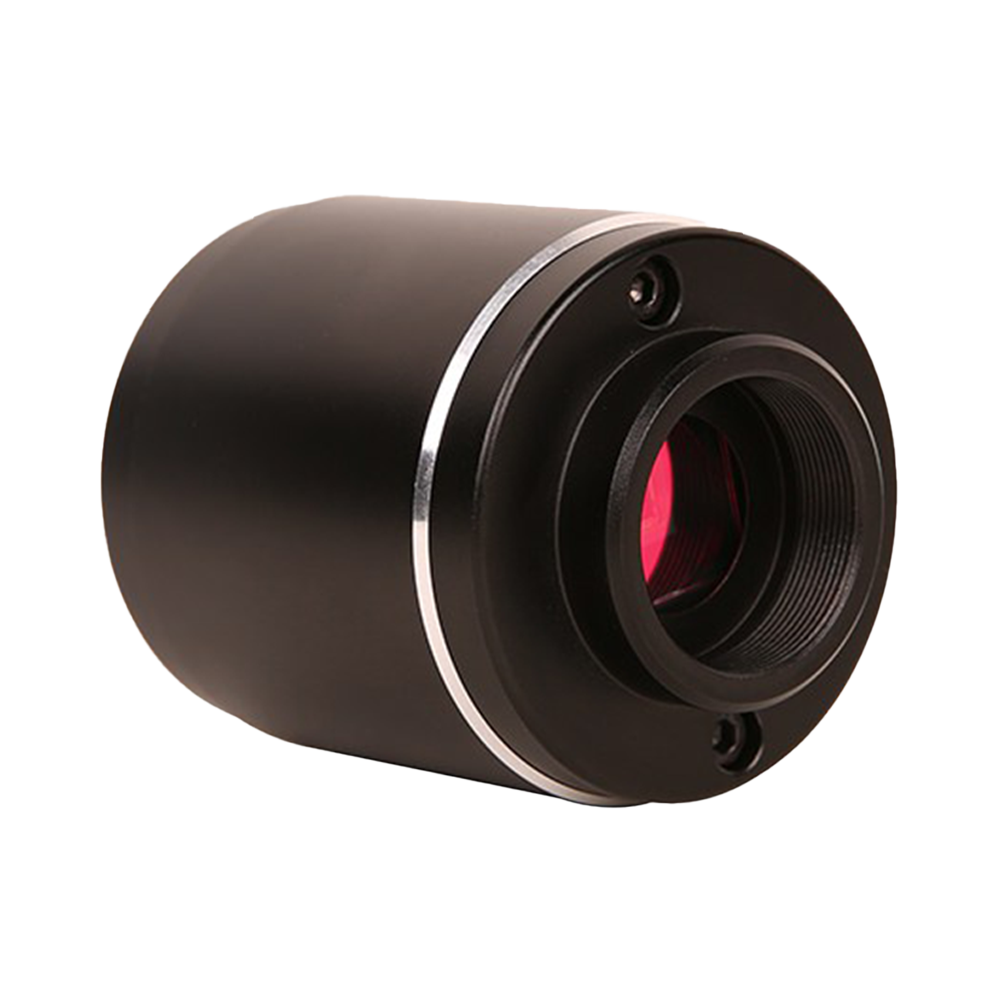
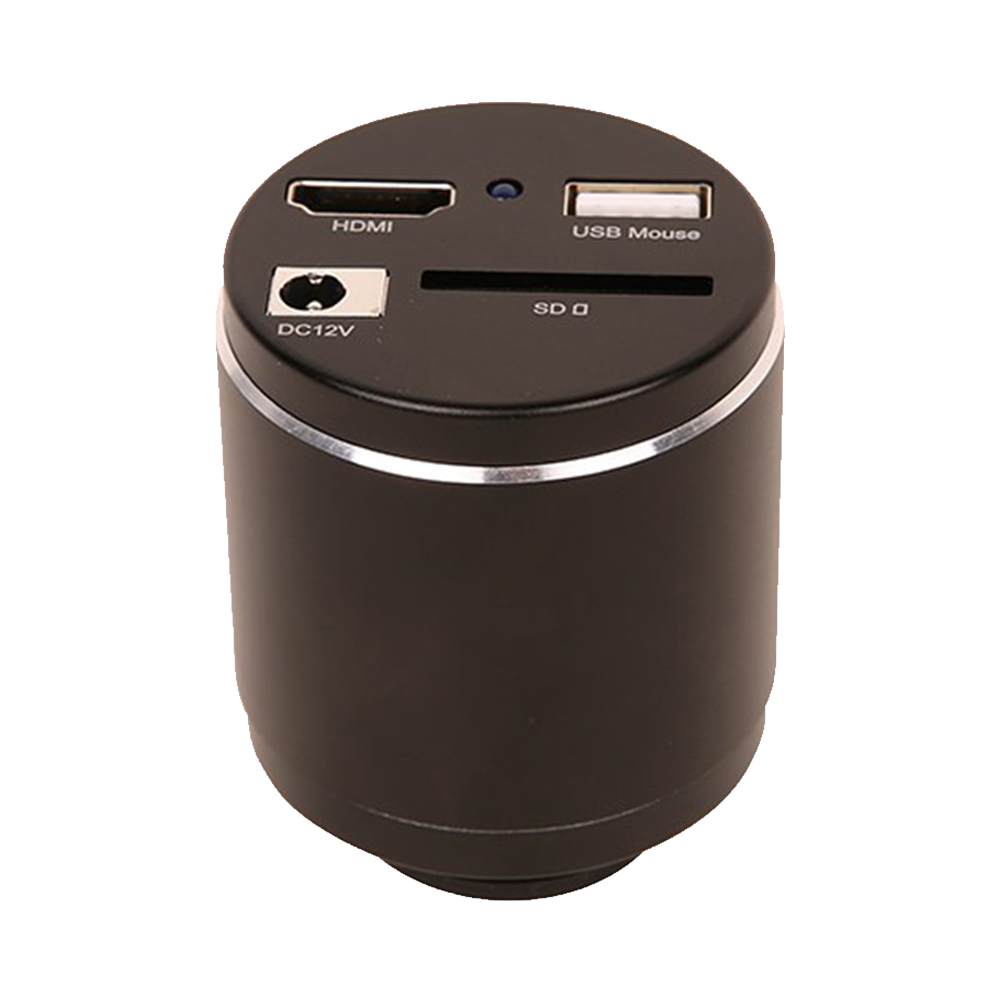
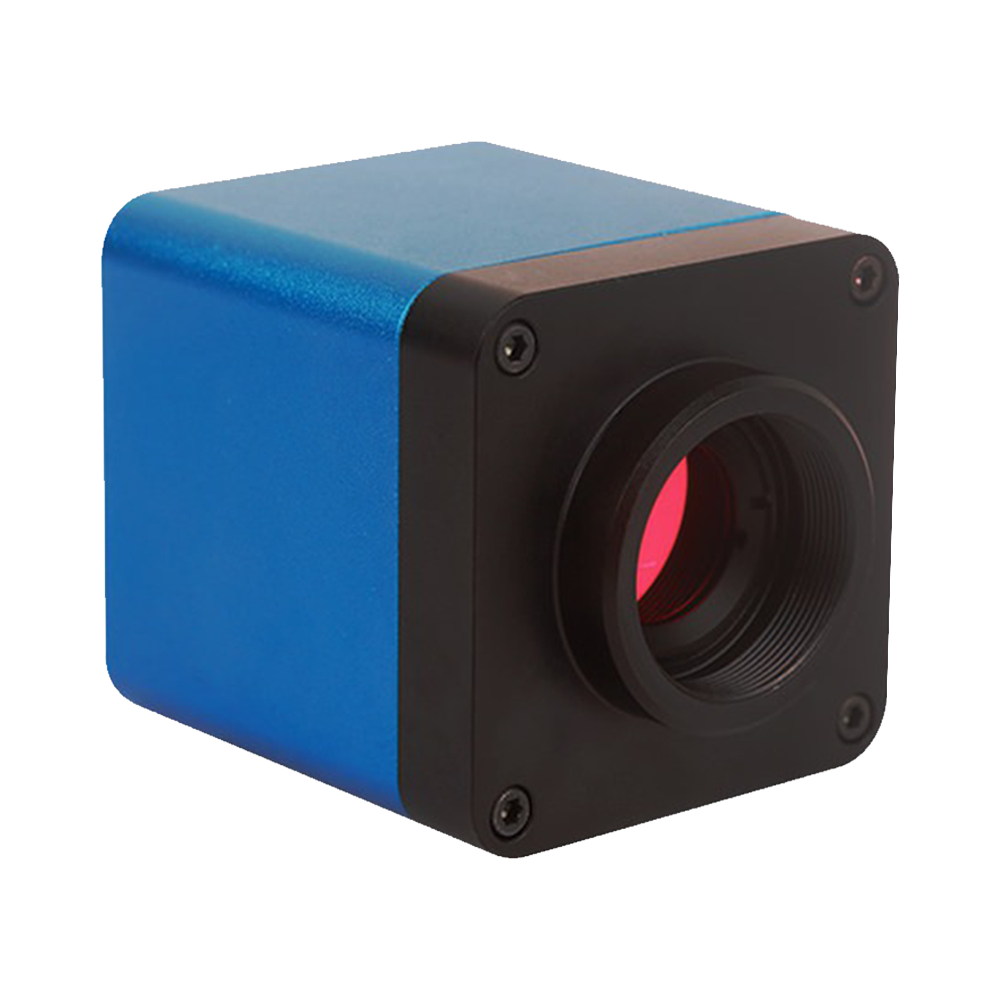
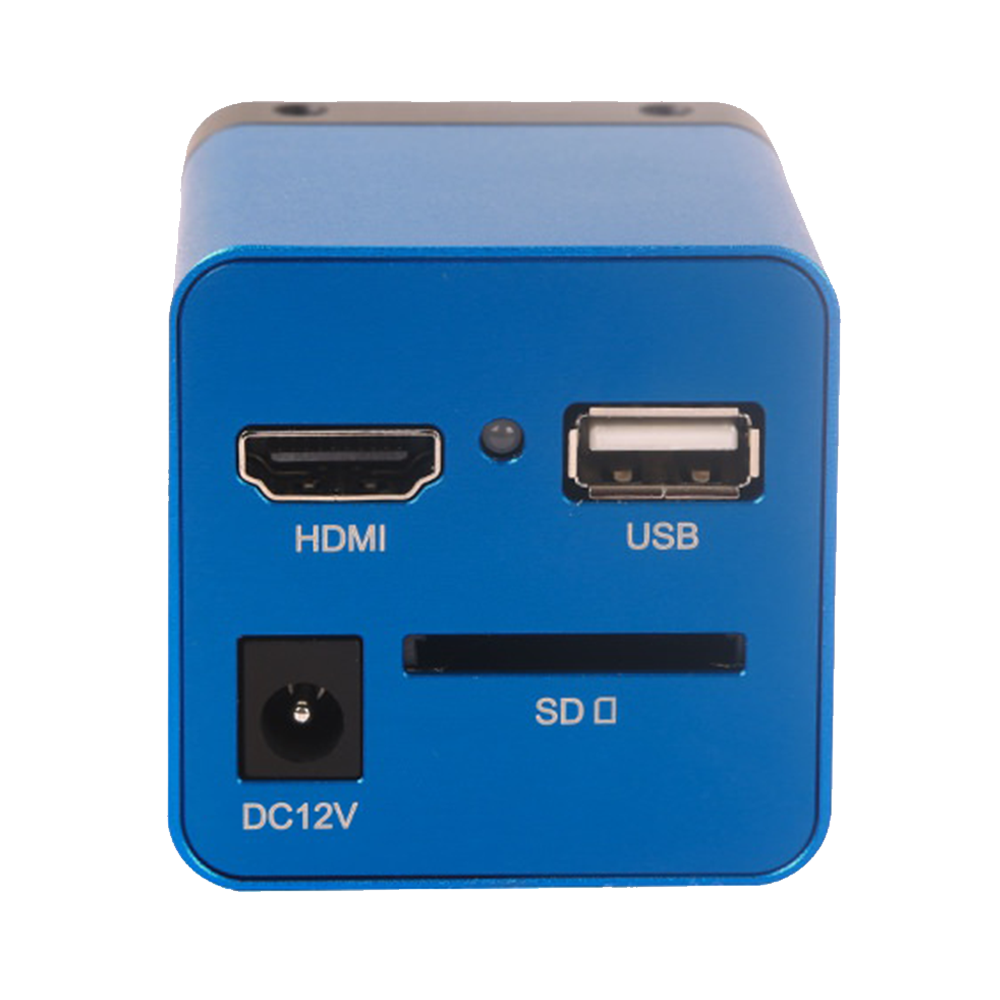


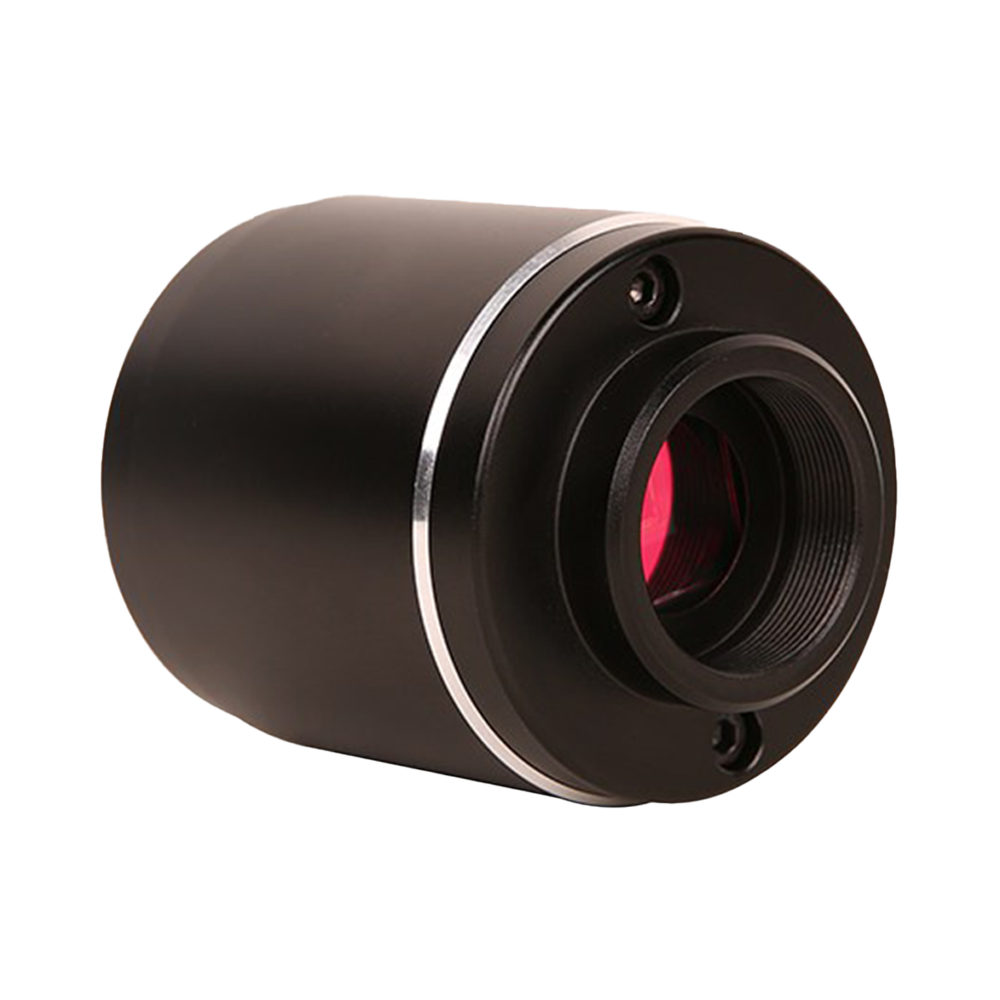
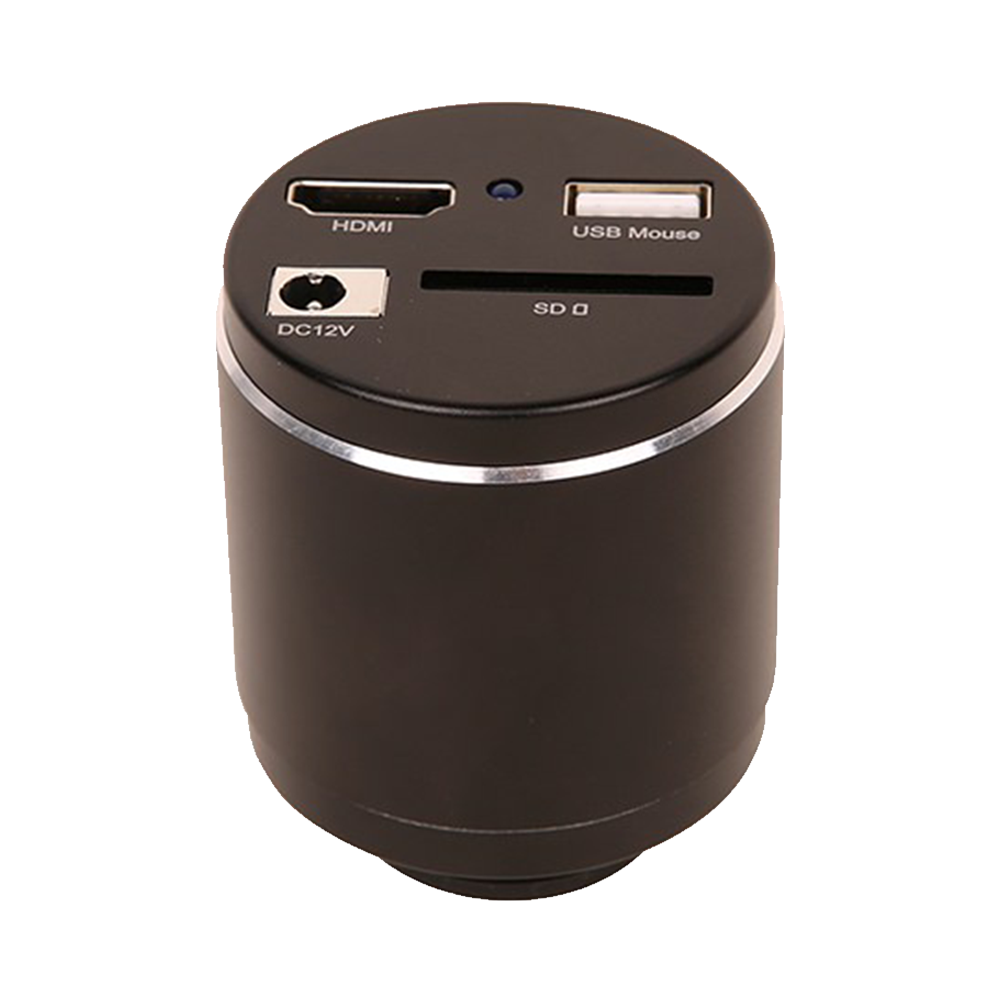
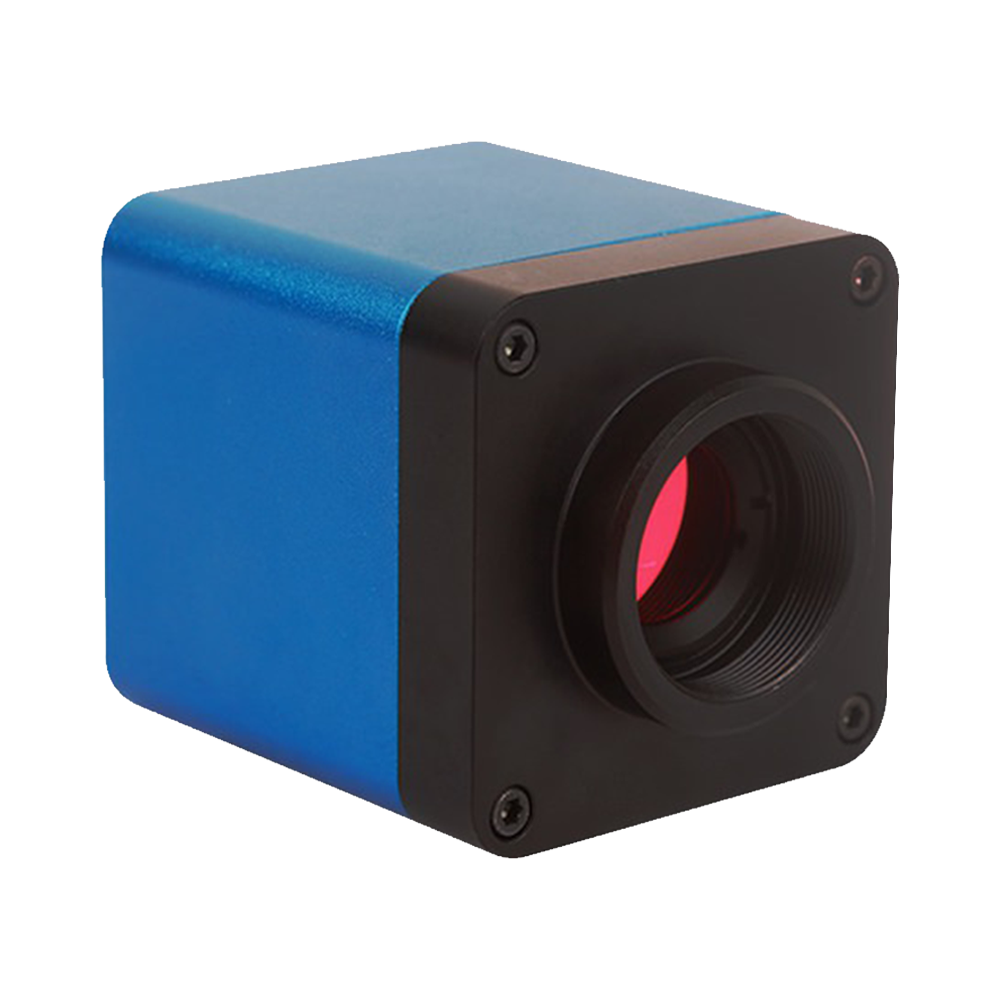
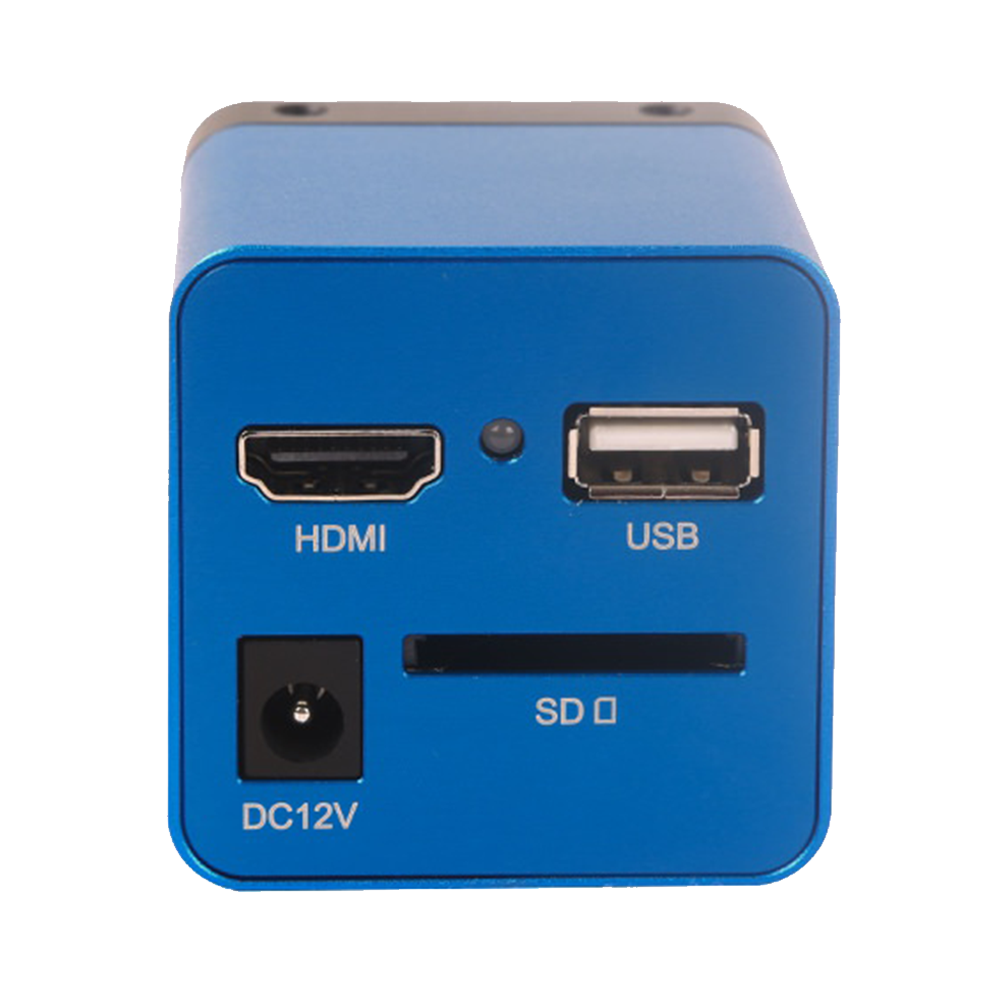
XCAMLITE1080P Series
Product Introduction
Direct HDMI display connection, high frame rate output, built-in measurement and overlay functions, supports real-time observation and industrial inspection with compact structure for easy integration.
Product Features
- Sony Starvis back-illuminated CMOS sensor
- HDMI interface output
- SD card saves captured images or videos
- Built-in XCamView software for camera control
- Powerful ISP and other related processing functions
XCAMLITE1080P Series
HDMI output compact C-mount camera
| Model | Sensor/Size | Effective Pixels | Output Resolution | Frame Rate (fps) | Output Interface | Auto Focus | Lens Mount | Storage Support | Featured Functions |
|---|---|---|---|---|---|---|---|---|---|
| XCAMLITE1080PA |
Sony IMX307(C)
1/2.8" (5.57×3.13 mm)
|
2.9 µm × 2.9 µm | 2MP (1920×1080) | HDMI: 60 fps @ 1920×1080 | HDMI1.4 | C-mount | SD card | High frame rate output Image measurement Video recording Graphics overlay Multi-language menu Mouse control |
XCAMLITE1080P Multi-Interface Camera | Packing List #
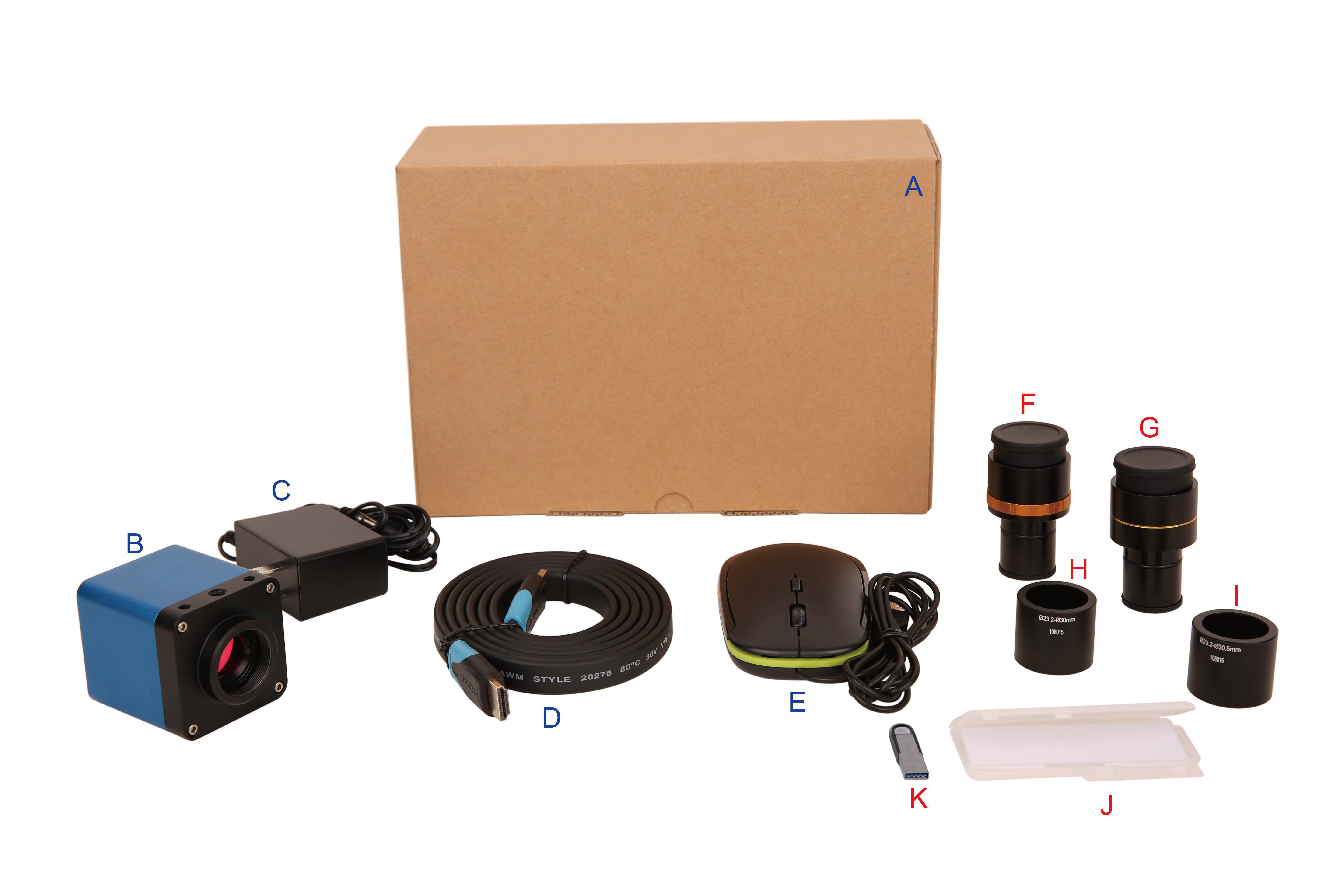
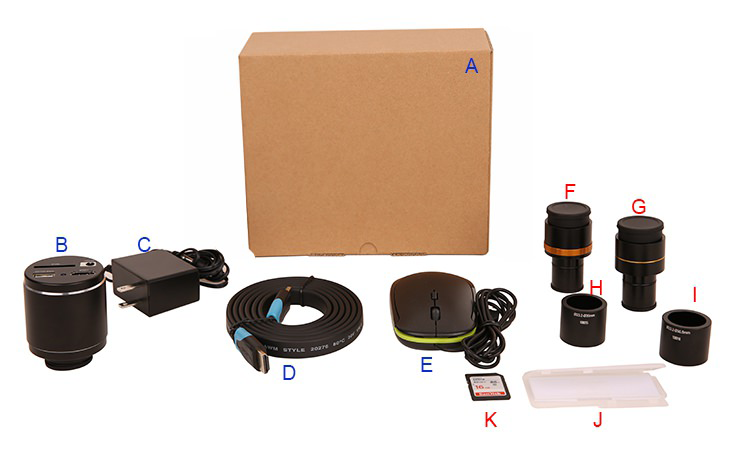
Standard Packing List
- A Camera box dimensions: 17.4 cm × 17.4 cm × 7.6 cm (1 pcs, 0.54 kg per box)
- B XCAMLITE1080P series camera ×1 (square or round model)
- C Power adapter: Input AC 100~240 V 50/60 Hz, output DC 12 V 1 A; US POWER-U-12V1A (MSA-C1000IC12.0-12W-US: UL/CE/FCC), EU POWER-E-12V1A (MSA-C10001C12.0-12W-DE: UL/CE/FCC); EMI: FCC Part 15 Subpart B; EMS: EN61000-4-2/3/4/5/6
- D HDMI cable
- E USB mouse (wireless mouse option available)
Optional Accessories
-
F Adjustable eyepiece tube adapters
Dia.23.2 mm eyepiece to C-mount: 108001/AMA037, 108002/AMA050, 108003/AMA075 (choose based on camera and microscope).
-
G Fixed eyepiece tube adapters
Dia.23.2 mm eyepiece to C-mount: 108005/FMA037, 108006/FMA050, 108007/FMA075. Note: Confirm camera model (C-mount) before choosing F or G; engineers can assist.
- H 108015 (Dia.23.2 mm→30.0 mm) adapter ring for 30 mm eyepiece tubes
- I 108016 (Dia.23.2 mm→30.5 mm) adapter ring for 30.5 mm eyepiece tubes
- J Micrometer: 106011/TS-M1 (X=0.01 mm/100 Div.); 106012/TS-M2 (X,Y=0.01 mm/100 Div.); 106013/TS-M7 (X=0.01 mm/100 Div., 0.10 mm/100 Div.)
- K SD card (16 GB or above)
XCAMLITE1080P Multi-Interface Camera | Product Dimensions #
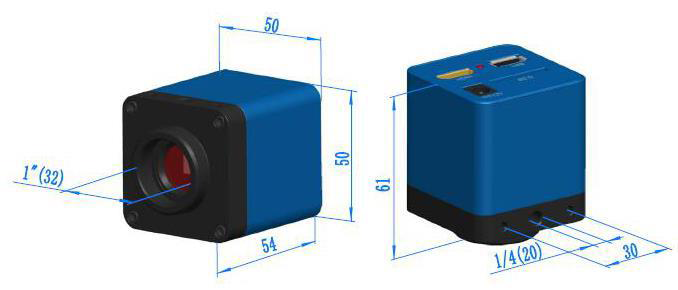
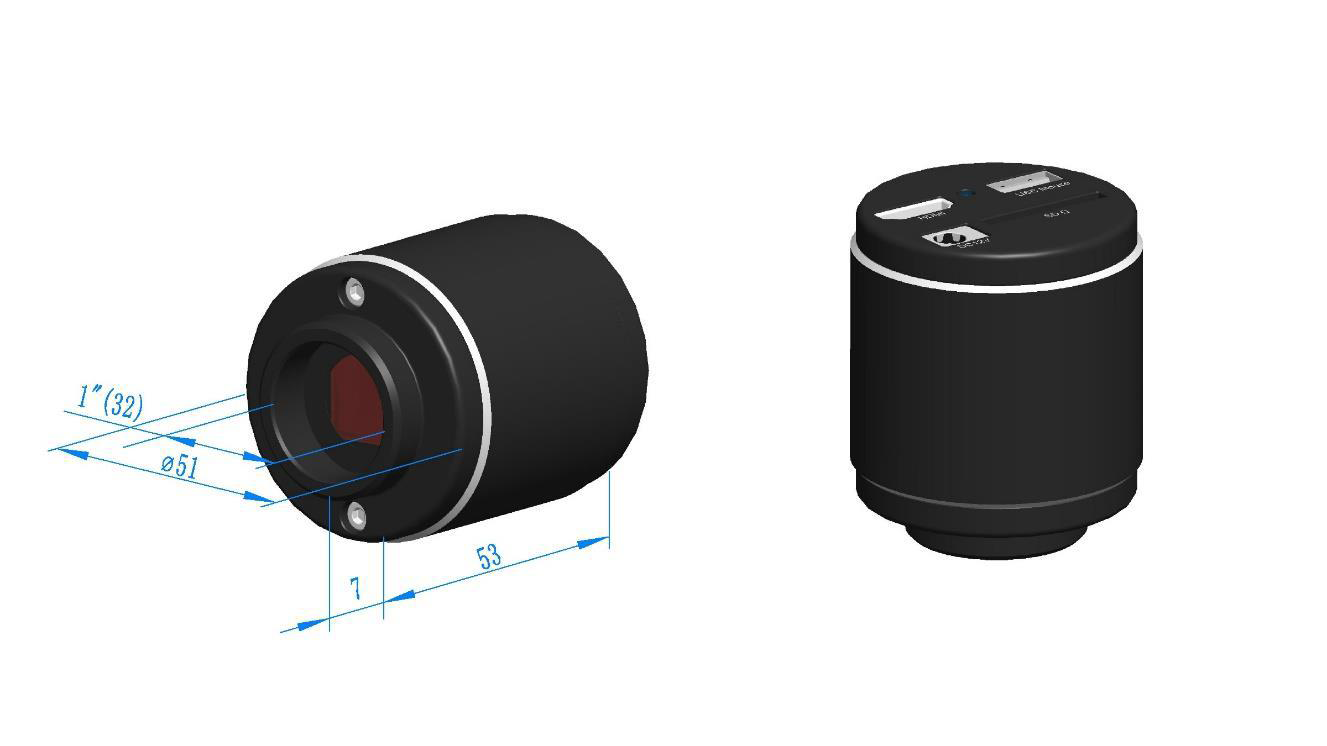
Body dimensions and mounting reference
See manual Fig. 3-82
See manual Fig. 3-83
Please confirm mounting holes and interface orientation per the dimension drawing before installation.
In-Depth Overview
The ToupTek Photonics XCAMLITE1080P series is a C-mount CMOS microscope camera with HDMI interface output, built for stereo microscopes, biological microscopes, and other optical systems that need 1080p high-definition video and image capture.
It uses a high-sensitivity CMOS image sensor, supports 1080p HDMI real-time preview, and embeds the XCamView interface for mouse-based setup, capture, and storage—ideal for research documentation, teaching demonstrations, and industrial inspection.
Technical Highlights
- HDMI interface for flexible deployment: HDMI real-time preview; connect directly to a monitor for standalone operation.
- 1080p imaging with tunable parameters: High-sensitivity CMOS sensor with auto/manual exposure, white balance, gain, and gamma adjustments.
- Built-in XCamView for easy control: Integrated XCamView UI for mouse-driven settings, capture, and recording; supports direct saving to SD cards.
- Rugged, stable industrial design: High-strength metal housing and efficient thermal design ensure long-term reliability in lab or industrial environments.
Core Advantages
-
1
HDMI output Supports standalone preview and teaching demonstrations.
-
2
1080p quality with low-light capability High-sensitivity CMOS preserves detail and accurate color.
-
3
Plug-and-play with built-in control XCamView simplifies setup and capture without an external computer.
-
4
Broad application coverage Fits "HDMI microscope camera," "1080p C-mount microscope camera," "research/teaching imaging," and "high-sensitivity CMOS camera."