
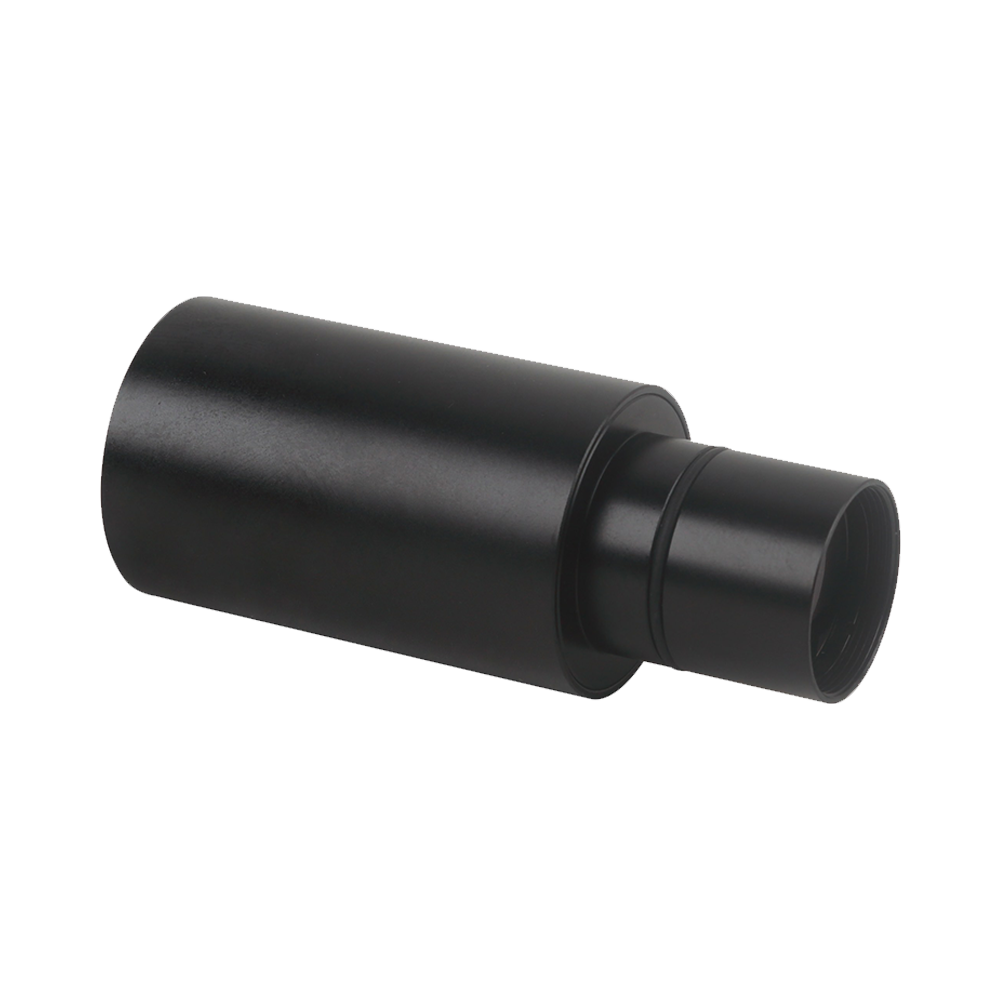
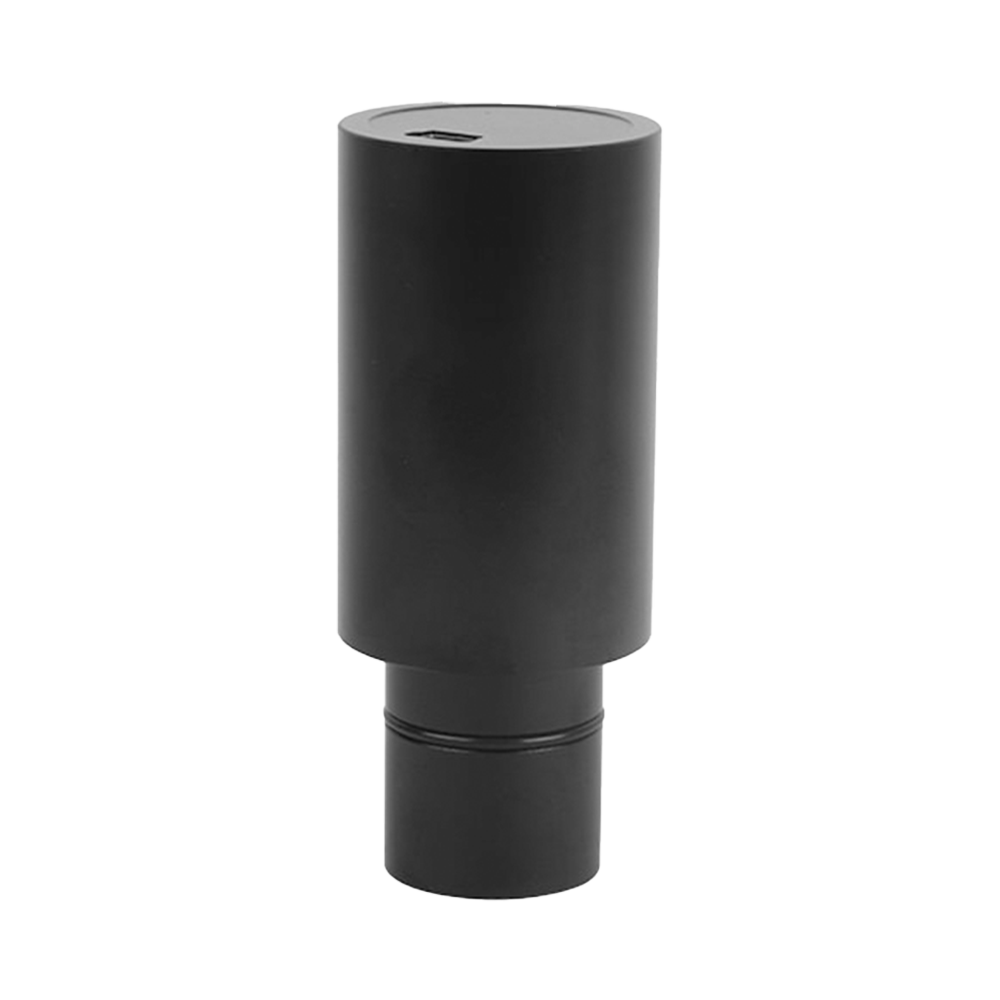
SPCMOS01300KPA Microscopy Camera/Microscope Camera
Product Introduction
The SPCMOS01300KPA incorporates an Aptina color CMOS sensor providing a cost-effective 1.3-megapixel imaging solution. The 3.6 µm large pixel design ensures excellent light sensitivity and signal-to-noise ratio performance, while the built-in reducer optimizes field matching effects. This model provides a high value solution while maintaining good image quality, suitable for basic educational, general education, and daily observation documentation applications.
Key Features
- Aptina color CMOS sensor with 1.3-megapixel cost-effective solution
- 3.6 µm large pixel technology providing excellent light sensitivity and signal-to-noise ratio
- Built-in reducer design with effective field matching and vignetting control
- 23.2 mm eyepiece tube direct insertion interface with convenient installation
- 1/3-inch sensor size with moderate optical matching
- Compatible with adapter sleeves supporting various tube specifications
- USB2.0 interface providing integrated data and power supply
- Ultra-Fine hardware ISP with basic image processing functions
- Good frame rate performance with maximum 12.5 fps response
- MJPEG compression algorithm for efficient data transmission
- Cost-effective lightweight design
- Suitable for basic educational and general education applications
Product Details
| Key Parameters | |
| Model | SPCMOS01300KPA |
| Sensor | Aptina(C) |
| Effective Pixels / Resolution | 1.3M (1280×1024) |
| Frame Rate (Full Resolution) | 7.5 fps @ 1280×1024; 12.5 fps @ 1024×768; 12.5 fps @ 800×600 |
| Shutter Type | Electronic Rolling Shutter (ERS) |
| Color Type | Color |
| Imaging Performance | |
| Pixel Size | 3.6 µm × 3.6 µm |
| Sensor Size | 4.60 mm × 3.70 mm |
| Diagonal | 1/3" (5.90 mm) |
| Dynamic Range | Available on request |
| Bit Depth | MJPEG |
| Sensitivity | Available on request |
| Interface & Mechanical | |
| Data Interface | USB2.0 |
| GPIO | Available on request |
| Lens Mount | 23.2 mm eyepiece tube interface |
| Dimensions | Dia. 33 mm × 79 mm |
| Weight | 0.26~0.27Kg |
| Power Supply | USB powered |
| Environment & Certification | |
| Operating Temperature / Humidity | -10 °C ~ 50 °C / 30%~80%RH |
| Storage Temperature / Humidity | -20 °C ~ 60 °C / 10%~60%RH |
| Operating System | Windows |
| Certification | CE, FCC |
Product Overview
The SPCMOS01300KPA is a digital camera specifically designed for Short-Wave Infrared (SWIR) microscopy imaging applications, featuring a Aptina(C) high-performance image sensor with advanced capabilities for infrared spectrum detection and analysis.
- SWIR Imaging Excellence: 1.3M (1280×1024) resolution, 3.6 µm × 3.6 µm pixel size, sensor size of 4.60 mm × 3.70 mm , optimized for Short-Wave Infrared spectrum detection with exceptional detail clarity
- Infrared Imaging Characteristics: Features Electronic Rolling Shutter (ERS) design, supports monochrome imaging, specifically calibrated for SWIR applications including material analysis, quality inspection, and thermal studies
- High-Speed Data Transmission: Utilizes USB2.0 interface, maximum frame rate up to 7.5 fps @ 1280×1024; 12.5 fps @ 1024×768; 12.5 fps @ 800×600 , enabling real-time SWIR imaging and rapid spectroscopic analysis
- Enhanced Dynamic Range: MJPEG bit depth, dynamic range reaching Available on request , providing superior contrast and detail capture in infrared spectrum
- SWIR Sensitivity Performance: Exceptional infrared sensitivity of Available on request , optimized for weak infrared signal detection and low-light SWIR applications
- Optical Adaptation: Standard 23.2 mm eyepiece tube interface interface, compatible with SWIR lenses and infrared optical systems, equipped with optional 0.5×/0.63×/1× adapters for various magnifications
- Compact Design: Unit dimensions only Dia. 33 mm × 79 mm , weight 0.26~0.27Kg , powered by USB powered , ensuring portability for field SWIR applications
- Software Support: Includes professional SWIR imaging software ToupView, supports Windows systems, provides spectral analysis, measurement, annotation, and advanced infrared processing functions, compatible with C/C++, C#, Python, ImageJ, μManager development environments
Core SWIR Performance Indicators
Resolution
1.3M (1280×1024)
Frame Rate
Up to 7.5 fps @ 1280×1024; 12.5 fps @ 1024×768; 12.5 fps @ 800×600
Pixel Size
3.6 µm × 3.6 µm
Data Interface
USB2.0
SWIR Imaging Features
Professional SWIR Applications
Optimized for industrial inspection, semiconductor analysis, food quality control, and medical diagnostics requiring Short-Wave Infrared imaging capabilities with superior penetration and contrast
Spectral Response Optimization
Precisely calibrated spectral response for SWIR wavelengths, ensuring accurate infrared imaging and spectroscopic analysis with minimal noise and maximum sensitivity
Quantitative Analysis Tools
Comprehensive measurement and analysis capabilities for SWIR applications including intensity profiling, spectral analysis, and temperature mapping for precise quantitative results
Advanced SWIR Processing
Real-time infrared image enhancement, noise reduction algorithms, and specialized SWIR processing functions designed to maximize image quality and analytical capability
Recommended Features
The SPCMOS01300KPA SWIR camera combines exceptional infrared imaging quality with advanced spectroscopic capabilities, making it the ideal solution for demanding Short-Wave Infrared applications. Whether for industrial quality control, semiconductor inspection, or research applications, this camera delivers precise, reliable infrared imaging and analysis solutions.
SPCMOS01300KPA Product Manual
PDF format, includes detailed technical specifications and dimensional structures
SDK Development Kit
Supports Windows, Linux, macOS, and other multi-platform systems
3D Model Files
STEP format, for mechanical design integration
Package Contents #
Standard kit and packaging for SPCMOS USB2.0 eyepiece cameras with built-in reducing optics
Standard Items
- Shipping carton: L 52 cm × W 32 cm × H 33 cm (20 pcs, 12–17 kg per carton)
- Inner box: L 15 cm × W 15 cm × H 10 cm (0.26–0.27 kg per box)
- SPCMOS camera (1 pc)
- High-speed USB2.0 Type-A male to Mini Type-B gold-plated cable (2.0 m)
- Software CD (drivers and application, Ø 8 cm)
Optional Accessories
- 108015 (Dia. 23.2 mm to 30.0 mm ring) – adapter ring for 30 mm eyepiece tubes
- 108016 (Dia. 23.2 mm to 30.5 mm ring) – adapter ring for 30.5 mm eyepiece tubes
- 108017 (Dia. 23.2 mm to 31.75 mm ring) – adapter ring for 31.75 mm eyepiece tubes
- Calibration reticles
106011/TS-M1 (X = 0.01 mm / 100 divisions)
106012/TS-M2 (X, Y = 0.01 mm / 100 divisions)
106013/TS-M7 (X = 0.01 mm / 100 divisions; 0.10 mm / 100 divisions)
Product Dimensions #
Mechanical outline of SPCMOS USB2.0 eyepiece cameras with reducer optics
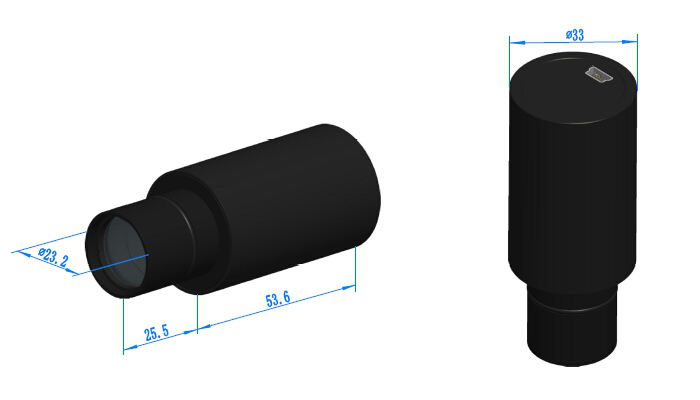
The SPCMOS series is a USB2.0 eyepiece-style microscopy camera with built-in reducing optics from ToupTek Photonics. Featuring a standard 23.2 mm eyepiece interface, it can directly replace traditional microscope eyepieces to quickly upgrade optical microscopes into digital imaging systems. This series uses Aptina or Sony CMOS sensors with clear imaging and a compact design, suitable for teaching, research, and routine observation digital imaging needs.
Core Features
Built-in Reducing Optics
23.2 mm standard interface, no adapter needed, avoids vignetting and distortion
High-Quality CMOS Sensors
Aptina/Sony sensors balance resolution and sensitivity
USB2.0 Plug-and-Play
Stable transmission, easy operation, quick digital upgrade
Ultra-Fine Color Engine
Professional-grade color processing for true microscopy image reproduction
Performance Highlights
Resolution Range
0.35–5 MP
Multiple optionsBuilt-in Reducer
Optical Match
Optimized imagingPixel Size
2.0–5.6 µm
High sensitivityExposure Range
0.1–2000 ms
Flexible adjustmentIn-Depth Technology Overview
Integrated Reducer Optics
The precision reducer inside each SPCMOS camera aligns the microscope image circle with the sensor to eliminate vignetting and distortion. Because it installs directly into a 23.2 mm eyepiece tube, users avoid external adapters and achieve uniform illumination across the entire frame from the moment the camera is mounted.
Optimized CMOS Sensor Selection
Aptina and Sony sensors cover 0.35–5 MP configurations, balancing resolution and low-light performance. Pixel sizes from 2.0 µm to 5.6 µm deliver high quantum efficiency with minimal noise, supporting both detailed documentation and routine screening.
Ultra-Fine Color Engine
ToupTek’s Ultra-Fine color engine provides hardware-grade processing for accurate staining reproduction, automatic white balance, and fine tone control. Users can adjust brightness, contrast, and saturation in real time to suit varying samples and illumination conditions.
Stable USB2.0 Transmission
A mature USB2.0 pipeline ensures smooth video streams without frame drops. MJPEG/YUV output supports 30 fps at 640×480 and stable performance at higher resolutions. Power and data share a single cable for genuine plug-and-play convenience, while USB2.0 compatibility works with legacy PCs and modern systems alike.
Software Ecosystem & SDK Support
Bundled ToupView/ToupLite software delivers live preview, capture, measurement, and report generation in an intuitive interface. Developers benefit from cross-platform SDKs for Windows, Linux, and macOS, with support for C/C++, C#/VB.NET, DirectShow, and TWAIN. The CNC-machined aluminum body uses fanless passive cooling, ensuring quiet, reliable operation for classrooms and laboratories.
Application Highlights
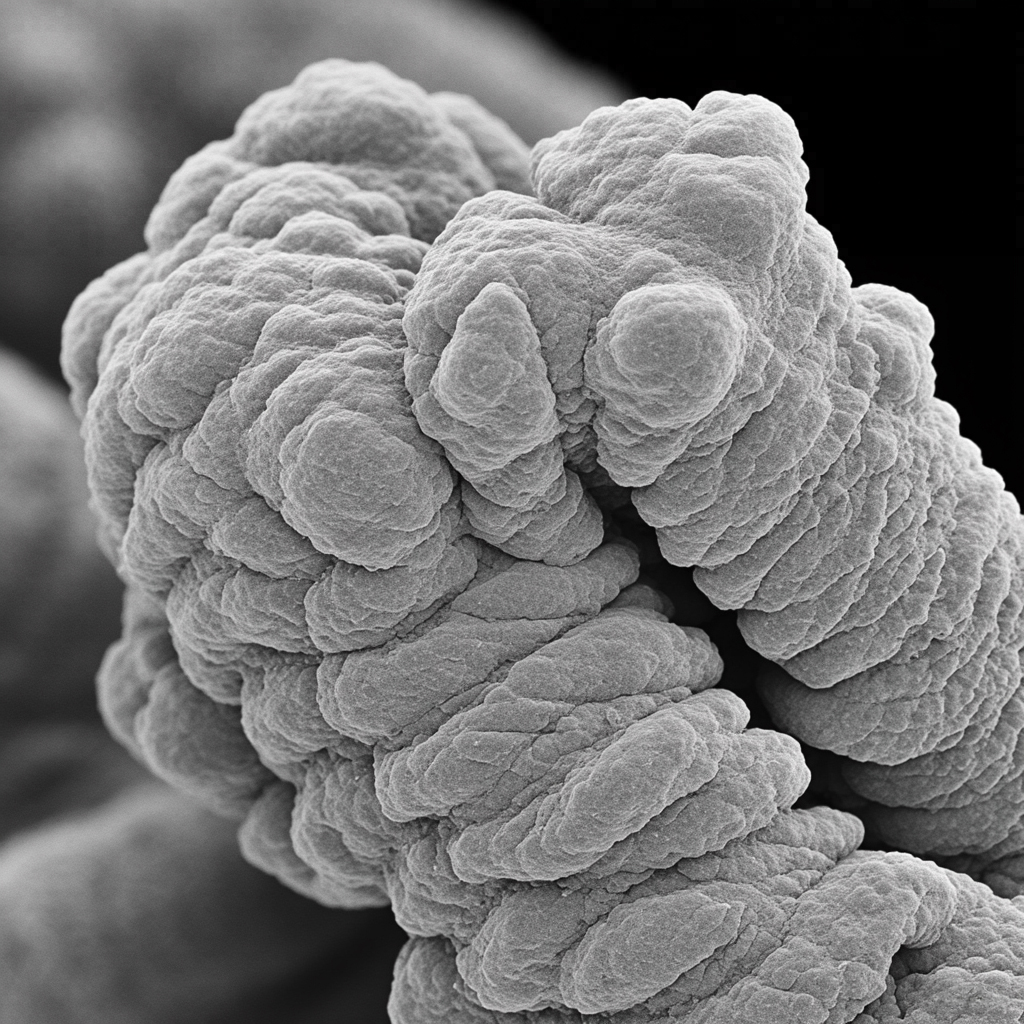
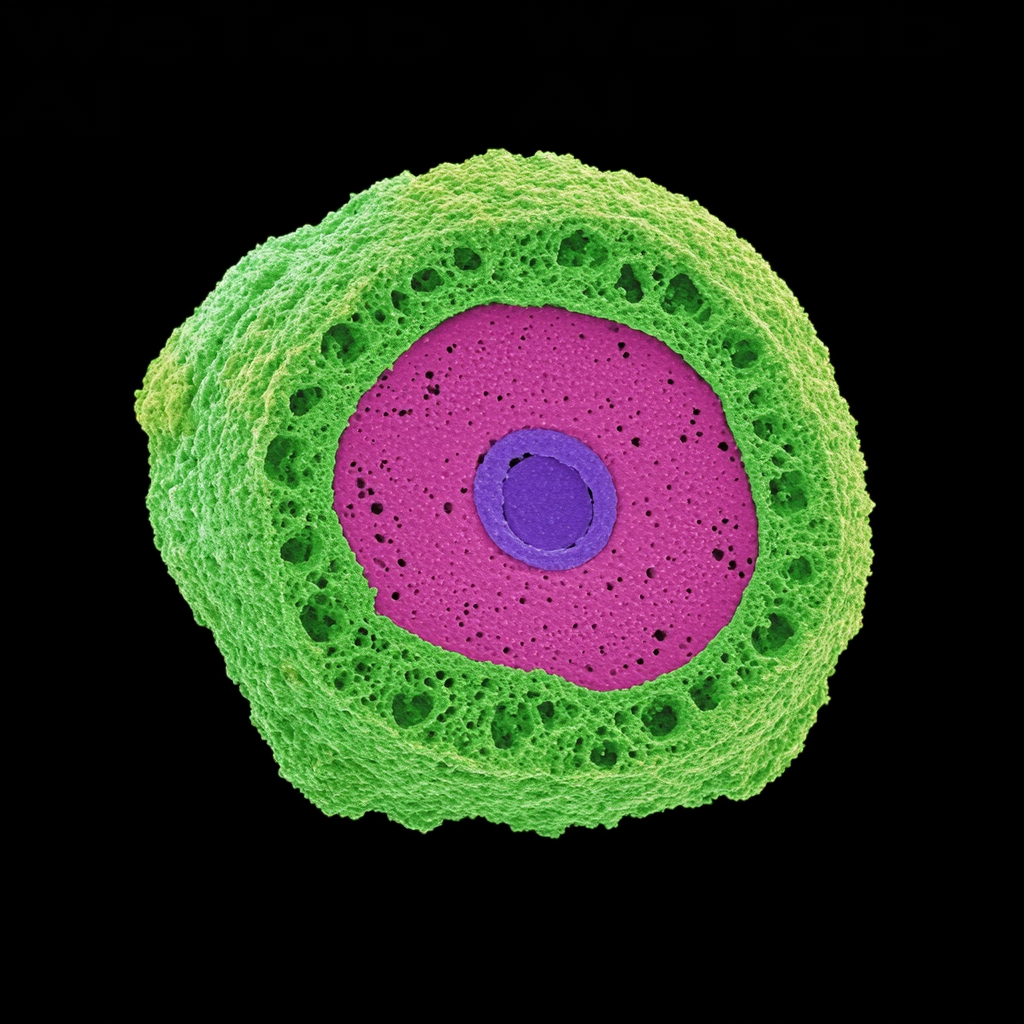
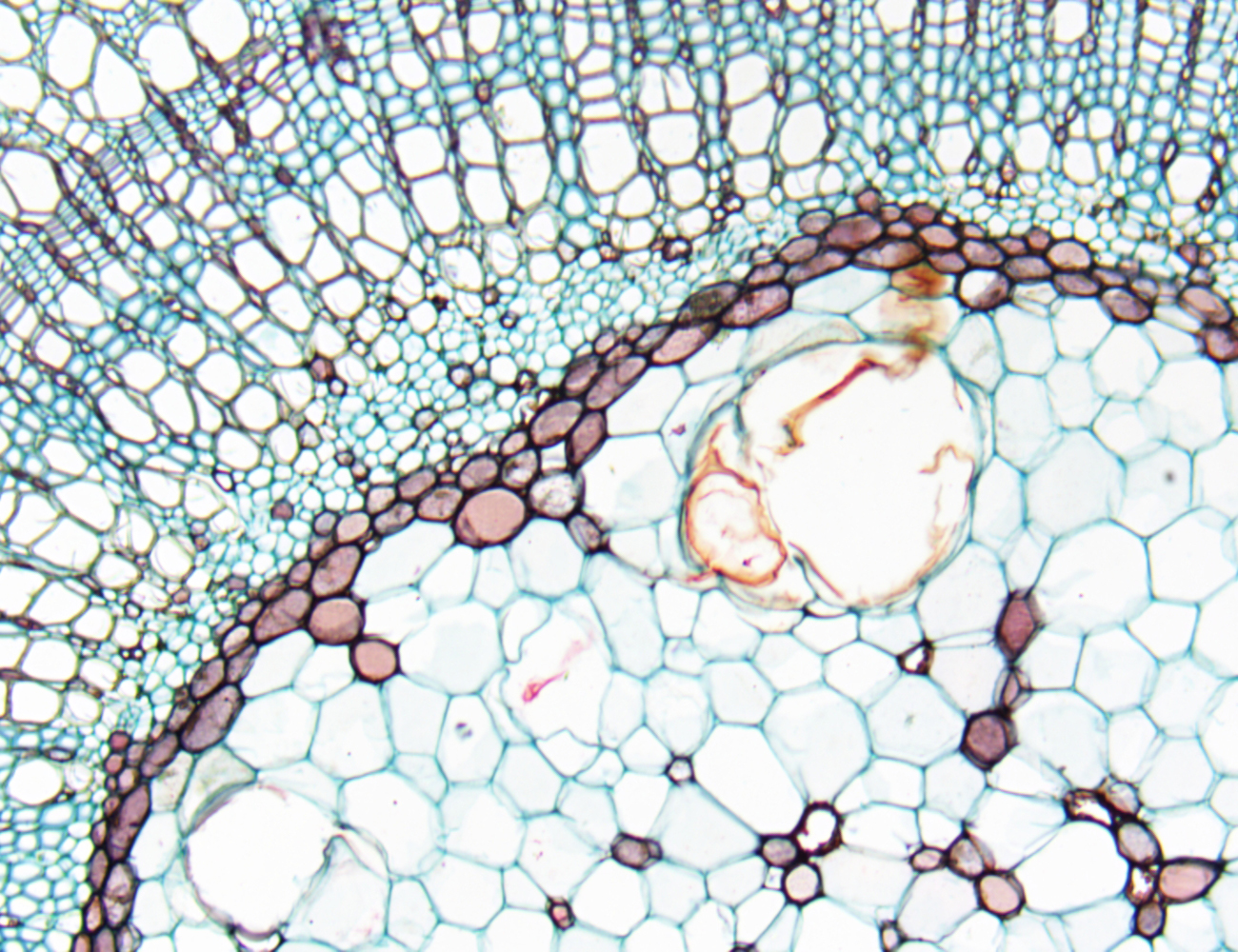
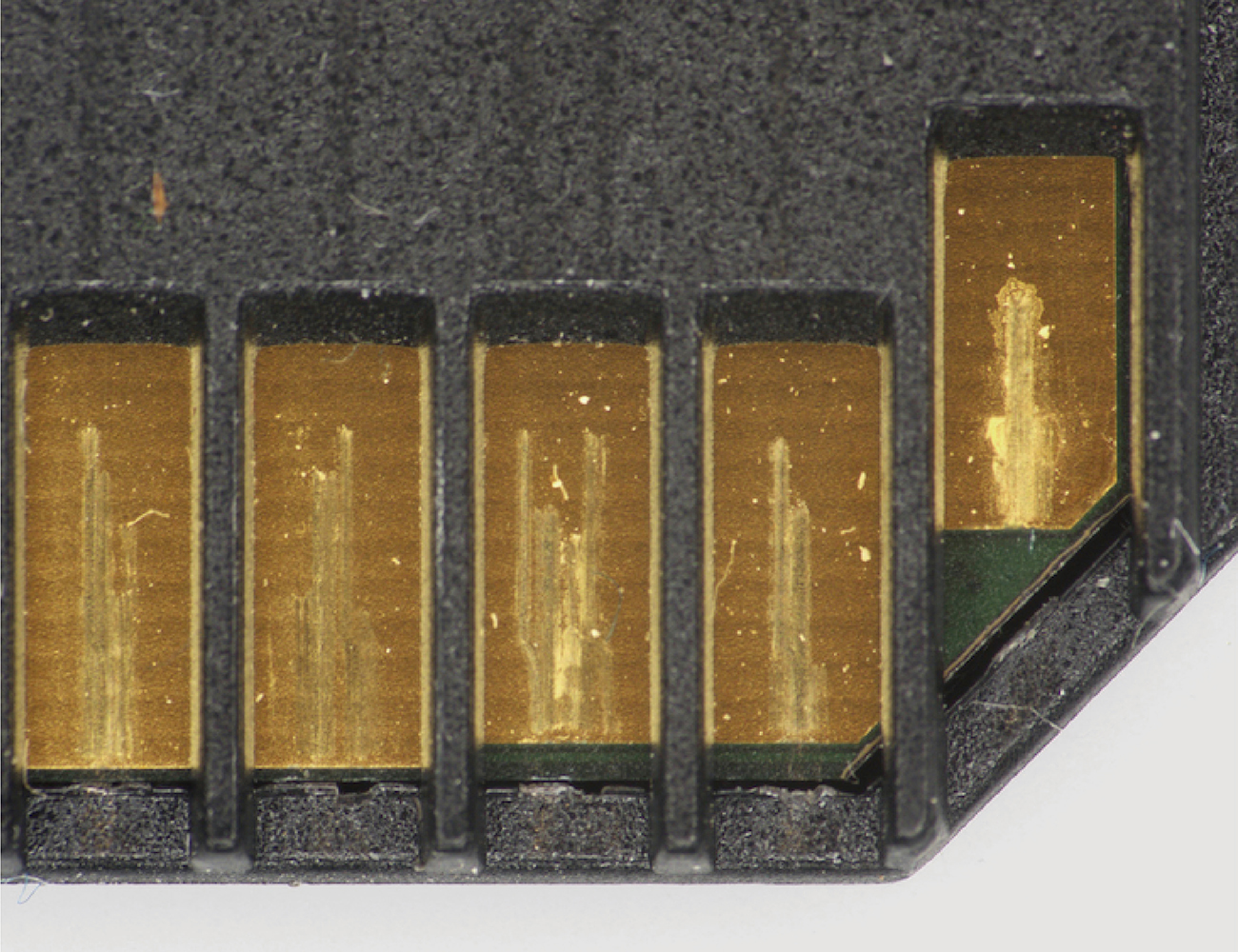
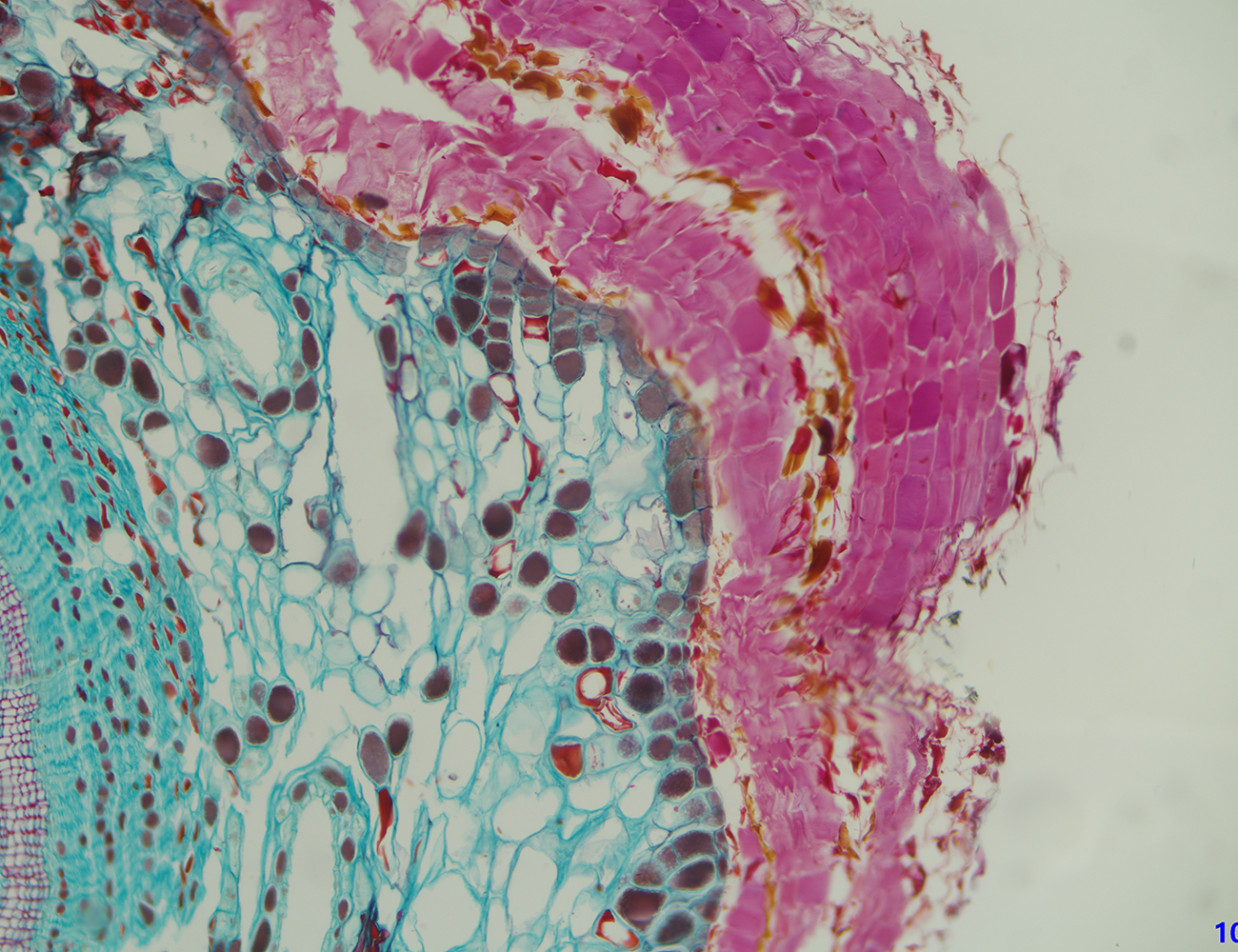
Daily microscopy scenarios powered by SPCMOS eyepiece cameras.
SPCMOS Series Advantages
Built-In Reducer
Wider field of view without extra adapters.
Quality Sensors
Aptina/Sony CMOS for crisp, low-noise imaging.
USB2.0 Plug-and-Play
Stable transfer and simple setup.
Ultra-Fine Color
Hardware color processing keeps samples true to life.