
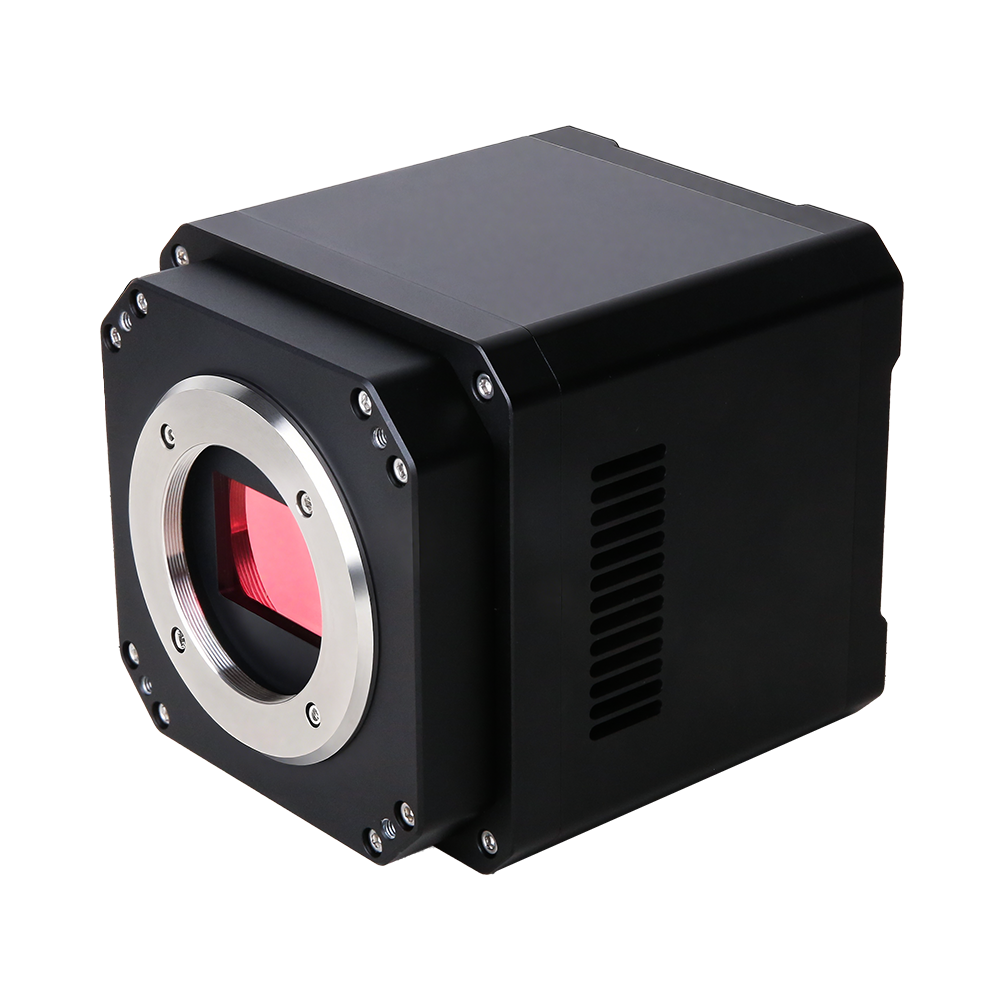
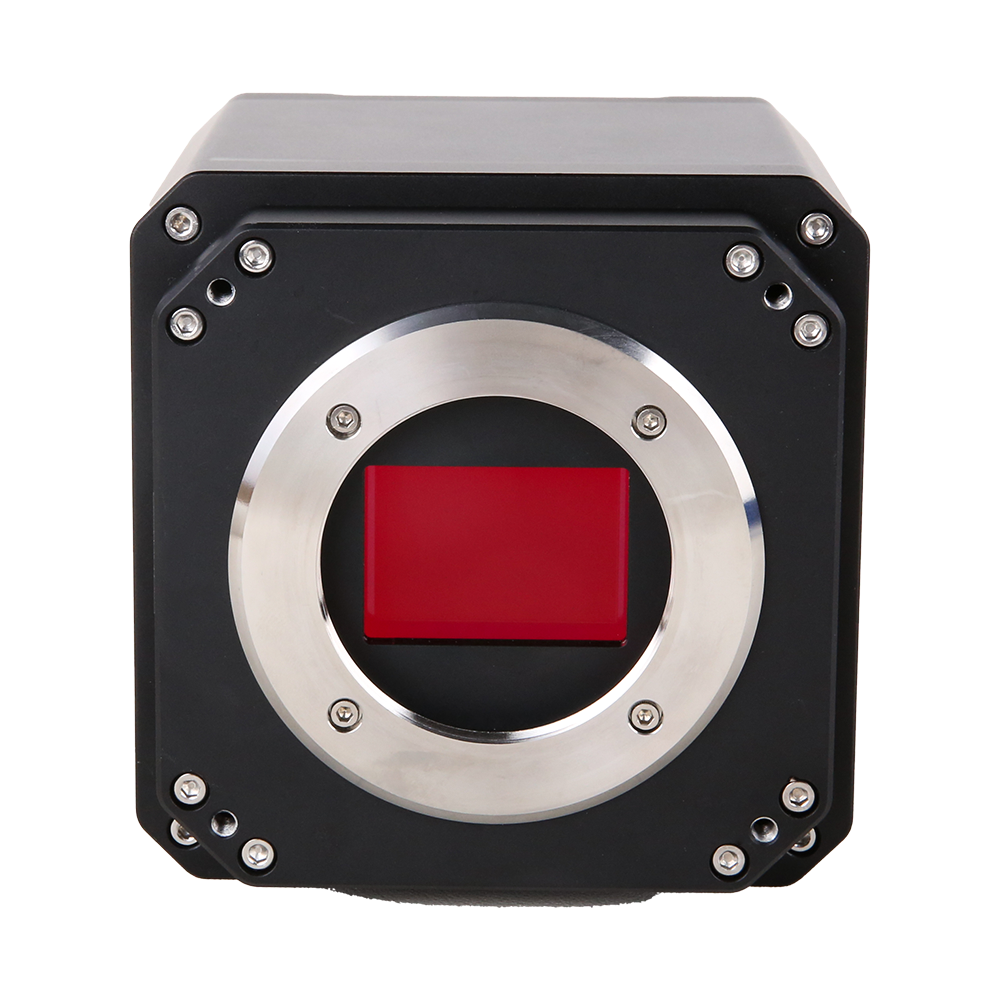
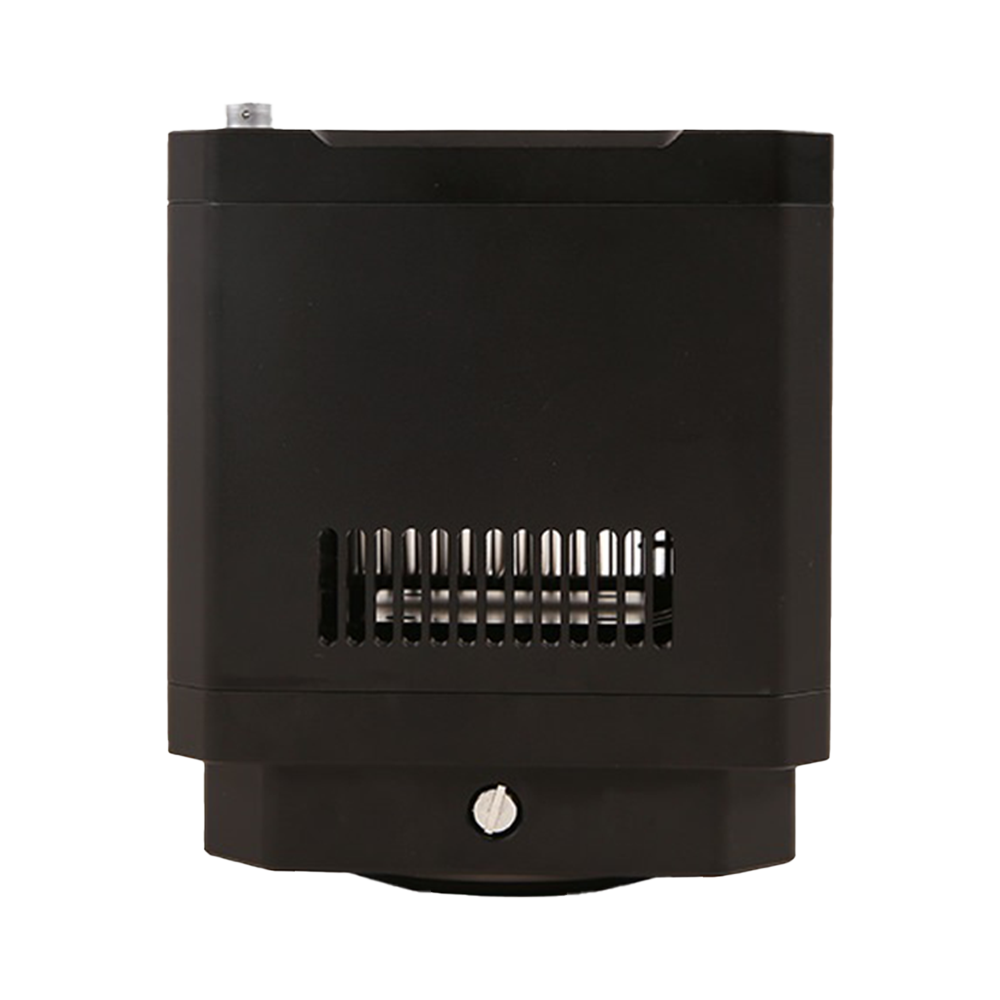
MAX04AM Scientific Camera
Product Introduction
4.2 MP NIR-enhanced sCMOS camera (GSENSE2020e), 6.5 µm pixel size, full-resolution 45 fps, USB3.0 transmission. Features built-in TEC cooling (typical ΔT ≈ 40 °C) and anti-condensation structure, supports HDR 16-bit mode, suitable for low-light/near-infrared imaging, fluorescence/spectral applications, and scientific testing.
Key Features
- Sensor: GSENSE2020e, 4.2 MP (monochrome, NIR-enhanced, RS)
- Pixel: 6.5 µm; full-resolution 45 fps
- Interface: USB3.0; stable continuous acquisition
- Output: 8-bit/HDR 16-bit, high dynamic range
- TEC cooling (typical ΔT ≈ 40 °C) and anti-condensation structure
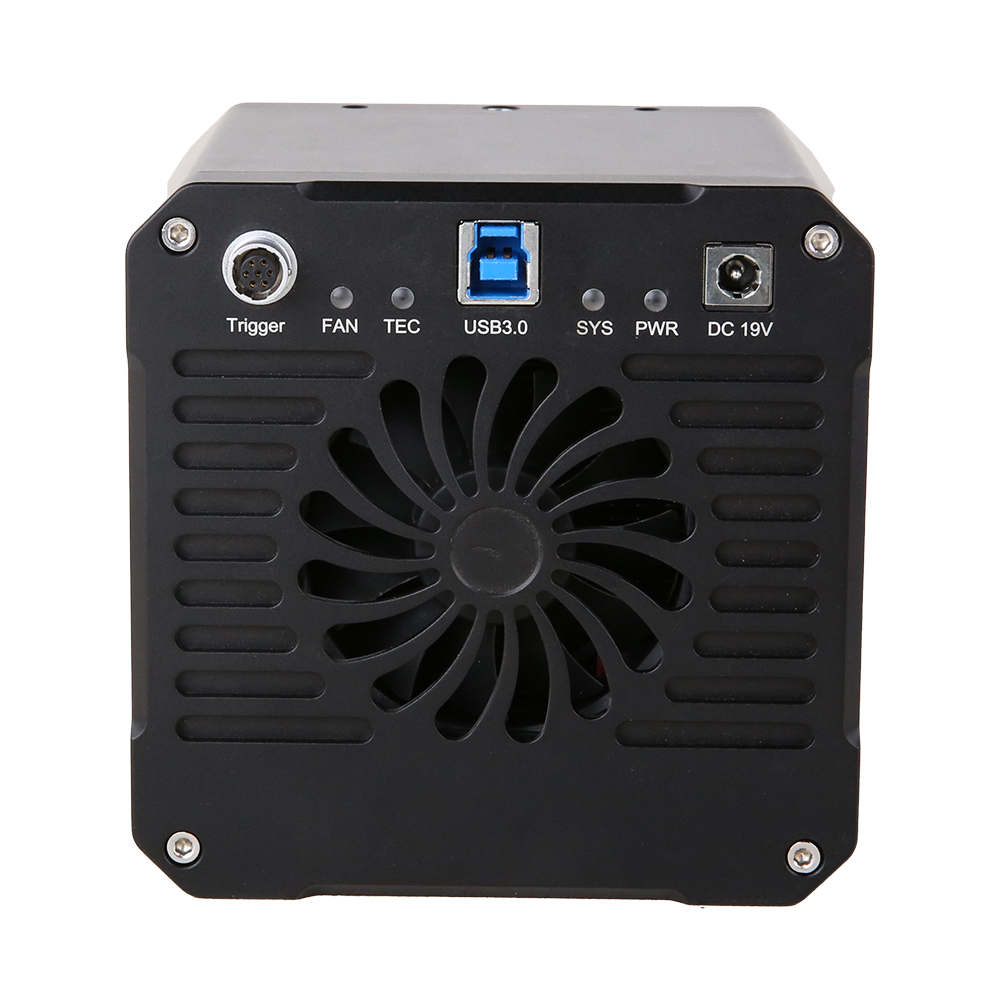
- Trigger/IO: Opto-isolated input/output + GPIO (model-dependent)
- Image features: ROI, binning, etc. (model-dependent)
- Built-in buffer (model-dependent), suitable for long-term experiments
- Exposure time: 0.1 ms to 1000 s (see specifications)
Product Details
| General Specifications | |
| Model | MAX04AM |
| Sensor | GSENSE2020e (M, NIR, RS) |
| Shutter Type | Rolling Shutter |
| Color Type | Monochrome |
| Resolution | 4.2 MP (2048×2048) |
| Sensor Size | 13.31 mm × 13.31 mm |
| Sensor Diagonal | 4/3" (18.82 mm) |
| Pixel Size | 6.5 µm × 6.5 µm |
| Performance Parameters | |
| Frame Rate | 45 fps @ 2048×2048; 45 fps @ 1024×1024 |
| Bit Depth | 8-bit/HDR 16-bit |
| Dynamic Range | 81.6 dB |
| Sensitivity | 8.1×10^7 (e-/((W/m^2)·s)); Peak QE 64.2% @ 595 nm; 0.12 (e-/s/pix) @ -10 °C |
| Interface Parameters | |
| GPIO | 1× opto-isolated input, 1× opto-isolated output, 2× direct GPIO |
| Lens Mount | C-mount (native); optional M42×1 adapter |
| Data Interface | USB3.0 |
| Power Supply | DC 19 V, 4 A |
| Physical Parameters | |
| Dimensions | Available on request |
| Weight | Available on request |
| Environmental Parameters | |
| Operating Temperature | -10 °C to +50 °C |
| Operating Humidity | 30% to 80% RH (non-condensing) |
| Storage Temperature | -20 °C to +60 °C |
| Storage Humidity | 10% to 60% RH (non-condensing) |
| Additional Parameters | |
| Operating System | Multi-platform SDK for Windows/Linux/macOS/Android (native C/C++, C#/VB.NET, Python, Java, DirectShow, Twain, etc.) |
| Certifications | Available on request |
Product Overview
MAX04AM is a scientific-grade cooled camera built on the GSENSE2020e (M, NIR, RS) back-illuminated sCMOS image sensor and delivers these key capabilities:
- High-resolution imaging: Offers 4.2 MP (2048×2048) resolution with a pixel size of 6.5 µm × 6.5 µm and an active area of 13.31 mm × 13.31 mm.
- Shutter architecture: Utilizes a Rolling Shutter design and supports Monochrome imaging for fluorescence, spectroscopy, gene sequencing, and other research workflows.
- High-speed data transfer: Provides USB3.0 high-bandwidth interfaces with frame rates up to 45 fps @ 2048×2048; 45 fps @ 1024×1024 and output formats covering 8-bit/HDR 16-bit.
- Wide dynamic range: Captures scenes with dynamic range up to 81.6 dB and sensitivity of 8.1×10^7 (e-/((W/m^2)·s)); Peak QE 64.2% @ 595 nm; 0.12 (e-/s/pix) @ -10 °C.
- Cooled for low noise: Integrated thermoelectric cooling stabilizes the sensor and suppresses dark current.
- Comprehensive I/O: Supports GPIO control interfaces with a standard C-mount (native); optional M42×1 adapter lens mount.
- Compact design: Measures Available on request, weighs approximately Available on request, and runs on DC 19 V, 4 A.
- Cross-platform support: Compatible with Multi-platform SDK for Windows/Linux/macOS/Android (native C/C++, C#/VB.NET, Python, Java, DirectShow, Twain, etc.), bundled with ToupView software and cross-platform SDKs supporting C/C++ | C# | Python and other popular languages.
Key Performance Metrics
Frame Rate
45 fps @ 2048×2048; 45 fps @ 1024×1024
Resolution
4.2 MP (2048×2048)
Dynamic Range
81.6 dB
Scientific Imaging Highlights
Back-Illuminated Sensor
Back-illuminated sCMOS architecture raises quantum efficiency for low-light imaging.
Cooled Noise Reduction
Integrated cooling lowers dark current and noise to boost image quality and SNR.
High Sensitivity
Sensitivity up to 8.1×10^7 (e-/((W/m^2)·s)); Peak QE 64.2% @ 595 nm; 0.12 (e-/s/pix) @ -10 °C meets stringent scientific imaging demands.
Flexible Control
Supports ROI, binning, and hardware triggers to adapt to varied research needs.
The MAX04AM camera pairs robust scientific imaging performance with stable cooling and versatile interfaces—ideal for research institutes, medical organizations, and advanced industrial applications that demand precise imaging and analysis.
MAX04AM Brochure
PDF format covering detailed specifications and mechanical drawings.
SDK Package
Supports Windows, Linux, macOS, and additional platforms.
3D Model Files
STEP format for mechanical integration.
Package Contents #
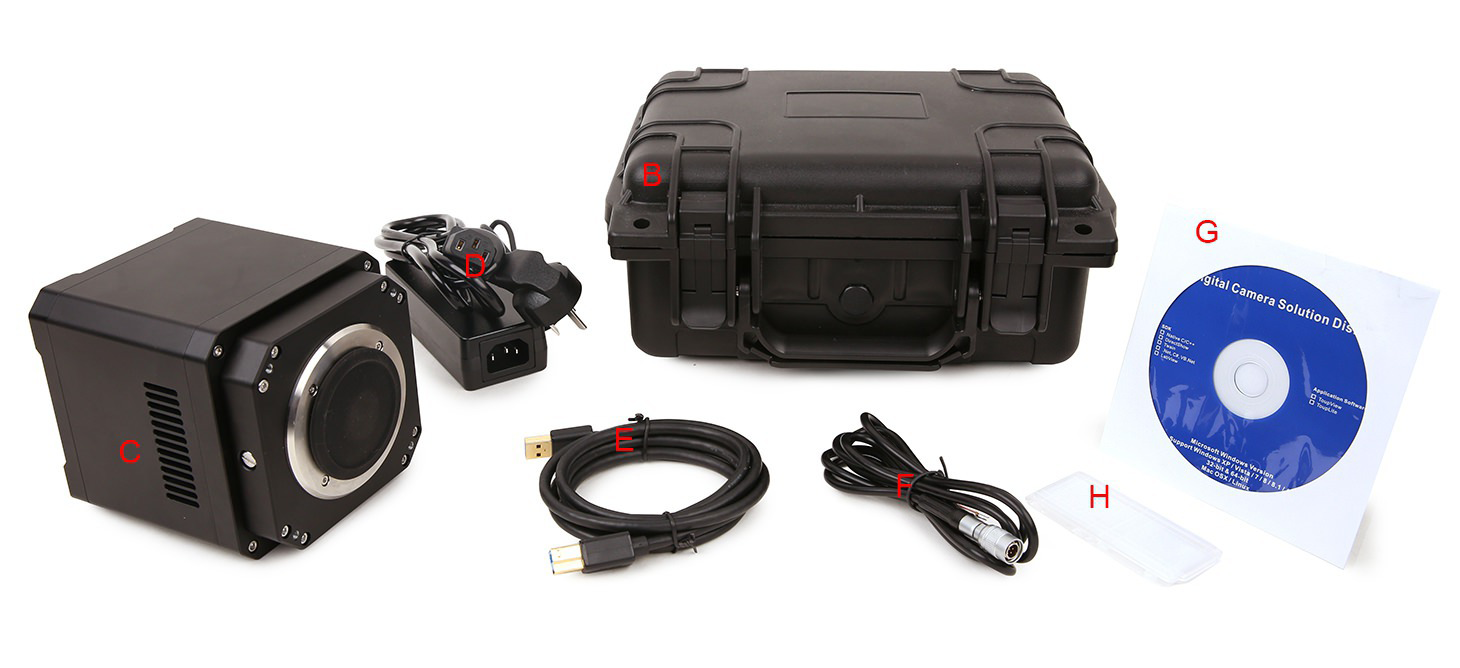
Package list for model MAX04AM (USB3 Cooled)
Standard packing list
- Carton size: L: 50 cm W: 30 cm H: 30 cm (20 pcs, 12–17 kg/carton)
- 3-A instrument safety case: L: 28 cm W: 23.0 cm H: 15.5 cm (1 pc, 2.8 kg/box); outer carton: L: 28.2 cm W: 25.2 cm H: 16.7 cm
- MAX-GSENSE series camera (USB3)
- Power adapter: input AC 100~240 V 50/60 Hz; output DC 19 V 4 A
- High-speed USB3.0 A-to-B gold-plated cable (1.5 m)
- I/O cable
- CD (driver and software, Ø12 cm)
Product Dimensions #
Dimensions for model MAX04AM (MAX04AM / MAX04BM)

Frequently Asked Questions
Learn more about scientific CMOS cameras
- Ultra-low read noise: sCMOS read noise approaches 1 e⁻, far outperforming traditional CCDs.
- High frame rate: Parallel readout architecture supports 100 fps or higher.
- Wide dynamic range: Captures bright and dark regions simultaneously with ratios up to tens of thousands to one.
- Large field of view and high resolution: Suits high-resolution, wide-field imaging.
EMCCD cameras excel in ultra-low light or long-exposure conditions.
sCMOS delivers greater value for high-resolution, high-speed imaging with low noise.
In-Depth Product Overview
sCMOS Sensor Architecture
Each pixel has its own amplifier and column ADC for parallel readout, enabling high-speed, high-SNR imaging. Dual gain channels and dual ADC designs further expand dynamic range and sensitivity.
Low Noise + Wide Dynamic Range
Typical sCMOS noise is < 2 e⁻ (30 fps) with dynamic range up to 50,000:1—far exceeding traditional CCDs.
Fast Readout & Versatility
Parallel readout supports >100 fps for capturing fast events such as cell motion, fluorescence lifetime studies, and plasma dynamics.
Low-Light Performance
Back-illuminated sCMOS sensors achieve >95% QE from UV to NIR, with low fixed-pattern noise and cooling down to −30 °C for astronomy and other needs.
Application Scenarios & System Value
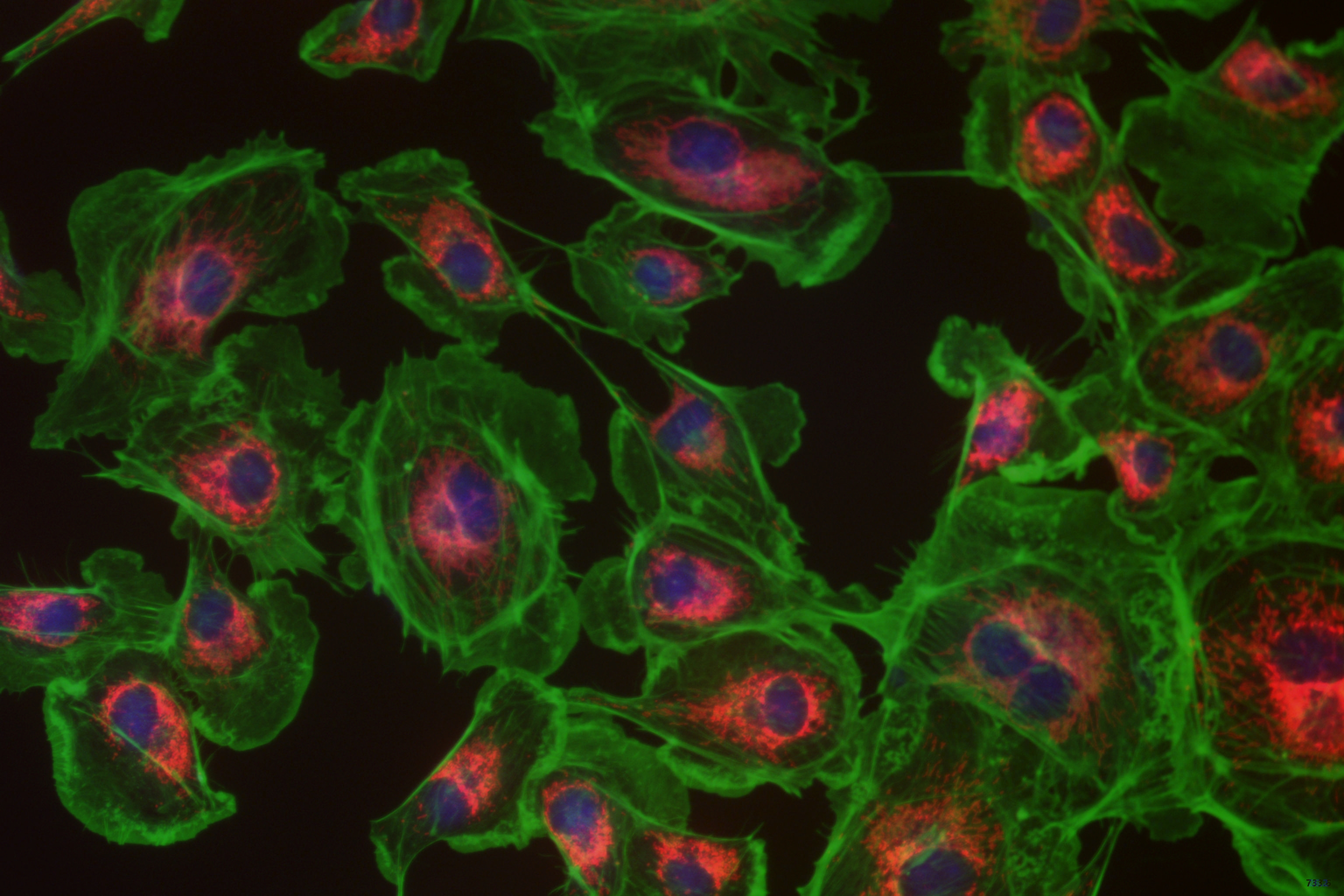
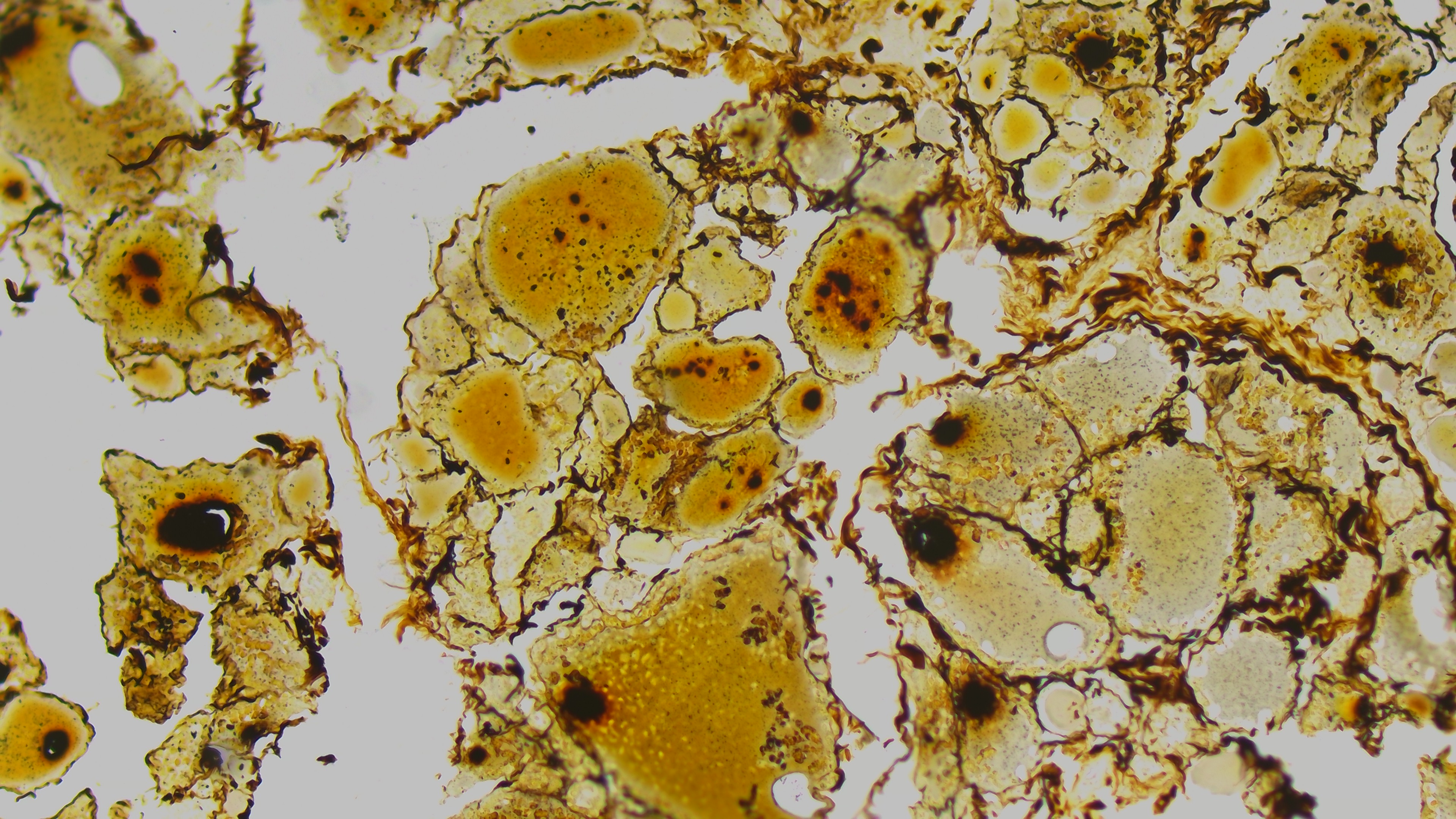
Ideal for fluorescence microscopy, astronomy, cold atom research, X-ray imaging, materials inspection, and industrial microscopy—delivering high sensitivity, precision, and adaptability.
Key Application Areas
Representative sCMOS applications




sCMOS Technology Advantages Summary
- Ultra-low read noise (<2 e⁻)
- High frame rate (>100 fps)
- Wide dynamic range (50,000:1)
- High quantum efficiency (>95%)
- Large FOV, high resolution
- Cooling capability (−30 °C)
- Parallel readout architecture
- Adaptable to diverse research needs