
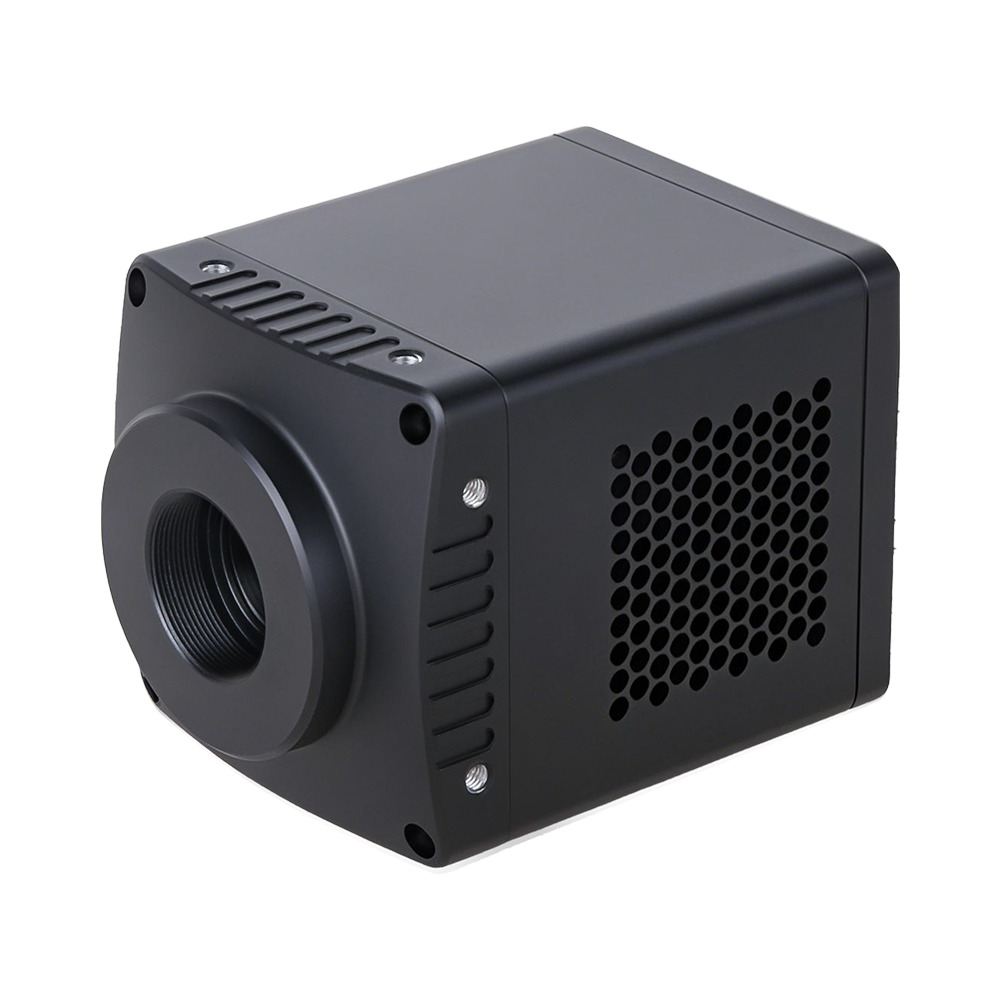
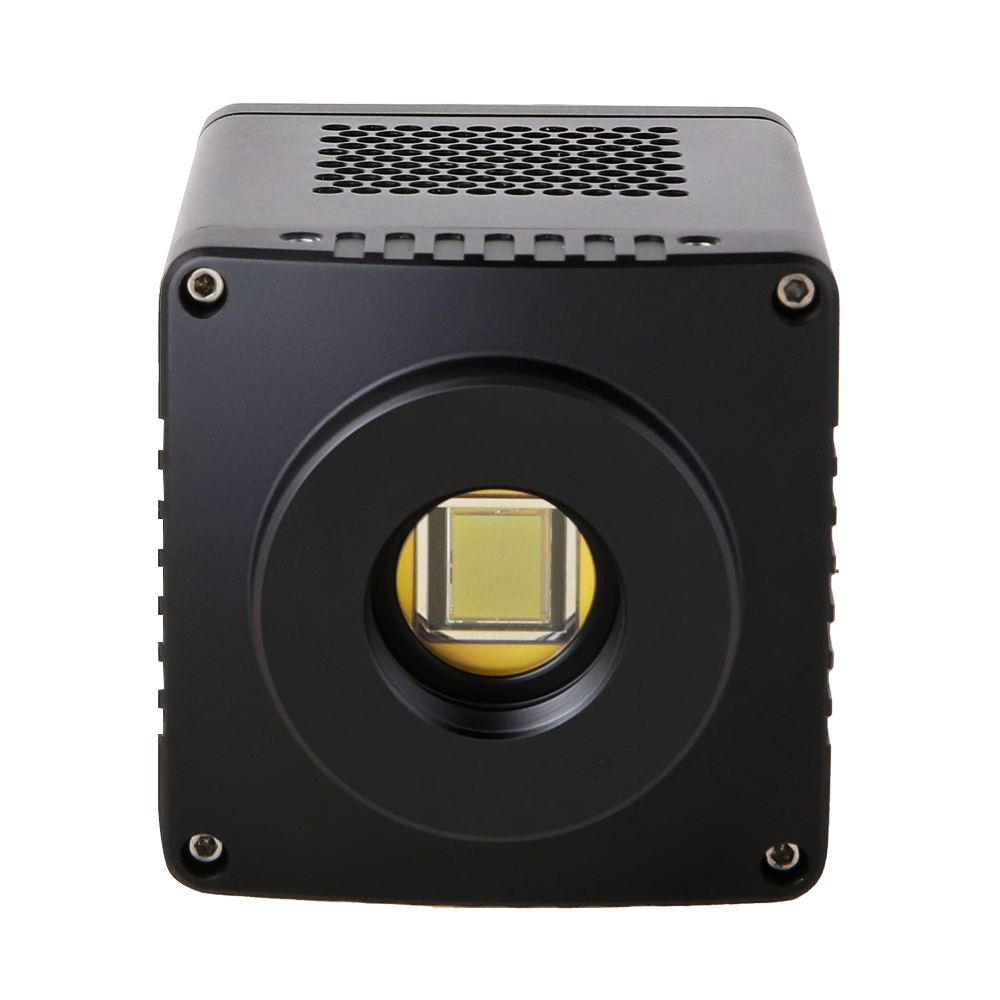
900–1700 nm | China-made SWIR InGaAs | 1.3 MP | USB3/10GigE/CameraLink | Cooled | Short-Wave Infrared Camera
Product Introduction
The SWIR 900–1700 nm 1.3 MP series features China-made InGaAs sensors with 15 µm pixels, achieving a balance between high sensitivity and high-speed acquisition. Available with USB3/10GigE/CameraLink Full interfaces and cooling options, covering applications including material identification, food sorting, and synchronized scientific imaging.
Product Features
- 900-1700 nm version with China-made InGaAs sensor
- Global shutter
- Support for USB 3.0/10GigE/CameraLink Full interfaces
- External I/O trigger control support
- 12–14-bit ADC
- 4 GB memory buffer
- High frame rate acquisition
- Precision temperature control (cooled/non-cooled)
- On-site firmware upgrade support
- OEM customization accepted
Product Models
SWIR1302 Series | 1.3 MP 15 µm | USB3/10GigE/CameraLink | 900–1700 nm
| Model | Sensor / Size | Resolution | Pixel Size | Shutter | Frame Rate | Interface | Dynamic Range |
Action |
|---|---|---|---|---|---|---|---|---|
| SWIR1302KMB-CXP |
China-made 1280×1024 (InGaAs CMOS)
1.5" (24.59 mm) | 19.2 mm × 15.36 mm
|
1.3 MP (1280×1024) | 15 µm × 15 µm | Global Shutter |
100 fps @ 1280×1024
|
CoaXPress 2.0 (CXP-10 x 1) |
69.2 dB (LG), 63.2 dB (MG), 57.4 dB (HG) *1 (for reference only)
|
View Details |
| SWIR1302KMB-U200 |
China-made 1280×1024 (InGaAs CMOS)
4/3" (24.59 mm) | 19.2 mm × 15.36 mm
|
1.3 MP (1280×1024) | 15 µm × 15 µm | Global Shutter |
200 fps at 1280×1024
|
USB3 |
70.59 dB (LG), 67.96 dB (MG), 47.98 dB (HG)
|
View Details |
| SWIR1302KMB-10G |
China-made 1280×1024 (InGaAs CMOS)
4/3" (24.59 mm) | 19.2 mm × 15.36 mm
|
1.3 MP (1280×1024) | 15 µm × 15 µm | Global Shutter |
200 fps at 1280×1024
|
10GigE |
69.2 dB (LG), 63.2 dB (MG), 57.4 dB (HG)
|
View Details |
| SWIR1302KMA-CL200 |
China-made 1280×1024 (InGaAs CMOS)
4/3" (24.59 mm) | 19.2 mm × 15.36 mm
|
1.3 MP (1280×1024) | 15 µm × 15 µm | Global Shutter |
200 fps at 1280×1024
|
CameraLink Full |
69.2 dB (LG), 63.2 dB (MG), 57.4 dB (HG)
|
View Details |
| SWIR1302KMB-CL200 |
China-made 1280×1024 (InGaAs CMOS)
4/3" (24.59 mm) | 19.2 mm × 15.36 mm
|
1.3 MP (1280×1024) | 15 µm × 15 µm | Global Shutter |
200 fps at 1280×1024
|
CameraLink Full |
69.2 dB (LG), 63.2 dB (MG), 57.4 dB (HG)
|
View Details |
| SWIR1303KMB-10G |
China-made 1280×1024 InGaAs
1.5" (24.60 mm) | 19.20 mm × 15.36 mm
|
1.3 MP (1280×1024) | 15 µm × 15 µm | Global Shutter |
100 fps @ 1280×1024
|
10GigE |
71.5 dB (LG); 65.7 dB (MG); 54.4 dB (HG)
|
View Details |
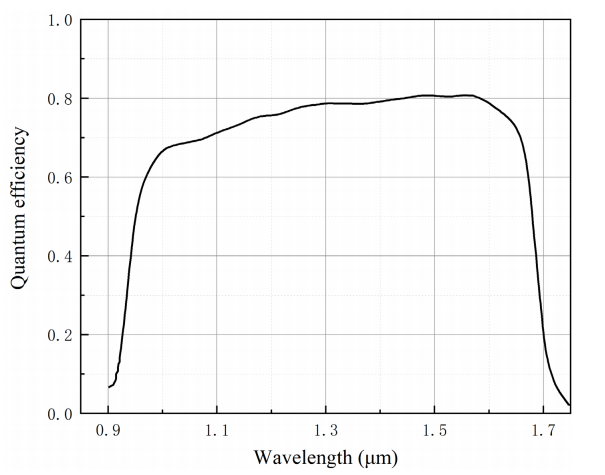
Quantum Efficiency Curve #
China-made InGaAs 900–1700 nm typical quantum efficiency response
Package Contents#
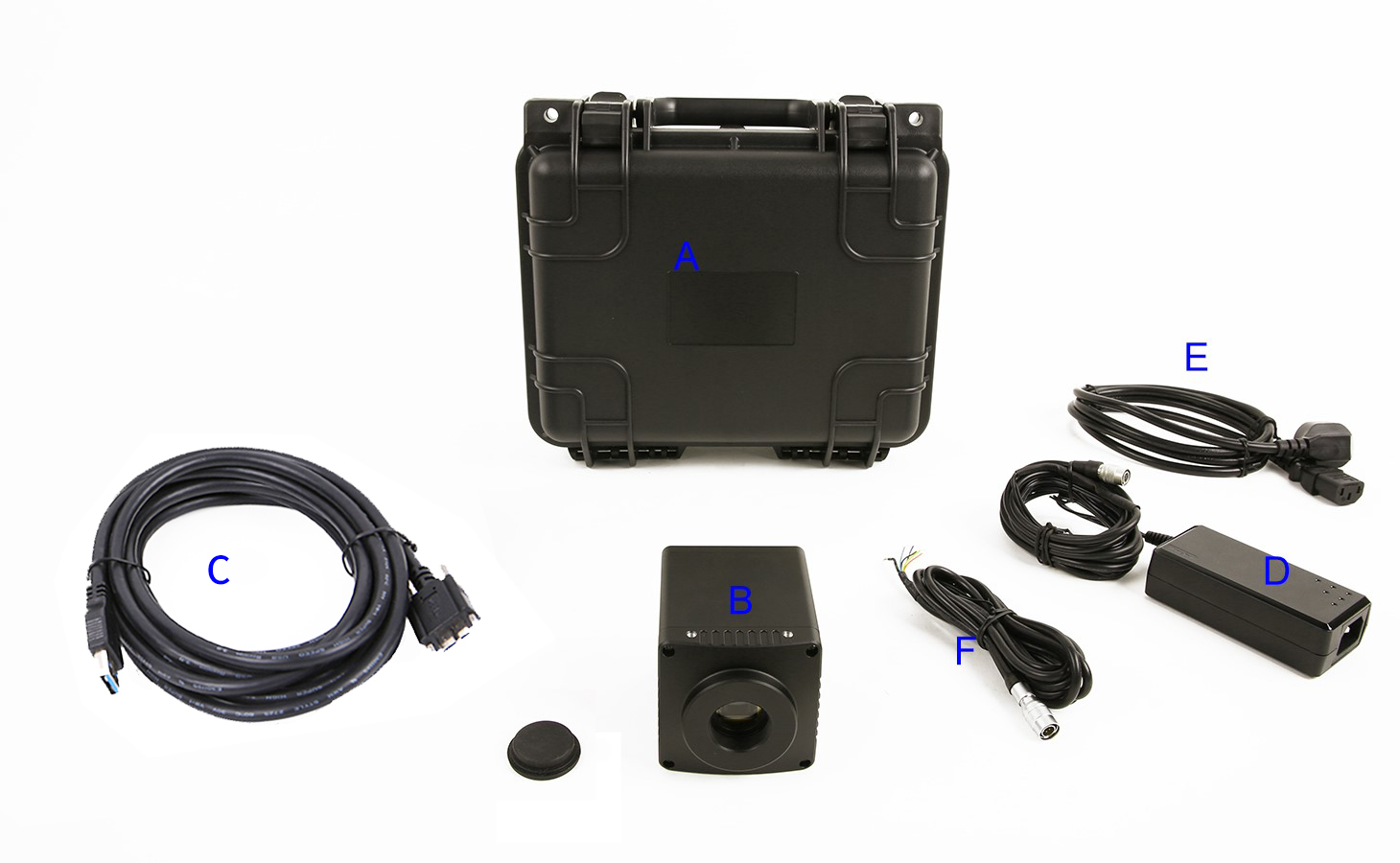
Standard package list (USB / 10GigE / CameraLink / CoaXPress, all cooled versions)
- A 3-A instrument safety case: L: 28 cm W: 23.0 cm H: 15.5 cm (1 pcs, 2.8 kg/box)
- B SWIR 900–1700 USB interface camera
- C High-speed USB3 A-to-B gold-plated data cable (1.5 m)
- D 12 V / 3 A 6-pin aviation power adapter
- E Power cable
- F External trigger control cable ×1
- A Outer box (not shown): carton size L: 28.2 cm W: 25.2 cm H: 16.7 cm
- B 3-A instrument safety case: L: 28 cm W: 23.0 cm H: 15.5 cm (1 pcs, 2.8 kg/box)
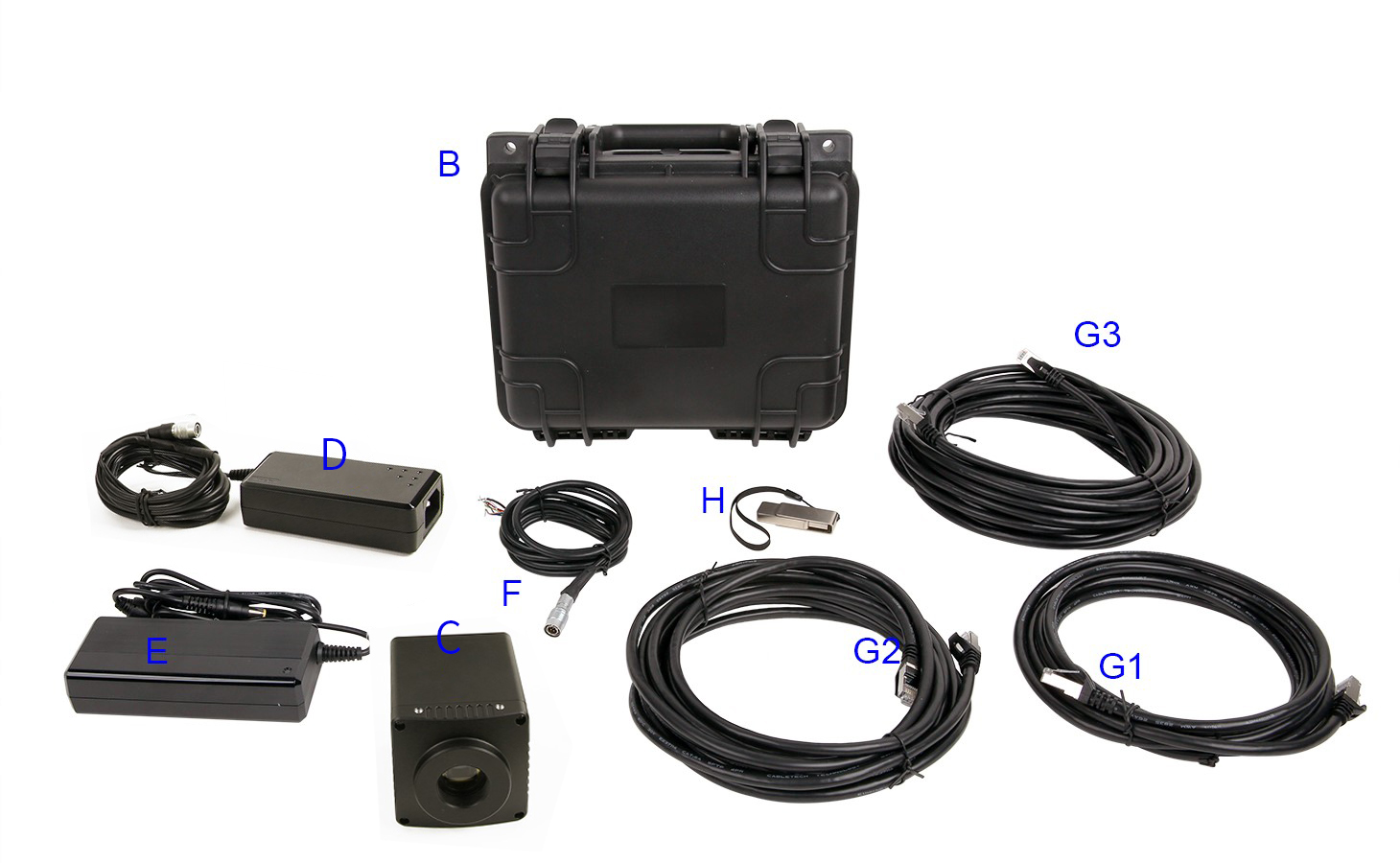
- C SWIR 900–1700 GigE interface camera
- D 12 V / 3 A 6-pin aviation power adapter
- E Power cable (CN/US/EU/UK, not shown)
- F External trigger control cable ×1
- G Network cable: G1 3 m / G2 5 m / G3 10 m (G4 50 m not shown)
- H USB drive (includes driver and software)
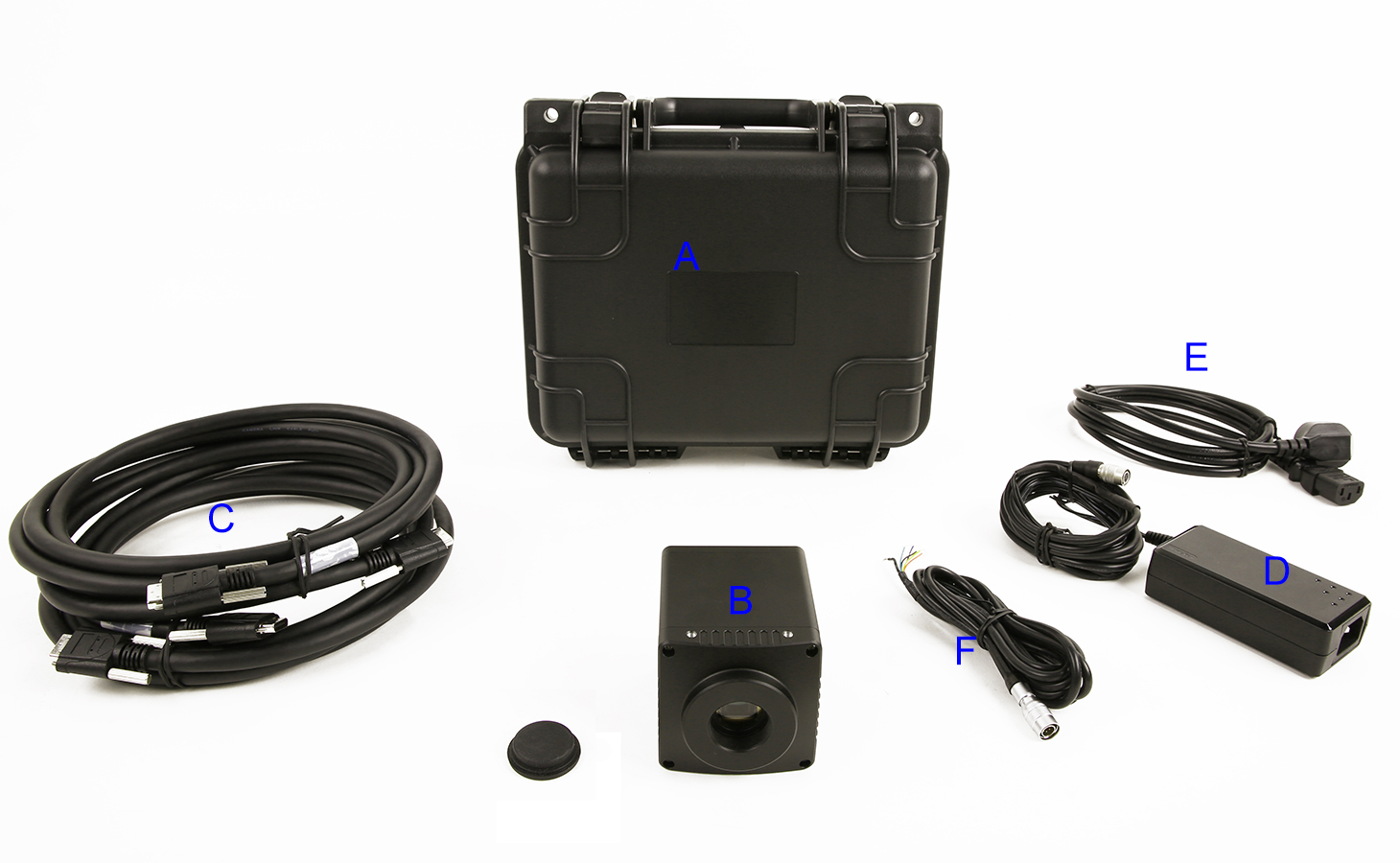
- A 3-A instrument safety case: L: 28 cm W: 23.0 cm H: 15.5 cm (1 pcs, 2.8 kg/box)
- B SWIR 900–1700 CL interface camera
- C CameraLink cable ×2 (Optional)
- D 12 V / 3 A 6-pin aviation power adapter
- E Power cable
- F External trigger control cable ×1
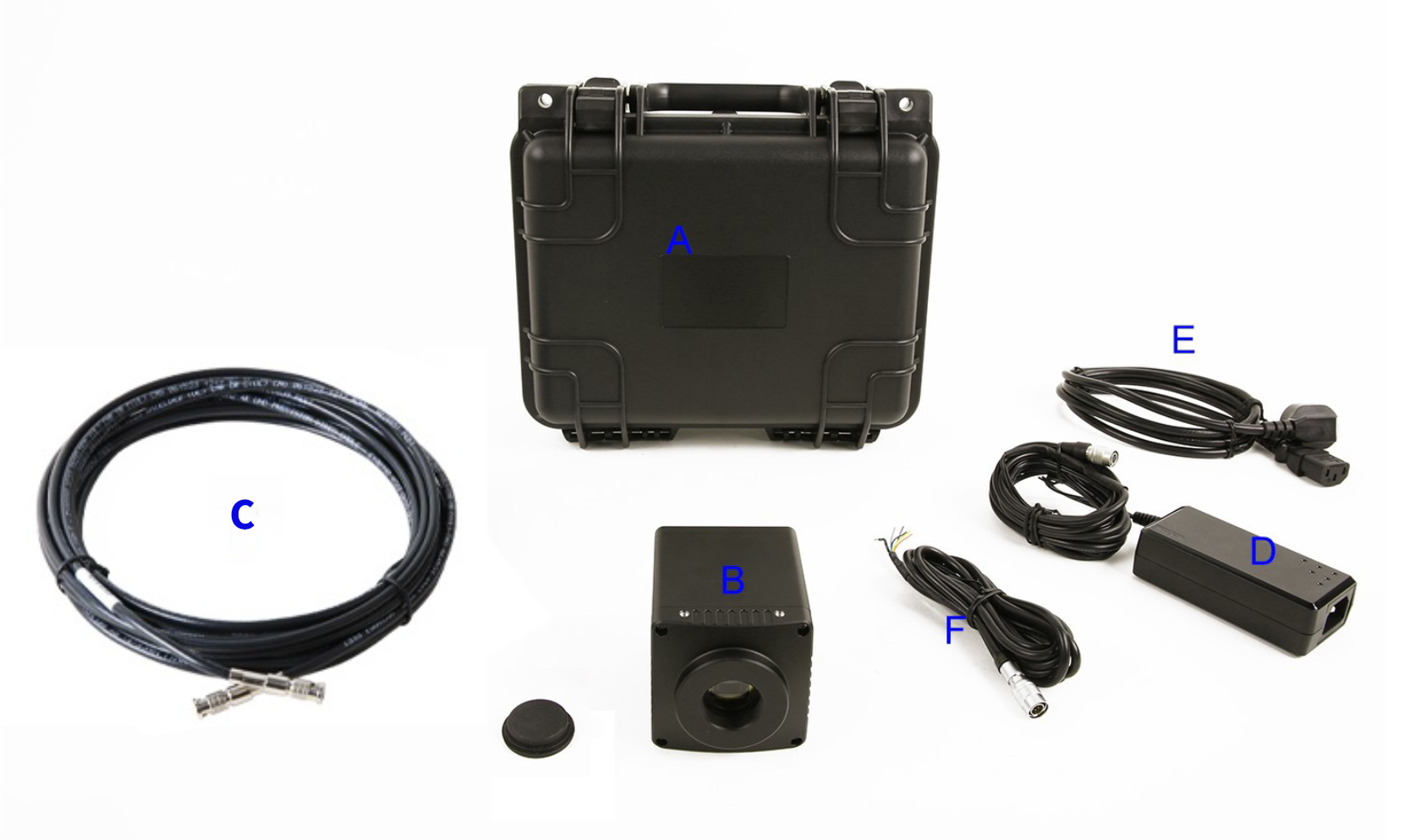
- A 3-A instrument safety case: L: 28 cm W: 23.0 cm H: 15.5 cm (1 pcs, 2.8 kg/box)
- B SWIR 900–1700 CoaXPress interface camera
- C CoaXPress cable ×1 (Micro-BNC) (Optional)
- D 12 V / 3 A 6-pin aviation power adapter
- E Power cable
- F External trigger control cable ×1
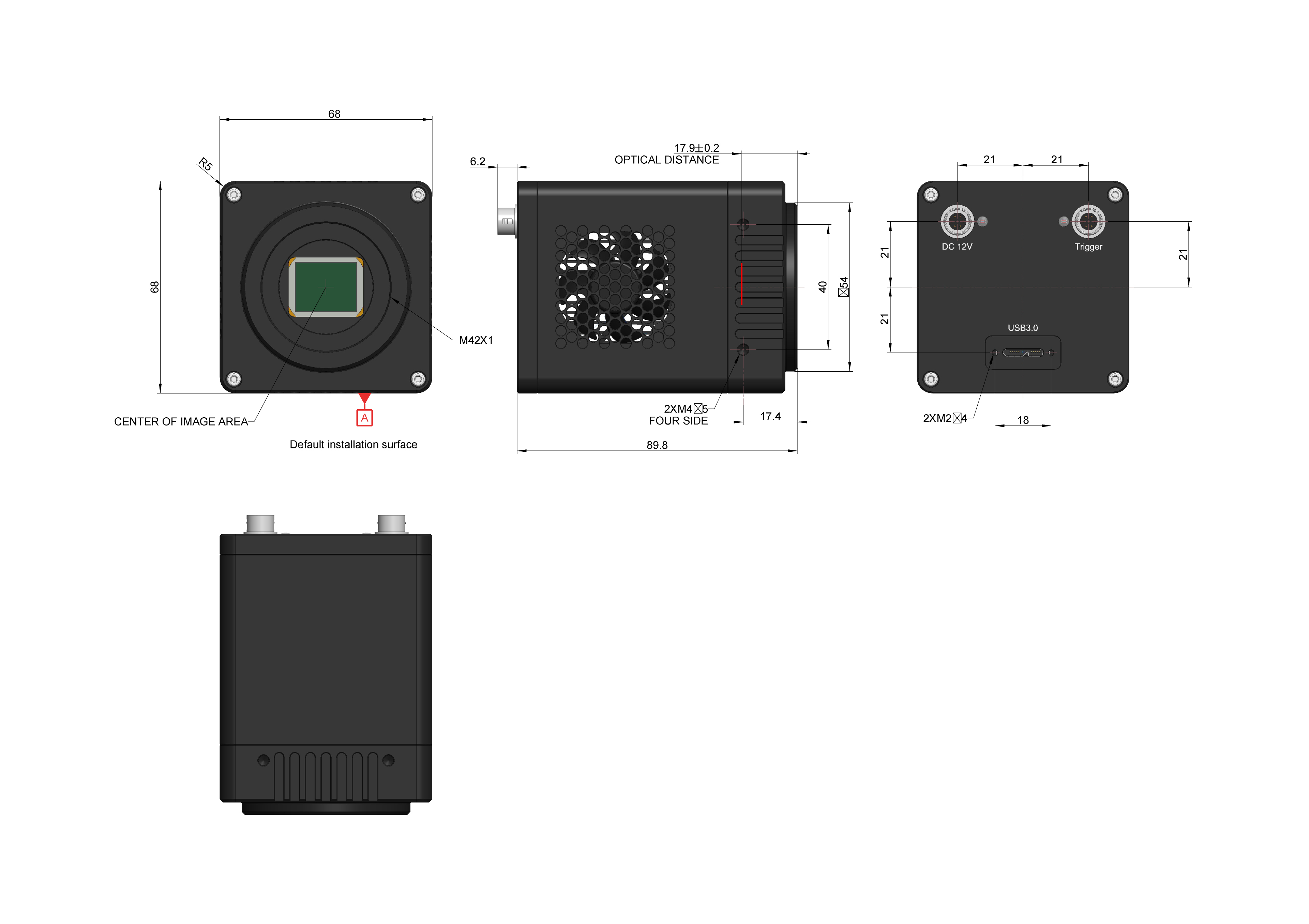
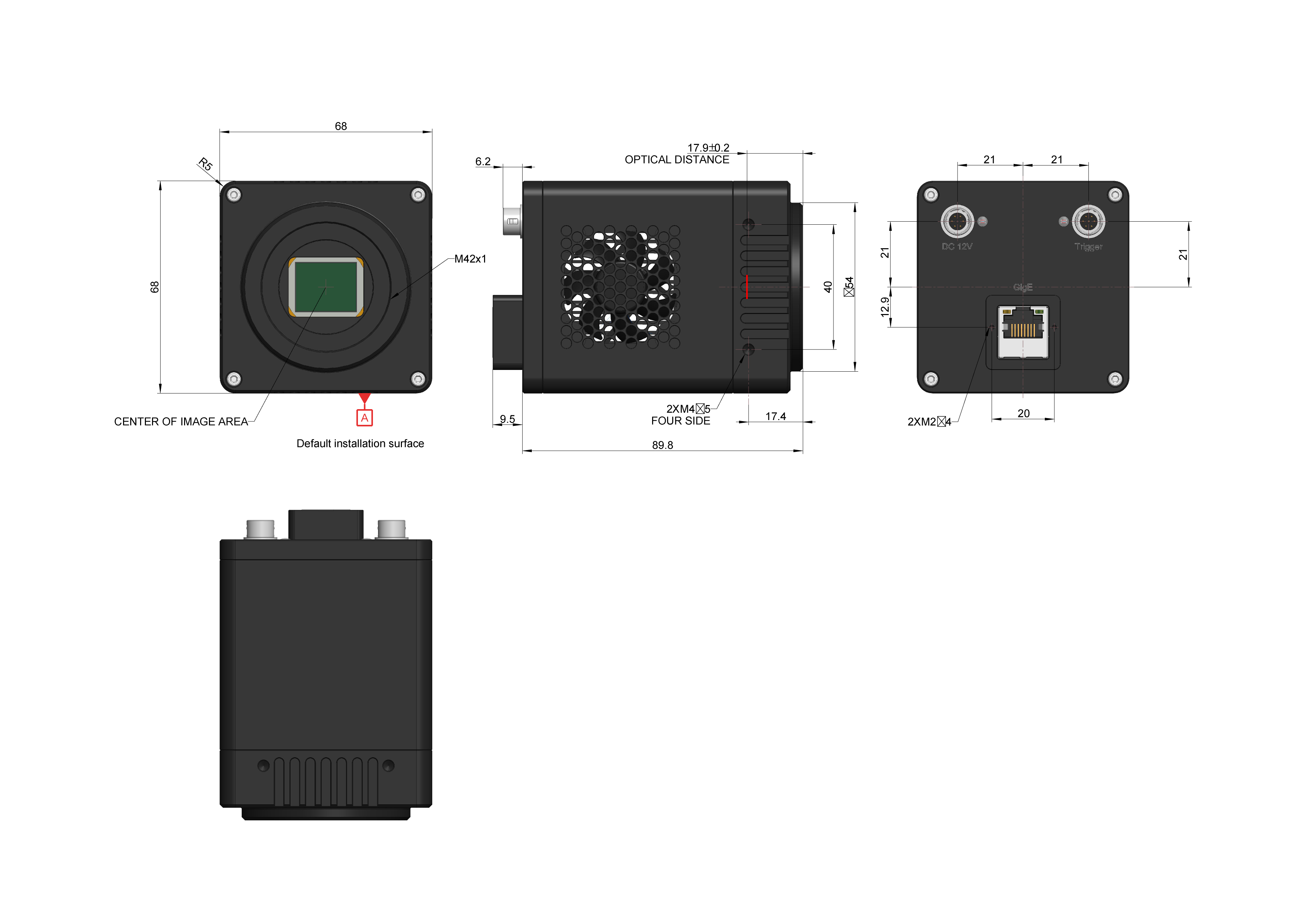
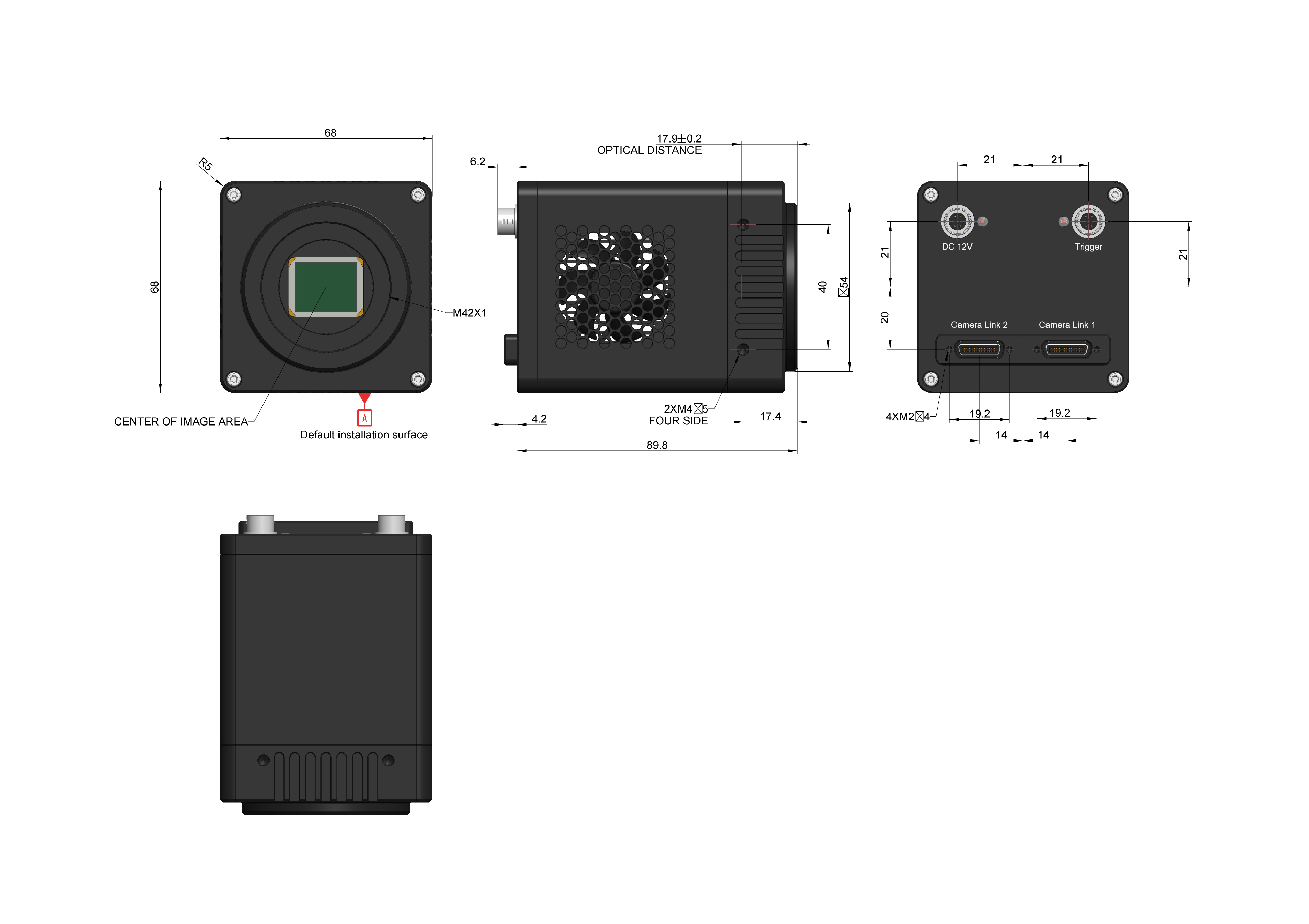
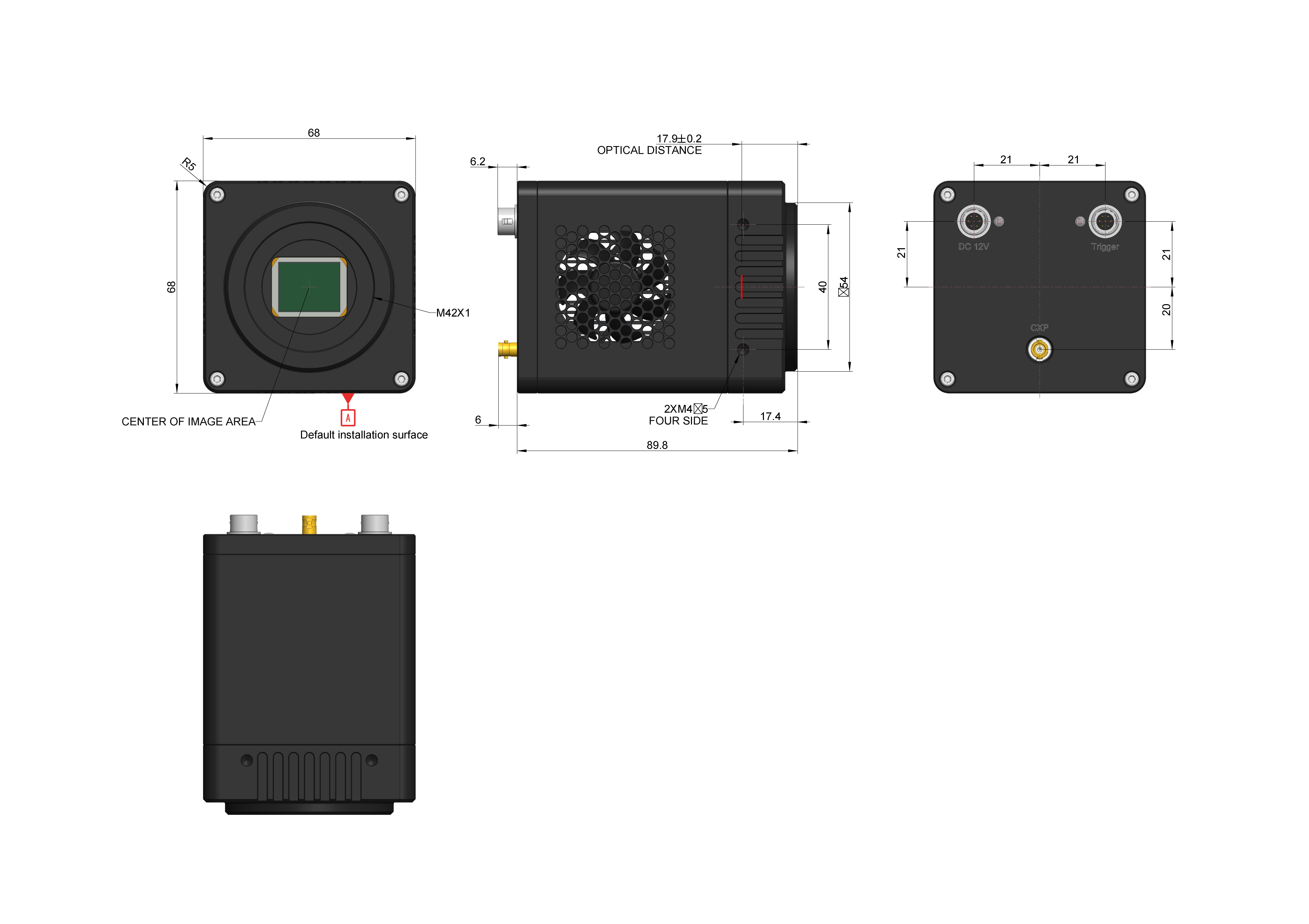
Product Dimensions #
Outline drawings and key mounts for different interfaces and cooled versions
Frequently Asked Questions
Learn more about SWIR short-wave infrared camera technology

Deep Understanding of SWIR Cameras
Short-Wave Infrared (SWIR) cameras and their core sensors are important components of advanced imaging systems. SWIR technology covers the 900–1700 nanometer wavelength band and has excellent penetration capabilities in harsh environments, such as penetrating fog, smoke, and dust to achieve clear imaging under extreme conditions.
SWIR cameras primarily rely on short-wave infrared light reflection, similar to the visible light band, complementing the application range that thermal imaging cameras (LWIR) cannot cover, providing more complete imaging solutions. They are compact and flexibly integrated, making them easy to apply in various industrial and commercial systems.
The high resolution and high sensitivity of SWIR cameras can meet precision detection and high-requirement applications, capable of detecting minute changes and anomalies in samples, making them very suitable for quality control and defect detection. Some models support cooling, further ensuring imaging quality in high-temperature or high-noise environments.
To reduce system costs and improve integration efficiency, modern SWIR cameras commonly adopt standard optical interfaces and compact designs to accommodate broader application requirements. With the continuous development of imaging markets and technology, SWIR cameras have become one of the key technologies for high-end imaging and sensing in multiple industries due to their unique advantages.
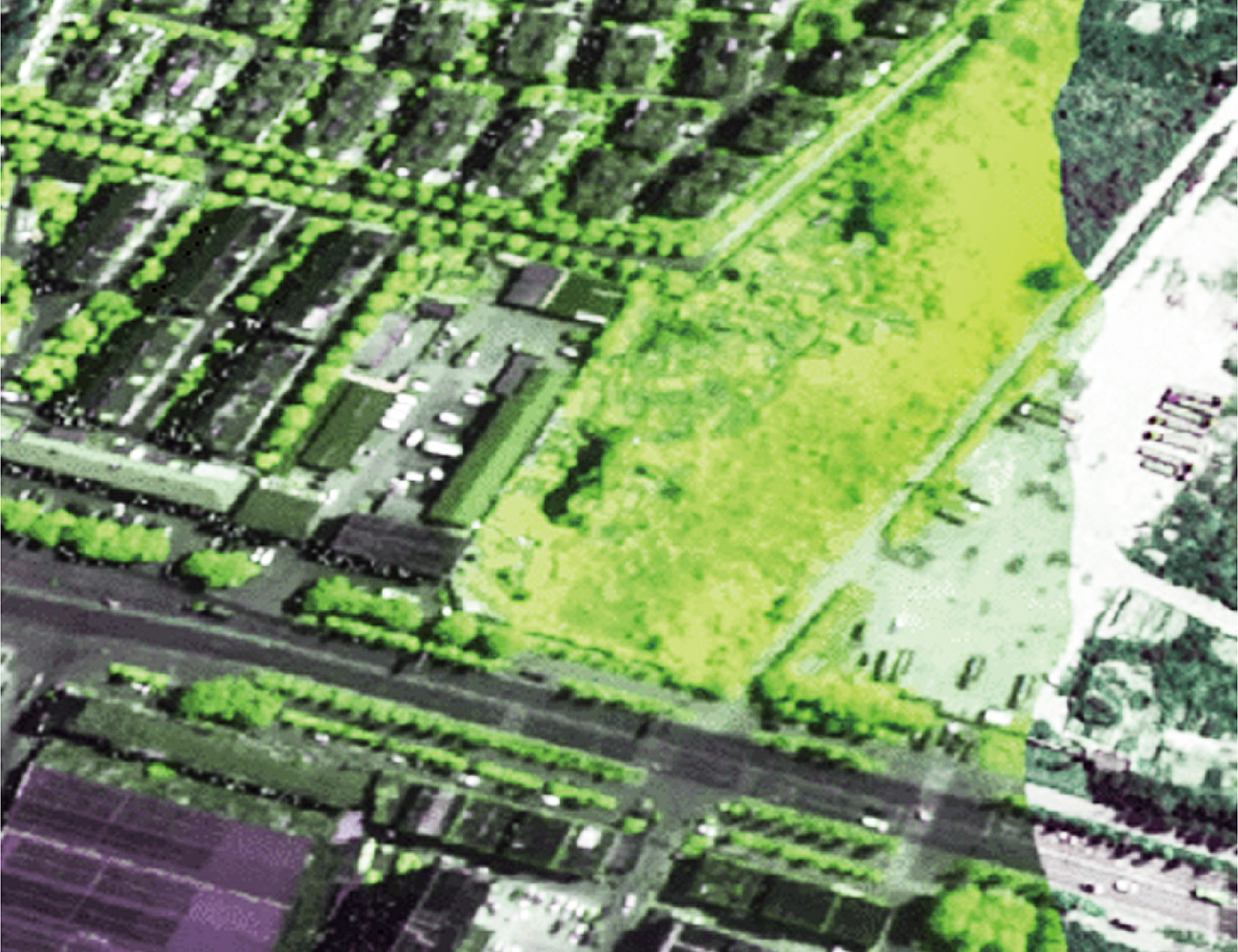
Application Examples
Demonstration of SWIR camera applications in real-world scenarios




More Application Industry References
- Semiconductor Industry: Solar cell and chip inspection
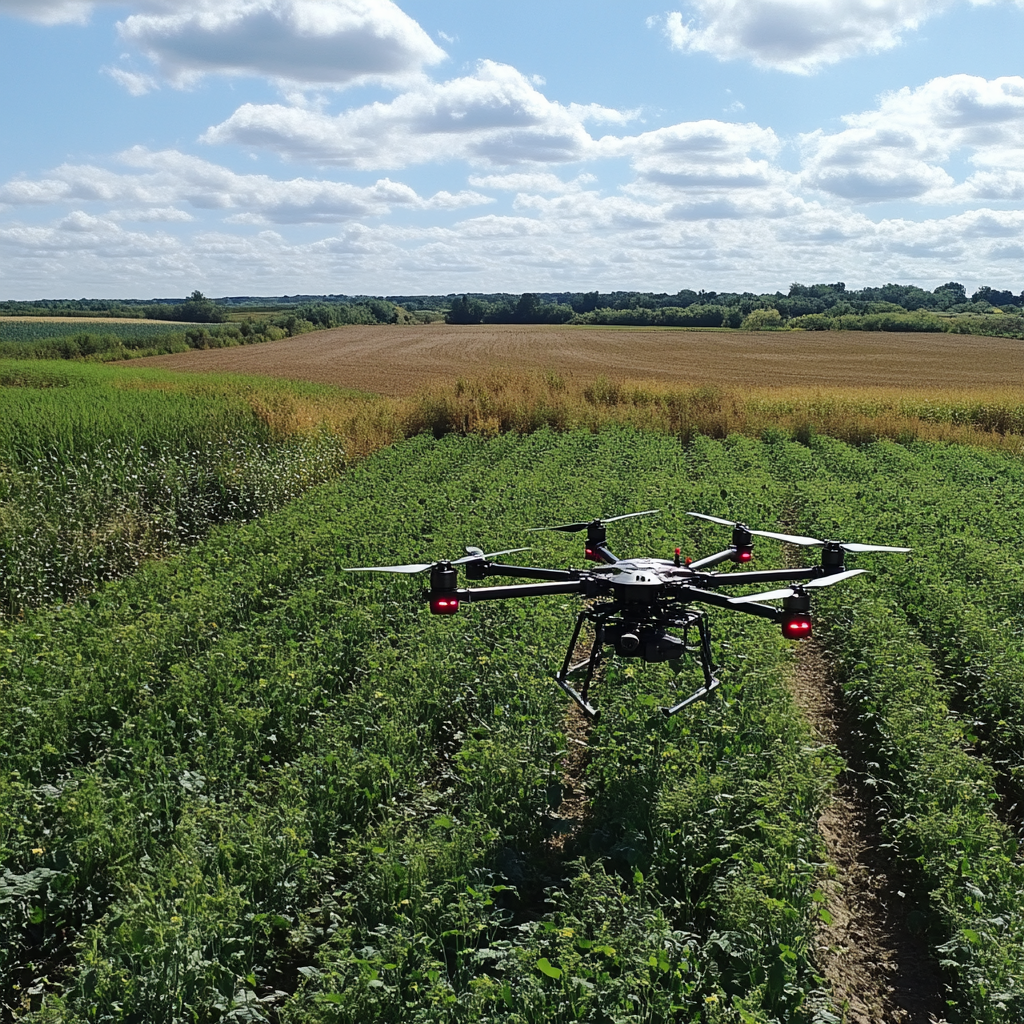
- Agriculture: Spectral remote sensing applications via multirotor aircraft
- Recycling Industry: Material sorting of plastics, waste, and other materials
- Medical Imaging and Research: Hyperspectral and multispectral imaging
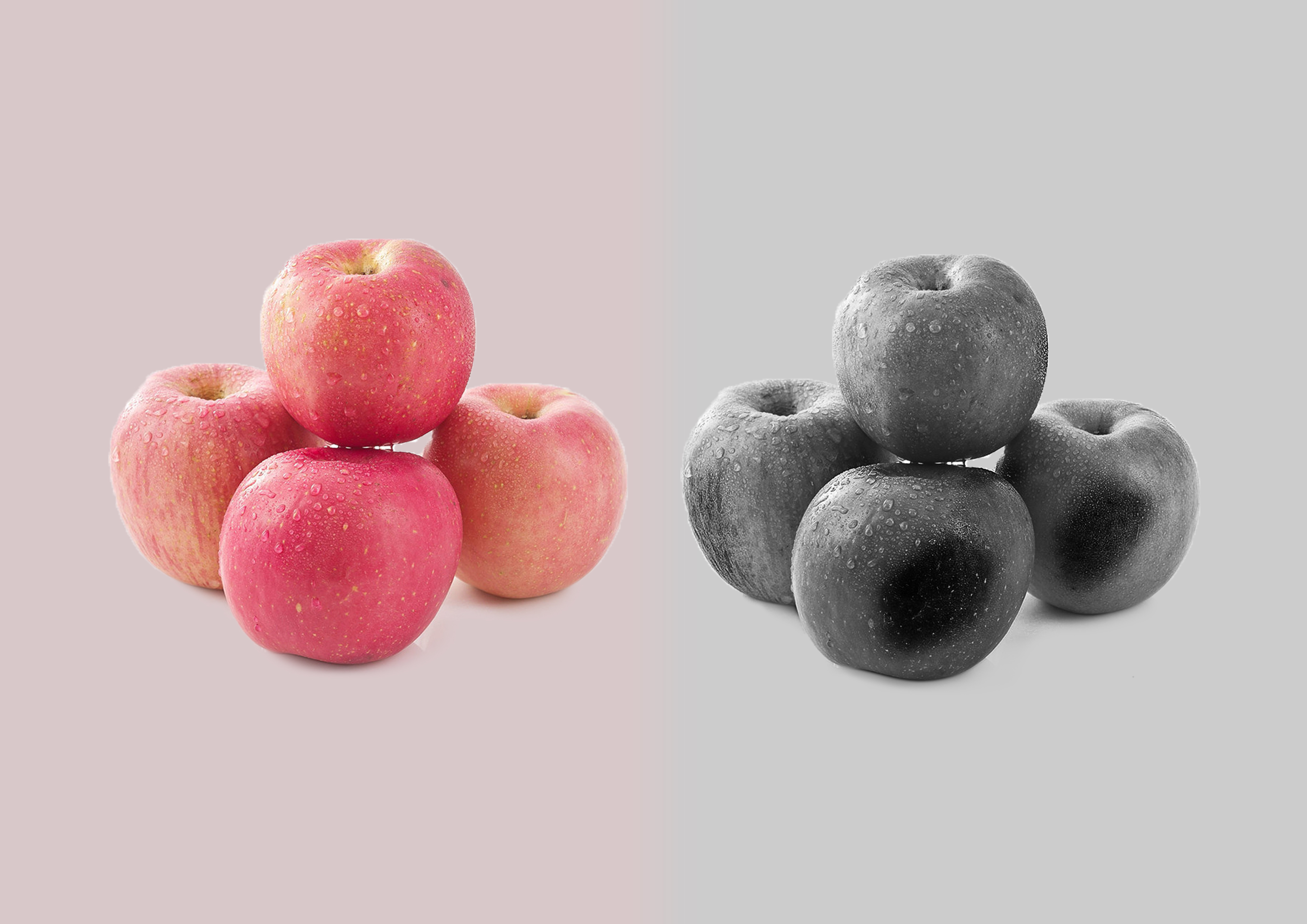
- Food Industry: Quality inspection and grading
- Beverage Industry: Liquid level detection in opaque containers
- Packaging: Seal inspection
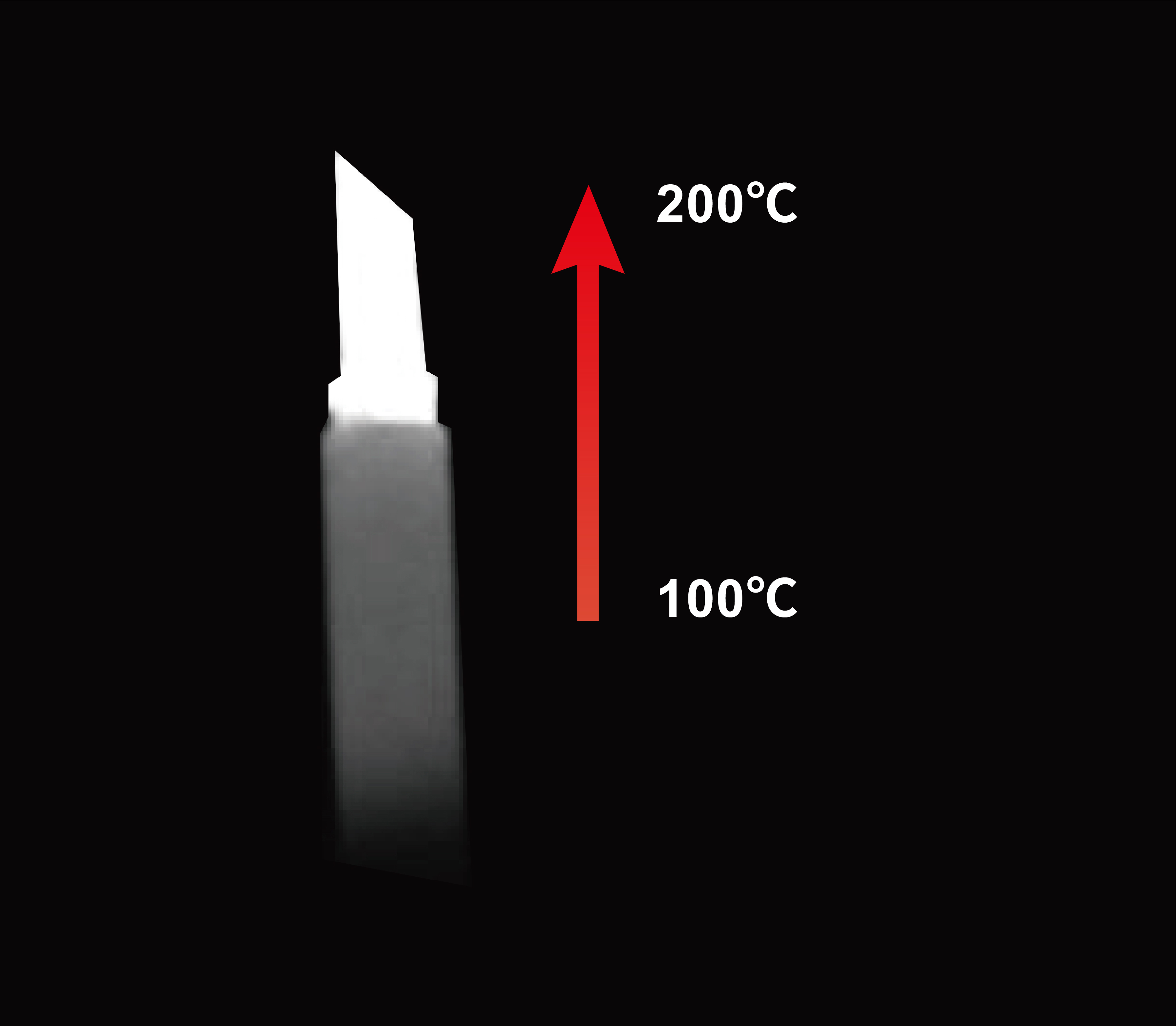
- Glass Industry: High-temperature glass penetration defect detection
- Printing Industry: See-through hidden features
- Video Surveillance: Visual enhancement (e.g., smoke penetration)
- Security: Counterfeit detection, such as currency, wigs, or skin