
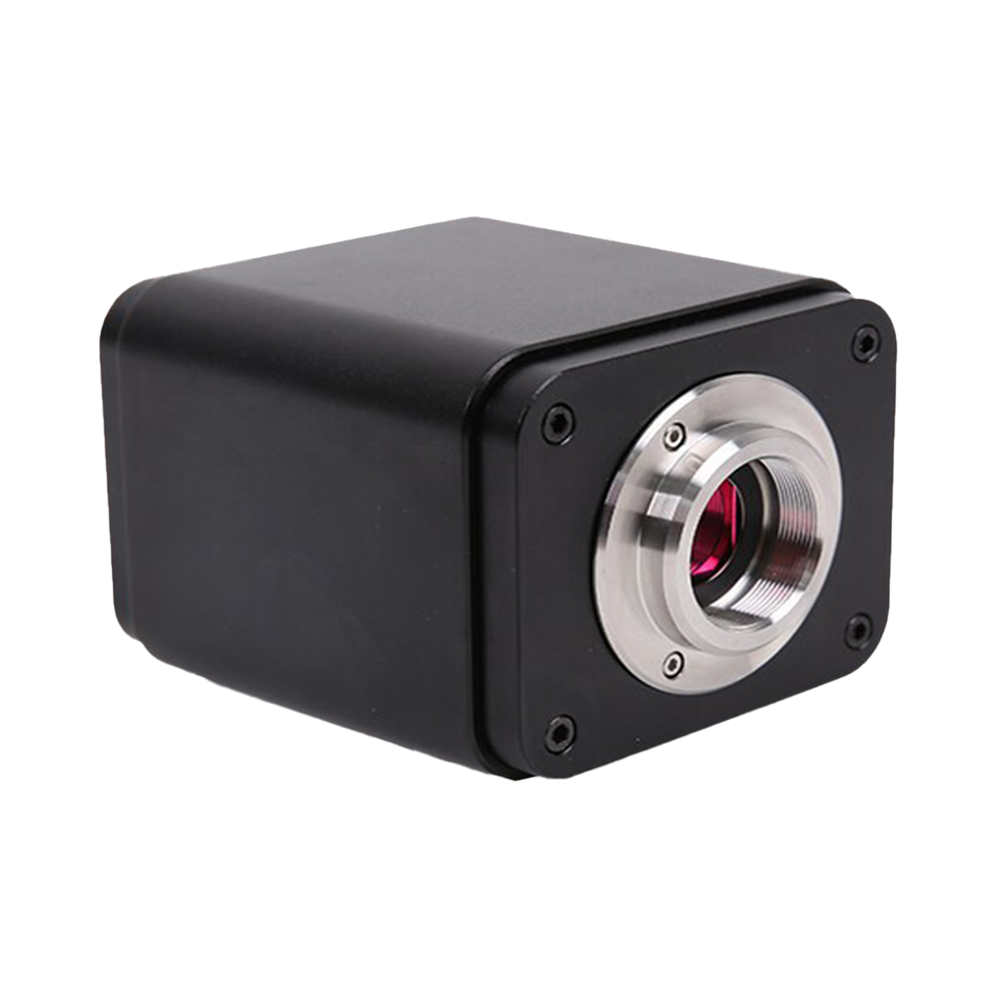
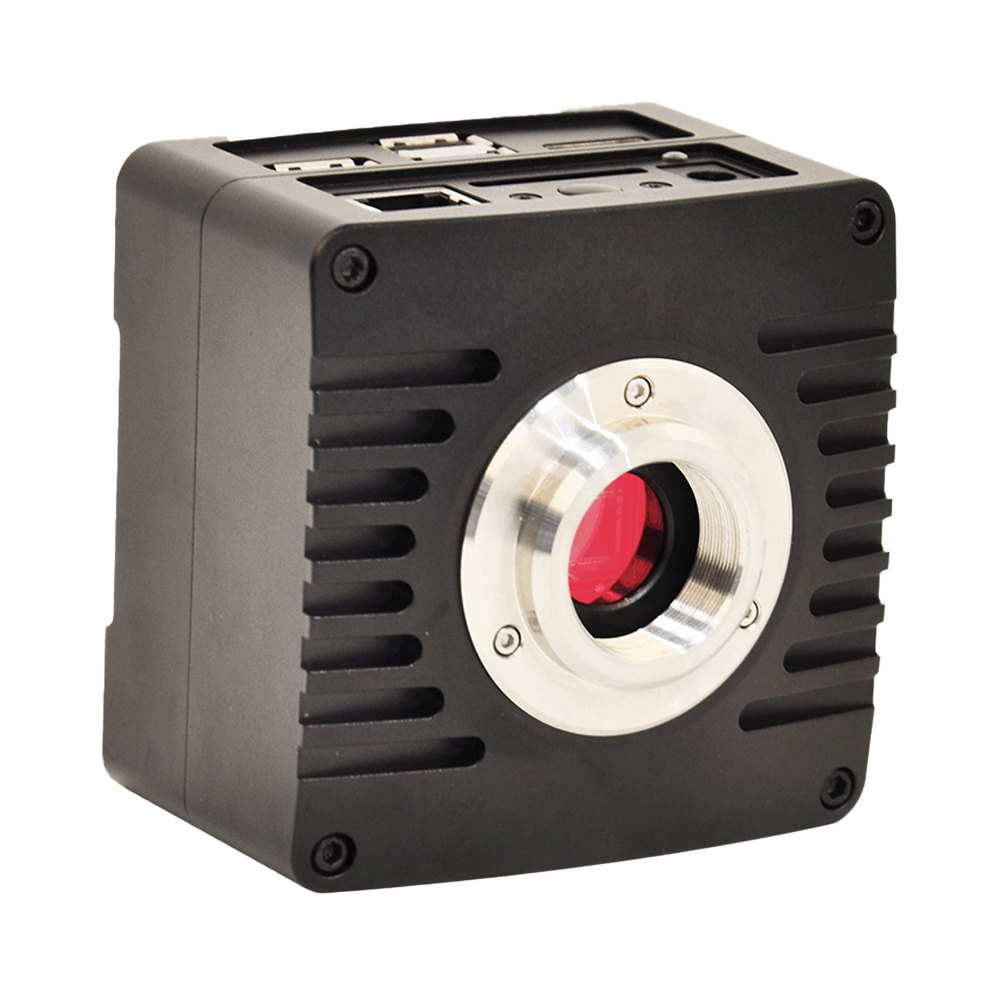
X5CAM4K Series
Product Introduction
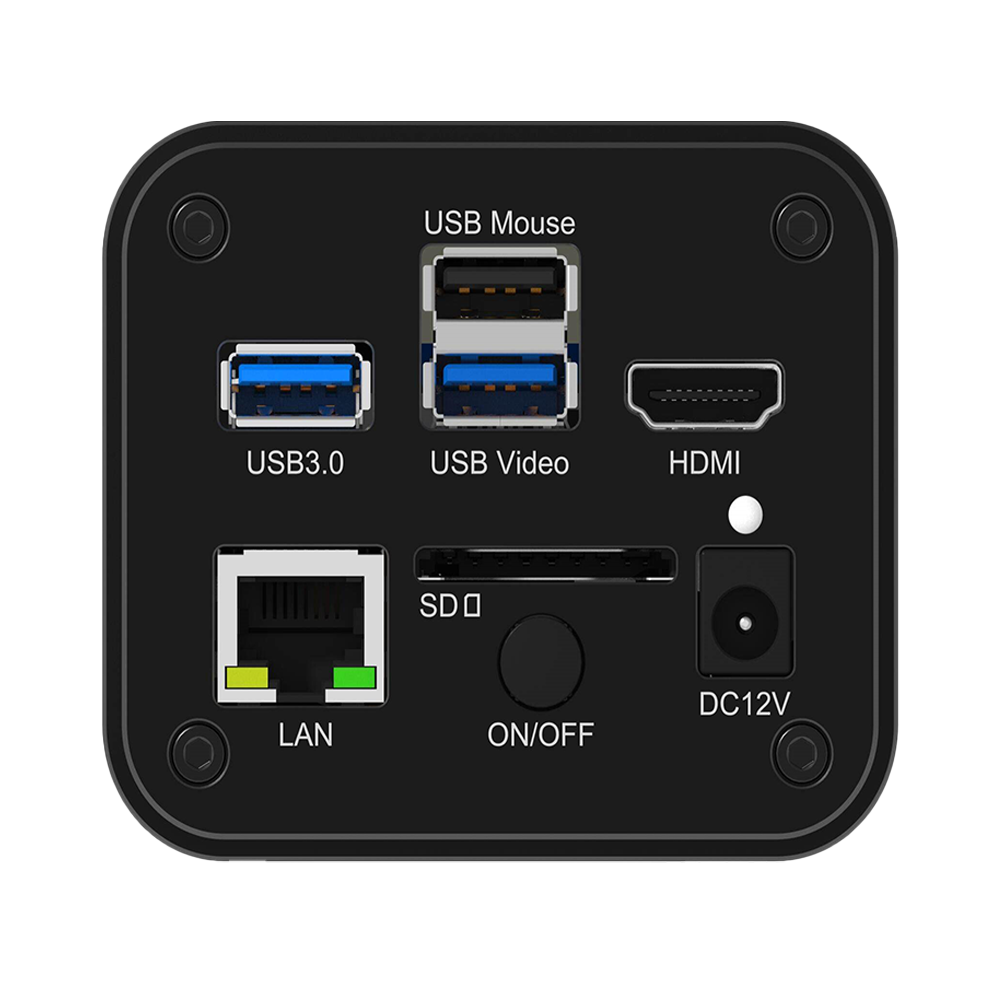
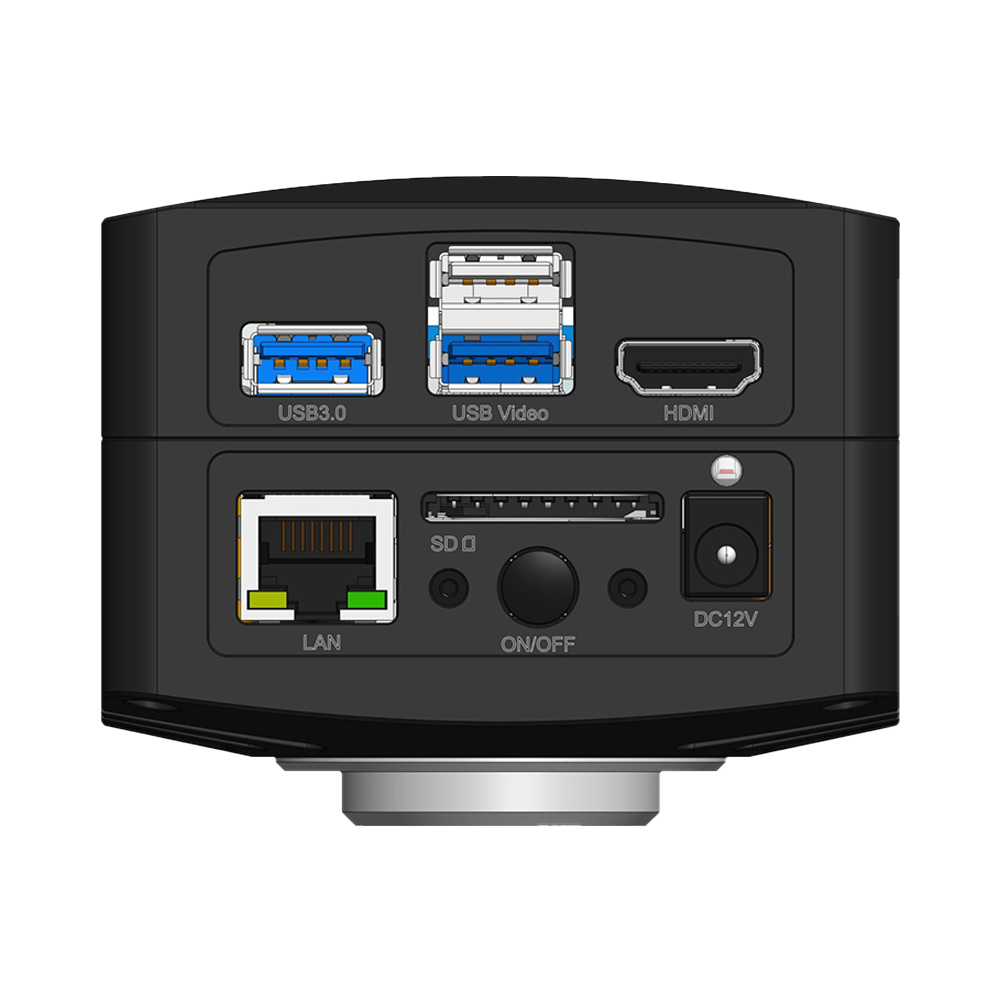
Supports HDMI, USB, network multi-interface synchronous output, specially designed for microscope interactive teaching systems, enabling multi-terminal sharing and collaborative operation.
Product Features
- Sony Starvis 2 back-illuminated CMOS sensor
- 4K HDMI/NETWORK/USB multi-interface simultaneous output
- 4K/1080P HDMI output adaptive switching
- High frame rate output, supports up to 4K 75 fps
- Supports 4K 60 fps low-latency HDMI output mode with average latency of 40 ms
- SD card/USB flash drive saves captured videos or images with customizable storage location and local preview and playback support
- Supports external keyboard with Chinese and English input
- Supports capture and display of JPEG, TIFF, PNG, and RAW format images
- Supports external USB3.0 interface SSD; supports automatic saving of recorded videos during sudden power loss
- Supports editing of recorded videos; supports optional time watermark in recorded videos or images
- Supports automatic upload of captured photos to server via network
- Supports USB voice control module for real-time voice command control of camera photo, video, and freeze operations
- Brand new browse interface provides rich file operation functions: image-to-image comparison, image-to-live-video comparison, multi-image depth-of-field stacking, multi-image stitching
- Powerful ISP functions with remarkable sharpening and 3D noise reduction effects, more precise ROI white balance
- Provides real-time video depth-of-field stacking function and real-time video WDR output function
- Provides real-time stitching function to obtain higher quality images through real-time processing
- Provides biological and stereoscopic microscope default ISP parameter switching for convenient secondary adjustment and optimization
- Embedded XCamView software provides rich image processing and measurement functions, supports automatic edge detection and automatic measurement
- ToupView/ToupLite software for more convenient PC operation
- iOS/Android mobile applications, free download from app stores
X5CAM4K Series
Multi-Interface Interactive Teaching Camera
| Model | Sensor/Size | Effective Pixels | Output Resolution | Frame Rate (fps) | Output Interface | Auto Focus | Lens Mount | Storage Support | Featured Functions |
|---|---|---|---|---|---|---|---|---|---|
| X5CAM4K8MPB |
Sony IMX585(C)
1/1.2" (11.14×6.26 mm)
|
2.9 µm × 2.9 µm | 8MP | 60 fps @ 3840×2160 | HDMI NETWORK USB3 WiFi | C mount | SD card / USB drive | 4K output Network transmission Teaching interaction Large-format sensor | |
| X5CAM4K8MPA |
Sony IMX678(C)
1/1.8" (7.68×4.32 mm)
|
2.0 µm × 2.0 µm | 8MP | 60 fps @ 3840×2160 | HDMI NETWORK USB3 WiFi | C mount | SD card / USB drive | 4K output Network transmission Teaching interaction | |
| X5CAM4K8MMA |
Sony IMX678(M)
1/1.8" (7.68×4.32 mm)
|
2.0 µm × 2.0 µm | 8MP | 60 fps @ 3840×2160 | HDMI NETWORK USB3 WiFi | C mount | SD card / USB drive | 4K output Network transmission Teaching interaction |
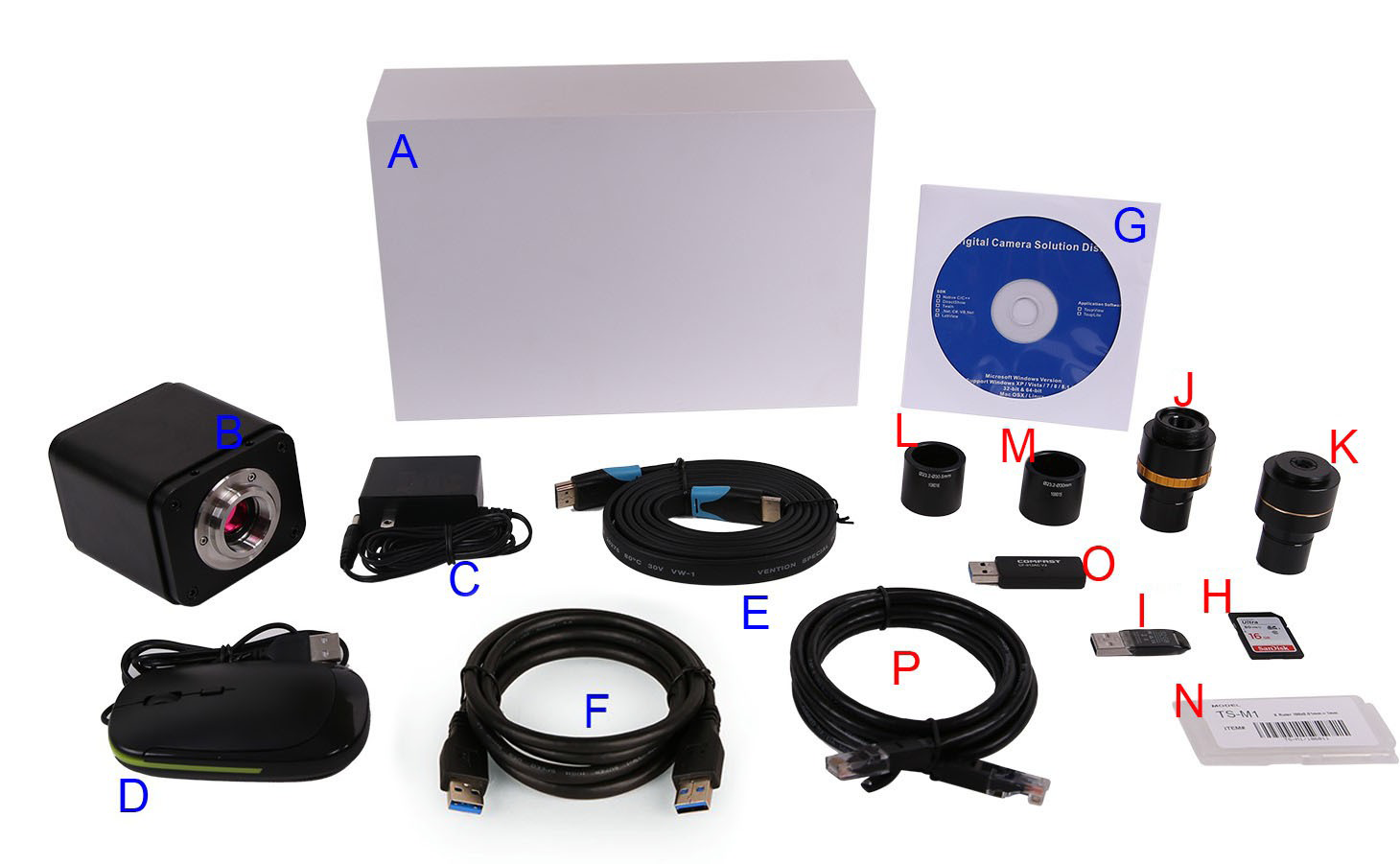
X5CAM4K Multi-Interface Camera | Packing List #
Standard Packing List
- A Camera box size: 25.5 cm × 17.0 cm × 9.0 cm (1 pcs, 1.7 kg per box)
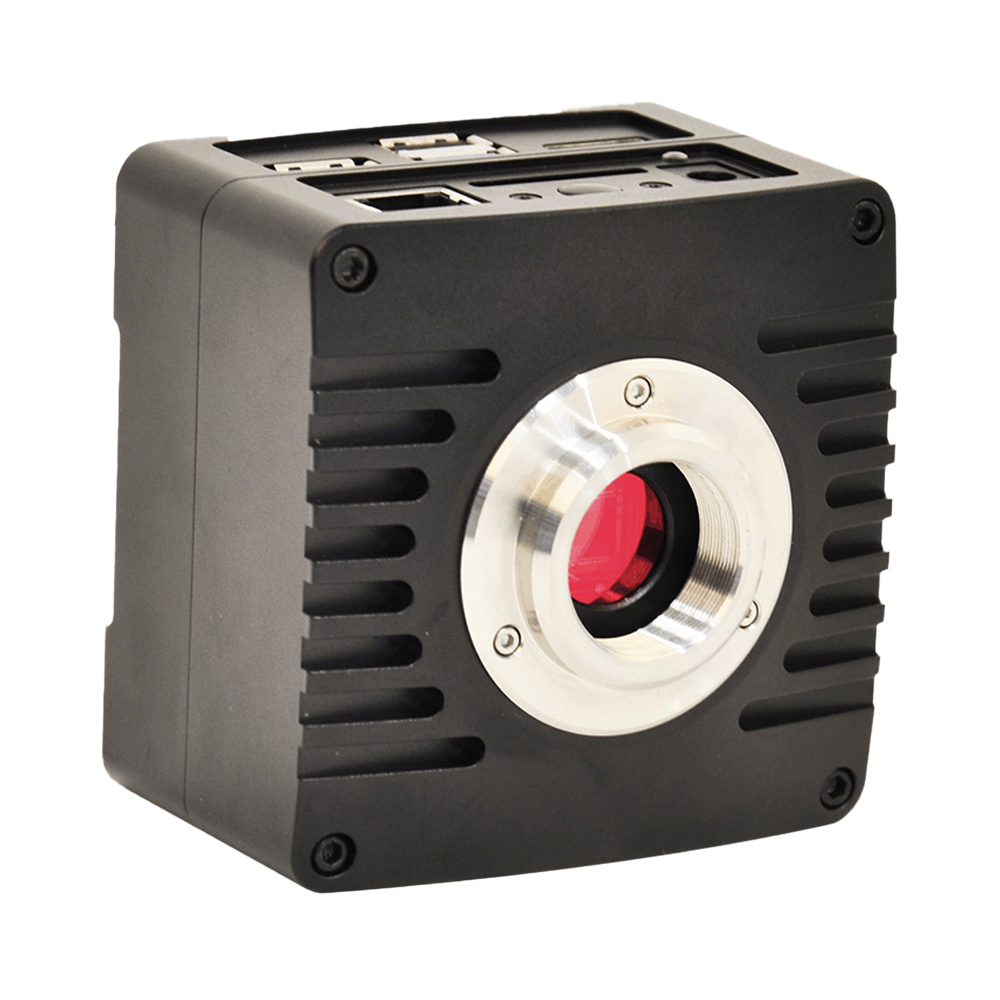
- B X5CAM4K camera ×1 (cube/flat version, choose one)
- C Power adapter: Input AC 100~240 V 50/60 Hz, output DC 12 V 1 A; US POWER-U-12V1A (MSA-C1000IC12.0-12H-US), EU POWER-E-12V1A (MSA-C10001C12.0-12H-DE)
- D USB mouse
- E HDMI 2.0 cable
- F USB3.0 A male ↔ A male gold-plated data cable (1.5 m)
Optional Accessories
- G Voice control module
- H SD card (16 GB+, Class 10)
- I USB drive
-
J Adjustable eyepiece tube adapters
Dia.23.2 mm to C-mount: 108001/AMA037, 108002/AMA050, 108003/AMA075 (choose based on the camera and microscope).
-
K Fixed eyepiece tube adapters
Dia.23.2 mm to C-mount: 108005/FMA037, 108006/FMA050, 108007/FMA075. Note: confirm the camera model and scenario before choosing J or K; engineers can assist.
- L 108015 (Dia.23.2 mm→30.0 mm) adapter ring for 30 mm eyepiece tubes
- M 108016 (Dia.23.2 mm→30.5 mm) adapter ring for 30.5 mm eyepiece tubes
- O USB wireless network adapter (required for WiFi mode; appearance varies by model)
- P Ethernet cable
X5CAM4K Multi-Interface Camera | Product Dimensions #
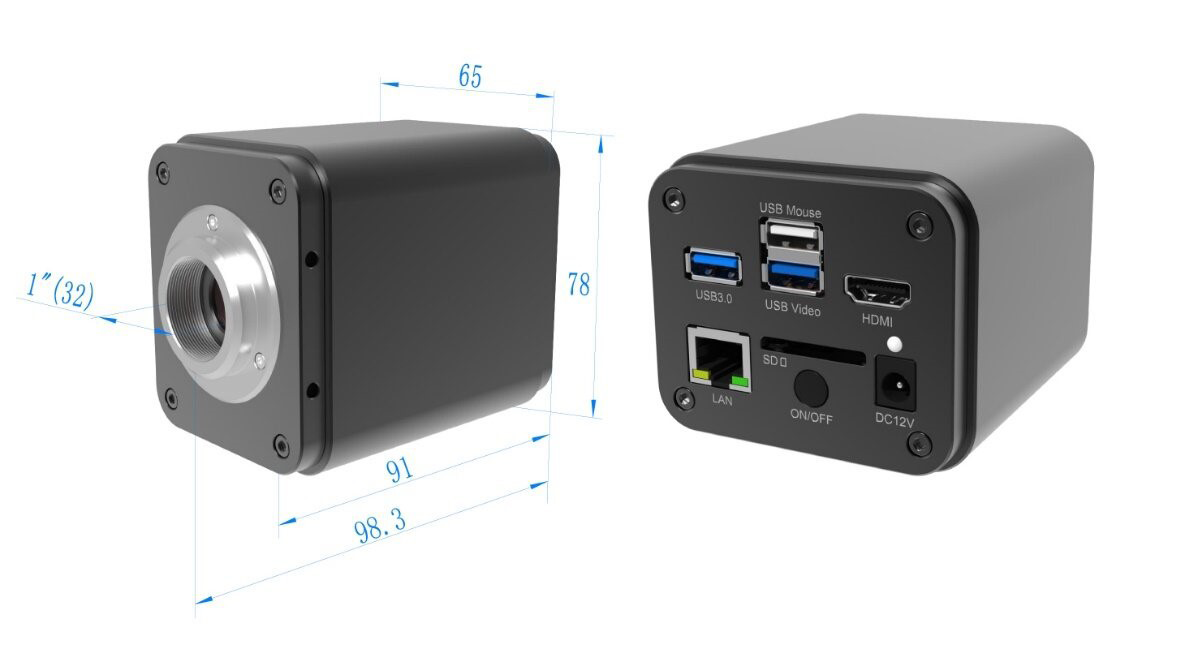
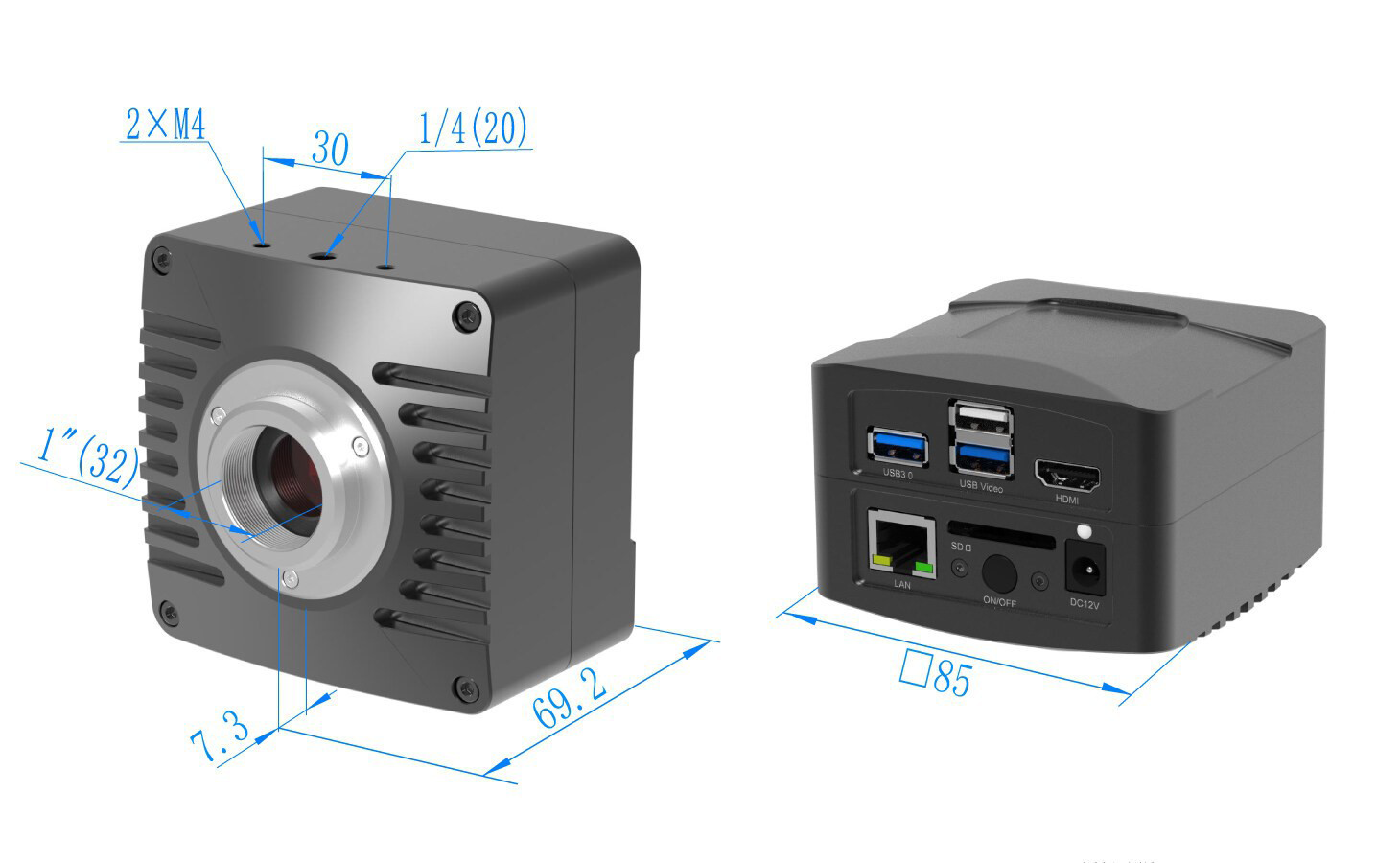
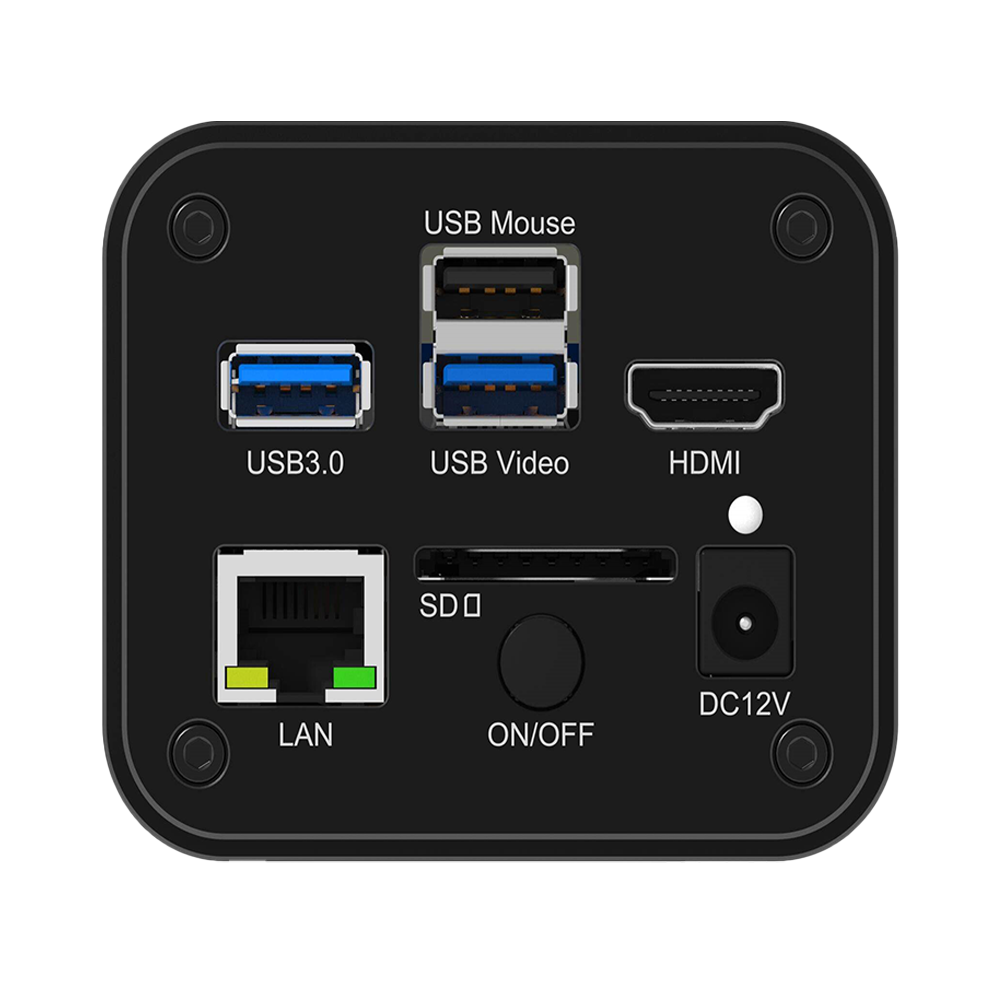
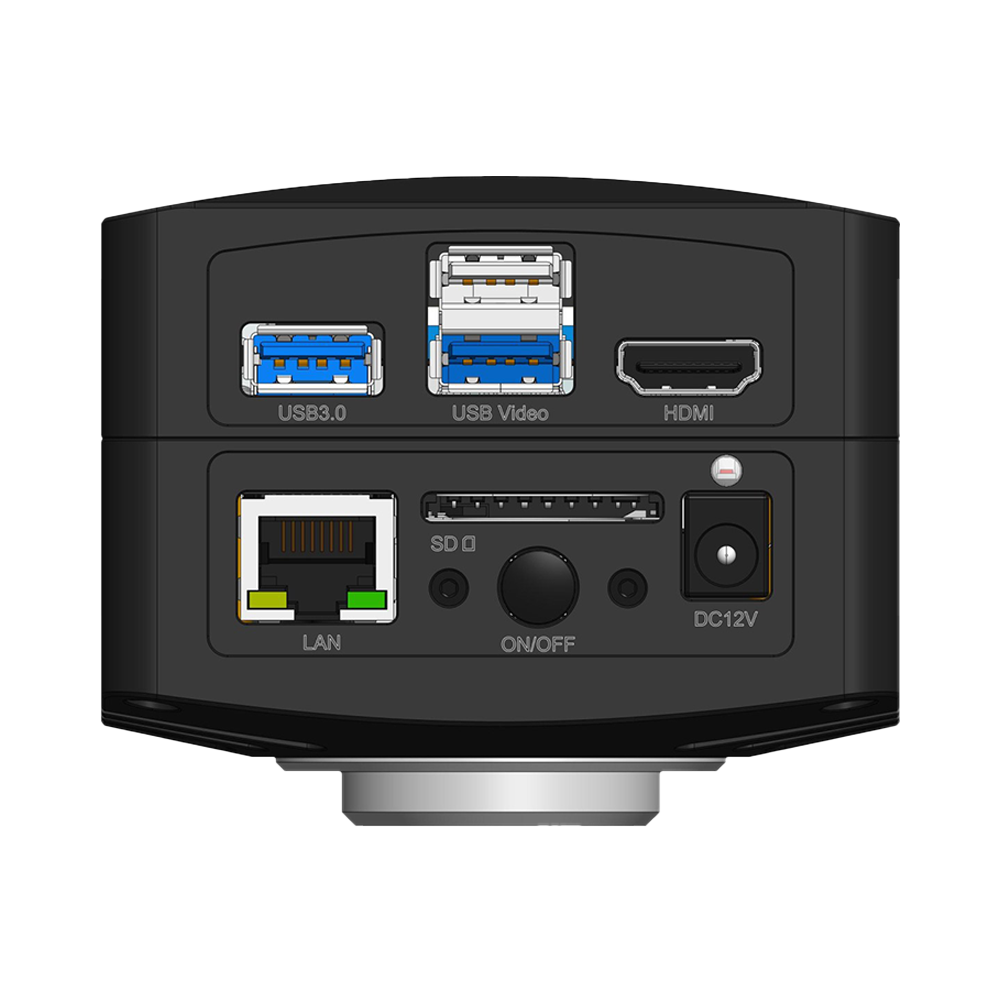
Main unit dimensions and interface layout
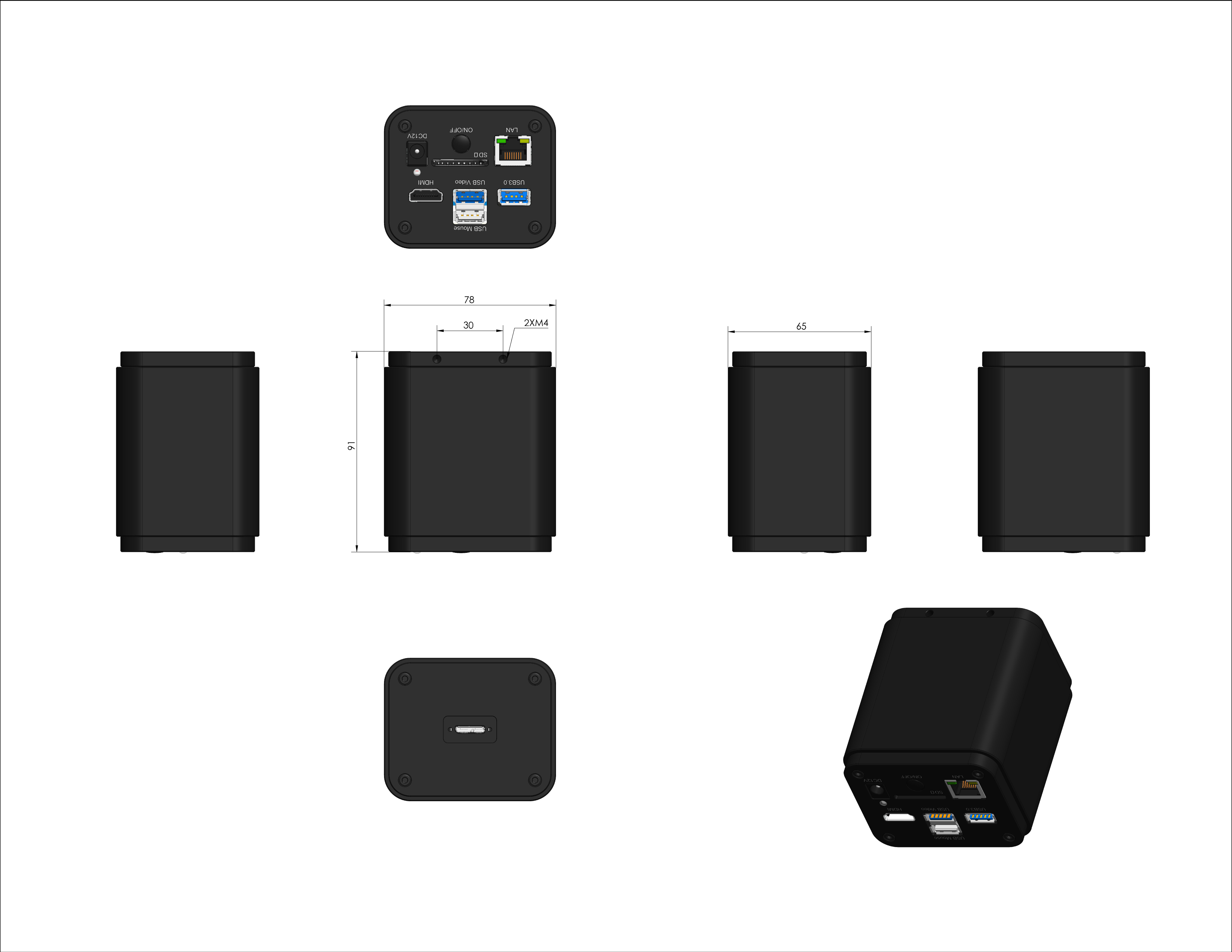
See manual Fig. 3-46 / Fig. 3-47
Please confirm mounting holes and interface orientation per the dimension drawing before installation.
Deep Dive
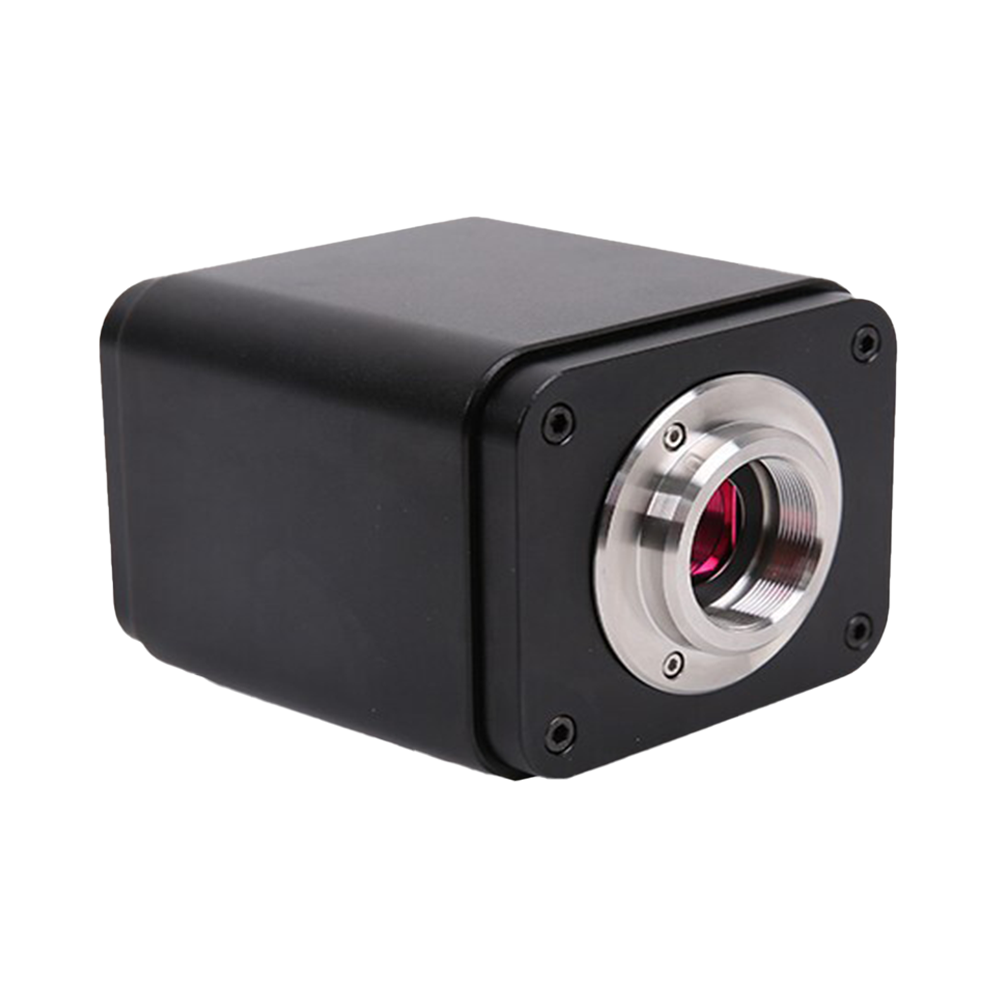
The ToupTek X5CAM4K series is a standalone multi-interface HDMI camera that works without a PC. It is designed for high-resolution imaging and video capture on stereo and biological microscopes and can be networked over LAN to build a microscopy interactive teaching system for classroom presentations and multi-end sharing.
This series uses a Sony Starvis 2 backside-illuminated high-sensitivity CMOS sensor, supports 4K/1080p HDMI auto switching, and delivers 4K 60 fps ultra-low-latency display (about 40 ms on average). It is widely suited for research, teaching, industrial inspection, and presentation environments.
Technical Highlights
- Multi-interface synchronous output: HDMI 4K60, USB3.0, and Gigabit Ethernet outputs run in parallel for local display, PC capture, and remote sharing
- High-performance imaging: Sony Starvis 2 BSI high-sensitivity CMOS with built-in 3D noise reduction, sharpness enhancement, color fidelity, and Gamma tuning
- Smart control and efficiency: Built-in voice control module enables photo, video, and freeze via USB audio control, and can auto-upload captured media to a server
- Flexible file management: Intuitive browser supports image/video comparison, static vs. dynamic views, real-time depth fusion, and image stitching
- Cross-platform ecosystem: Compatible with ToupView and ToupLite on Windows/macOS/Linux, with standard SDKs for easy integration
Core Benefits
-
1
Plug-and-Play for Any Setting PC-free with multi-interface output, adaptable to classrooms, research, and QA
-
2
High Resolution with Low Latency 4K 60 fps output with about 40 ms latency for live display, recording, and streaming
-
3
Smart Interaction Voice control and auto upload simplify workflows and boost efficiency
-
4
Professional Image Optimization Hardware 3D noise reduction, sharpness, and color tuning preserve detail and fidelity
-
5
Cross-Platform & Extensible Works with multi-platform software and SDKs for easy integration and collaboration